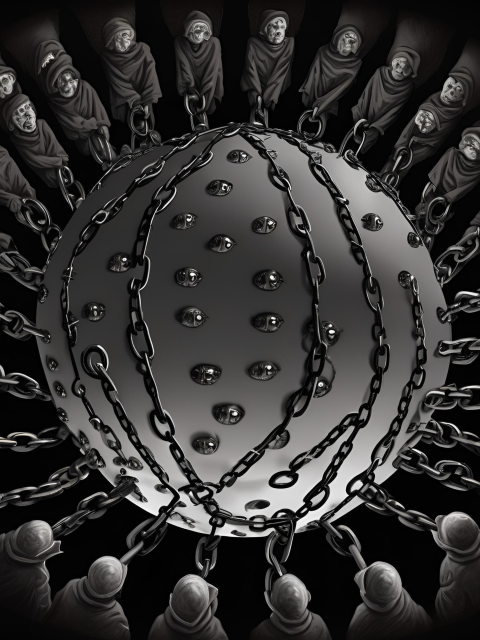
Core Ethical & Professional Guidelines for Artists in the Age of Machine Creativity
Artificial Intelligence has opened a door that artists have been dreaming about for decades.
With a few carefully chosen words, a concept that once lived only in imagination can suddenly appear in front of us—fully rendered, textured, and illuminated as if it had always existed. Worlds can be built in minutes. Visual styles can be explored at incredible speed. Ideas can move from thought to image faster than any traditional medium has ever allowed.
For many artists, this feels like magic.
But every powerful tool eventually comes with its own set of expectations—an evolving code of conduct shaped by the community that uses it.
Photography developed its ethics.
Digital art developed its standards.
Music sampling developed its boundaries.
Generative AI art is now developing its own.
Most of these principles are rarely written down. They exist as unspoken rules shared among responsible creators who understand that innovation without integrity ultimately damages the very medium they love.
These rules are not restrictions.
They are guidelines for stewardship.
Because generative AI is not just another tool.
It is a creative amplifier.
And when something amplifies creativity, it also amplifies responsibility.
Rule 1:
AI Is a Creative Partner, Not the Artist
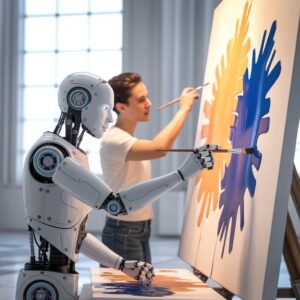
One of the most important principles in generative art is understanding the relationship between the artist and the machine.
AI does not wake up with inspiration.
It does not have emotional experiences.
It does not decide what stories need to be told.
The creative spark still belongs to the human.
AI generates images based on patterns it has learned from vast datasets. The direction, concept, theme, and meaning still originate with the artist guiding the process.
Responsible AI artists treat the technology as a creative collaborator, not a replacement for human imagination.
In practice, this means using AI outputs as starting points rather than finished works. Artists guide the process through prompts, selection, editing, composition adjustments, and further refinement.
The machine may generate possibilities.
But the artist shapes the vision.
Rule 2:
The Artist Is Responsible for the Final Work
AI does not hold ethical responsibility.
The person who publishes, sells, or distributes the artwork does.
Because generative systems can produce unexpected results, artists must review outputs carefully before presenting them publicly. Sometimes images include unintended distortions, derivative visual elements, or problematic representations.
Professional artists take the time to curate and refine what they produce.
That responsibility includes:
- Reviewing every generated piece before sharing it
- Editing and correcting visual issues
- Ensuring the work aligns with the artist’s own values and standards
The simple truth is this:
If your name is attached to the work, you own the responsibility for it.
Rule 3:
Prompting Is a Real Creative Skill
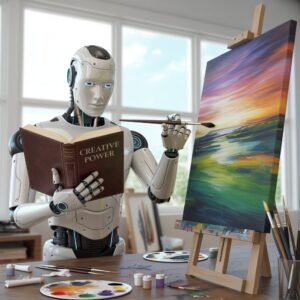
There is a common misconception that AI art is created by simply typing a sentence and pressing a button.
Anyone who has worked seriously with generative systems knows this could not be further from the truth.
Creating strong AI-generated artwork requires an understanding of:
- visual language
- composition
- lighting
- color harmony
- artistic styles
- descriptive precision
Prompting is not just instruction—it is visual storytelling through language.
Experienced AI artists often spend dozens or even hundreds of iterations refining prompts and parameters before achieving the desired result.
In this new creative landscape, prompting has become a legitimate artistic discipline—one that blends design thinking, art direction, and experimentation.
Rule 4:
Do Not Intentionally Imitate Living Artists
One of the most debated topics in generative art revolves around stylistic imitation.
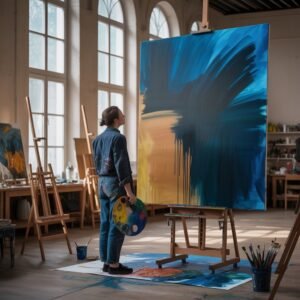
While AI systems can reproduce stylistic patterns, deliberately prompting for images “in the style of” a specific living artist raises serious ethical concerns.
Artists spend years—often decades—developing a recognizable visual voice. That voice represents their identity, their labor, and their livelihood.
Using AI to replicate it without permission undermines that effort.
Responsible creators instead use inspiration as a starting point while working to develop their own distinctive visual direction.
Great artists throughout history have always been influenced by others. But influence is not the same as replication.
True artistry builds something new from inspiration rather than copying what already exists.
Rule 5:
Respect the Creative Ecosystem
Art does not exist in isolation.
Every artist works within a larger creative community—one that includes painters, photographers, designers, illustrators, sculptors, writers, and filmmakers.
AI artists are now part of that ecosystem.
Respecting that community means recognizing the value of human creativity and supporting the artists who continue to push boundaries in every medium.
Responsible AI artists:
- acknowledge inspiration
- support fellow creators
- avoid exploitative uses of generative technology
The goal should never be to replace artists.
The goal should be to expand what artists can create.
Rule 6:
Be Honest About AI Use
Transparency builds trust.
In an era where images can be generated instantly, audiences increasingly care about understanding the creative process behind the work they encounter.
Being open about AI involvement does not diminish the value of the artwork. In fact, it often strengthens the relationship between artist and audience.
Honesty about process allows viewers to appreciate the hybrid nature of the work: human imagination guided through powerful technological tools.
Many artists now distinguish between:
- AI-generated art (primarily machine-created imagery)
- AI-assisted art (AI used as part of a larger creative process)
- traditional art (created entirely by hand)
Clarity prevents confusion and builds credibility.
Rule 7:
Do Not Misrepresent AI Art as Hand-Crafted Work
Closely related to transparency is the issue of misrepresentation.
Passing AI-generated artwork off as entirely hand-drawn or painted work undermines the integrity of the creative field.
Traditional artists dedicate years to mastering techniques such as painting, drawing, and sculpture. Misrepresenting AI art as manual craftsmanship dismisses that investment.
There is no shame in using AI as a creative tool.
But honesty about process is essential to maintaining professional integrity.
Rule 8:
Curation Is Part of the Art
One of the most overlooked aspects of AI art is the importance of selection.
Generative systems can produce hundreds or thousands of images quickly. But quantity does not equal quality.
The artist’s role shifts from pure creation to creative direction and curation.
Professional AI artists develop a trained eye for identifying the strongest compositions, lighting effects, and conceptual expressions among many generated options.
Just because an image can be generated does not mean it deserves to be shown.
True artistry lies in knowing what to keep and what to discard.
Rule 9:
Avoid Harmful or Manipulative Imagery
Generative AI can produce images that look convincingly real.
With that power comes significant ethical responsibility.
Artists should avoid creating imagery designed to deceive audiences, spread misinformation, or damage the reputation of real individuals.
Responsible creators consider the broader impact of the images they produce and distribute.
Creative freedom is important.
But it should never come at the expense of harm or deception.
Rule 10:
Use AI to Expand Creativity, Not Replace It
The greatest potential of generative AI lies in exploration.
Artists can use the technology to:
- test visual ideas quickly
- explore conceptual directions
- prototype designs
- experiment with aesthetics that would otherwise be impossible
When used thoughtfully, AI becomes a creative accelerator.
But if used only to generate quick content with no artistic direction, it becomes little more than automated imagery.
The difference lies in intention.
Artists who approach AI with curiosity and experimentation unlock entirely new creative possibilities.
Rule 11:
Develop a Personal Voice
One of the risks of generative art is aesthetic sameness.
Because many artists use the same tools, models, and prompts, the results can begin to look similar if creators are not intentional.
The artists who stand out in this new landscape are the ones who cultivate a distinct voice.
They develop recognizable themes, aesthetics, and visual philosophies.
AI may help generate images, but artistic identity still comes from the human guiding the process.
Rule 12:
Iteration Is the Real Craft
Perhaps the most important unspoken rule of generative art is this:
The magic rarely happens on the first attempt.
Great AI artwork often emerges after dozens or even hundreds of iterations.
Artists refine prompts.
They adjust parameters.
They experiment with lighting, composition, perspective, and mood.
The process becomes a dialogue between artist and machine.
Each generation informs the next.
Over time, this iterative exploration leads to something far more refined than any single prompt could produce.
Iteration is where experimentation becomes artistry.
Why These Unspoken Rules Matter
Following these guidelines creates a healthier and more sustainable creative environment.
When artists act with transparency, responsibility, and respect, several positive outcomes emerge.
Audiences develop trust in AI artists and their work.
Creative communities remain collaborative rather than competitive or adversarial.
AI art gains legitimacy as a serious artistic medium rather than being dismissed as a technological novelty.
Most importantly, artists maintain their role as the true origin of vision and meaning within the creative process.
What Happens When the Rules Are Ignored
Without ethical standards, powerful tools can quickly damage the communities that use them.
Ignoring these principles can lead to:
- plagiarism and stylistic theft
- deceptive or misleading imagery
- erosion of trust between artists and audiences
- hostility between traditional and AI-based creators
- the perception that AI art lacks authenticity
If these issues dominate the conversation, generative art risks being seen not as innovation but as exploitation.
That outcome would be a loss for everyone.
The Future of AI Art Belongs to Responsible Creators
Generative AI is one of the most transformative tools ever introduced into the creative world.
But technology alone does not determine the future of art.
Artists do.
The individuals who choose to use these systems—how they use them, why they use them, and the integrity they bring to the process—will ultimately shape how generative art is understood by the world.
The unspoken rules of AI art exist for a simple reason:
To ensure that creativity evolves without losing its humanity.
When artists combine imagination, ethics, curiosity, and discipline, generative AI becomes something extraordinary.
Not a replacement for human creativity…
But one of the most powerful tools ever created to amplify it.