
Looking Beneath the Surface Before We Continue the Renovation
Project Renaissance began as a complete renovation of The Haus Of Legends website. After more than two years of building the site from the ground up, learning as I went, adding new tools and services, solving problems as they appeared, and continually adapting the website to support a growing creative business, the time had come to step back and look at the whole thing differently.
We began the renovation in phases so that we could understand what was working, what was no longer serving us, and what needed to change. That process carried us through the first stages of Project Renaissance and toward Phase IV of the Website Renovation.
Then we paused.
Not because the renovation had gone wrong, but because we realized we were renovating only part of the machine. The easiest way to explain it is with a car.
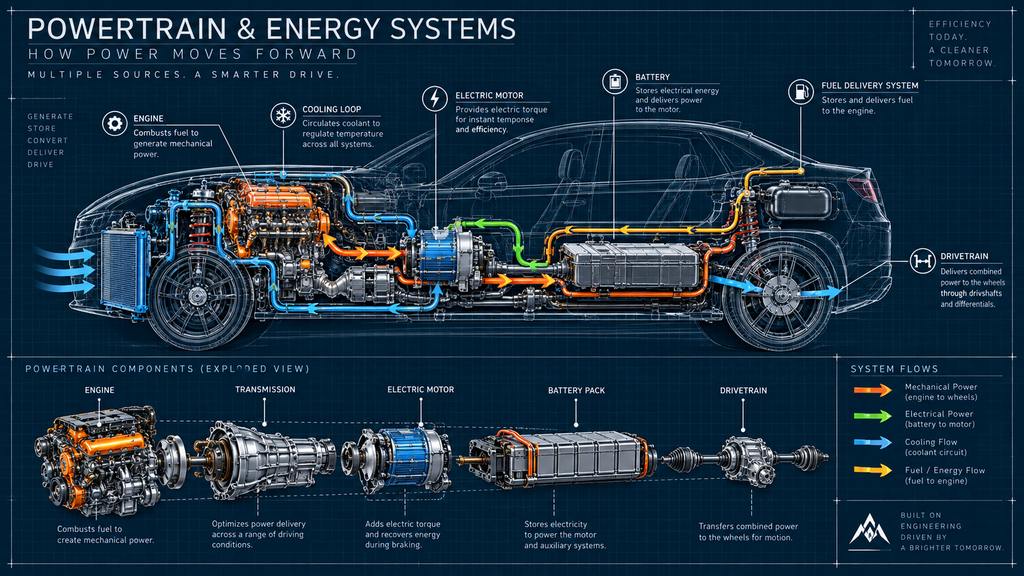
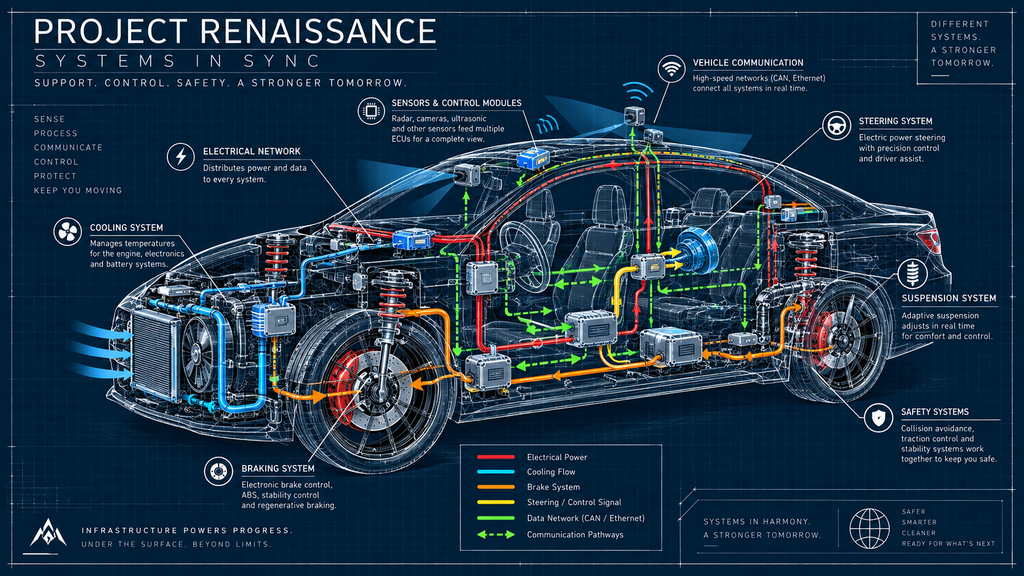
You can restore the body, replace the upholstery, update the dashboard, polish the paint, improve the lighting, and make the car look completely different. But underneath all of that are the systems that actually make the car work: the engine, electrical system, cooling system, transmission, brakes, suspension, fuel system, sensors, and all of the connections between them. Eventually, if you are serious about restoring the car, you have to open the hood.
That is where Project Renaissance is now.
Why We Paused the Website Renovation
The Website Renovation focuses on the part of The Haus Of Legends that visitors interact with: the structure, navigation, content, products, ecommerce experience, usability, presentation, trust, and overall experience of moving through the site.
But as we worked through that renovation, we began encountering questions that lived underneath WordPress. How is the hosting environment configured? What databases exist? How is PHP set up? What controls the domain and DNS? What caching systems are active? What is happening with backups, logs, SSL, scheduled processes, and the other systems supporting WordPress?
Those questions matter because the visible website and the infrastructure underneath it are connected. If the foundation is unstable, eventually the problems reach the surface.
So rather than continue deeper into Phase IV while those questions remained unanswered, we decided to pause the Website Renovation long enough to create a second, coordinated part of Project Renaissance:
Project Renaissance — Infrastructure Reset.
The Website Renovation works on the car people see and drive. The Infrastructure Reset opens the hood and looks at what is going on under the car..
Two Views of the Same Website
One of the biggest changes in how we are now working is that Nova and I have access to two different views of The Haus Of Legends.
The first comes through WPVibe, which allows us to work from inside WordPress. From there we can inspect the WordPress side of the website: plugins, themes, users, settings, scheduled tasks, content, database information, and many of the systems WordPress itself understands.
That view is essential, but WordPress is only one part of the website. The second view comes through our new connection to the Hostinger hosting environment, using Codex and Hostinger’s MCP tools. That allows us to look at the systems surrounding WordPress: hosting configuration, domains, DNS, PHP, SSL, databases, files, caching, and other infrastructure that WordPress alone cannot fully explain.
Neither connection replaces the other. They complement one another.
Going back to the car metaphor, WPVibe helps us understand what is happening from the driver’s seat and inside the vehicle’s control systems. Hostinger gives us access to the engine bay, wiring, drivetrain, and the mechanical systems underneath.
For the first time in Project Renaissance, we can begin examining the website as a complete system instead of looking at it from only one side.
Why Create Two Parts of Project Renaissance?
We could have placed everything into one enormous renovation project, but separating the work makes it easier to understand what we are doing and why.
The Website Renovation asks questions about the experience.
Does the website make sense? Can visitors find what they need? Are the products presented well? Is the store easy to use? Does the site communicate who The Haus Of Legends is and what we are building?
The Infrastructure Reset asks different questions.
Are the systems underneath the website secure? Are they configured intentionally? Do we understand the databases, DNS, caching, backups, logs, integrations, and server settings? If something fails, can we identify where the problem came from? Can we recover?
Both projects serve the same website, but they are solving different kinds of problems. Keeping them separate also gives us something equally important: documentation. At the end of Project Renaissance, we should not only have a renovated website. We should understand how it works.
What an Infrastructure Reset Actually Means
The word reset can sound dramatic, but this is not about wiping everything out and starting over.
This is about understanding what has accumulated over more than two years of building and determining what belongs, what needs improvement, what needs further investigation, and what should become part of the long-term maintenance of the site.
It is the difference between a car that has been repaired whenever something breaks and a car whose systems have finally been inspected together.
We are establishing a baseline first. Then we investigate. Then we make a plan. Only after we understand what we are looking at do we begin changing anything. That approach has become one of the most important rules of Project Renaissance:
Read first. Understand second. Change last.
What the Infrastructure Reset Will Cover
Over the coming phases, we will work through the infrastructure by subject rather than trying to fix everything at once. That includes:
- access, visibility, and establishing the baseline;
- security and ownership;
- hosting and server configuration;
- domains, DNS, and email infrastructure;
- databases, backups, and recovery;
- WordPress integrations and background systems;
- files, logs, and diagnostics;
- hardening, optimization, and long-term maintenance;
- final validation and documentation.
Each phase will follow the same workflow we are using throughout Project Renaissance: understand the problem, establish the current state, investigate, plan, make controlled changes, test the result, document what happened, and then close the phase properly.
And, just like the Website Renovation, each Infrastructure Reset phase will become part of the Project Renaissance: Renovations & Resets journal series.
The successes will be documented. The failures will be documented. The workarounds will be documented. So will the moments when we discover that something we thought was a problem was actually doing exactly what it was supposed to do. That is part of the education.
What This Means for The Haus Of Legends
The immediate benefit is practical. A better-understood infrastructure should make the website easier to secure, maintain, troubleshoot, recover, and eventually optimize.
But there is another benefit that matters just as much. We are creating a map of the machine.
When something breaks in the future, the starting question should no longer be, “What on earth happened?” It should become, “Which system are we looking at?”
That is a very different relationship with technology. I still do not need to become a hosting engineer or professional web developer. But I do need to understand enough to ask useful questions, recognize what I am looking at, and make informed decisions about the website that supports my business.
That is exactly what Project Renaissance has increasingly become. It is not only about renovation. It is about learning how to understand the thing you built.
Where the Infrastructure Story Begins
The first phase of the Infrastructure Reset was about visibility. Before we could repair, optimize, clean up, or harden anything, we needed to know what we could actually see.
That meant establishing the two views we now have, learning the limits of each connection, finding new ways around the limitations we encountered, and creating the baseline that the rest of the Infrastructure Reset will build upon.
That story is the subject of the first Infrastructure Reset phase post:
Renovations & Resets — Infrastructure Phase I:
Before You Fix a Website, Learn How to See It
It is where we open the hood for the first time. And from here forward, Project Renaissance will continue from both sides: renovating what people experience on the surface while resetting and strengthening the systems underneath.
Because a beautiful car is one thing. A beautiful car that you understand, can maintain, and trust to get you where you are going is something entirely different.
And in today’s world, where nearly everything is plugged into a computer and diagnosed for you, an important edge to have is understanding the system you are diagnosing.
You do not need to be a car mechanic to figure out what is wrong.
But it certainly helps to know where to put the gas—and where the engine sits.