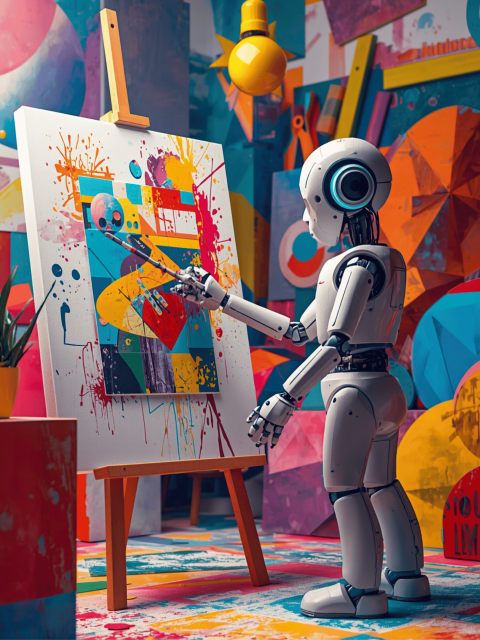
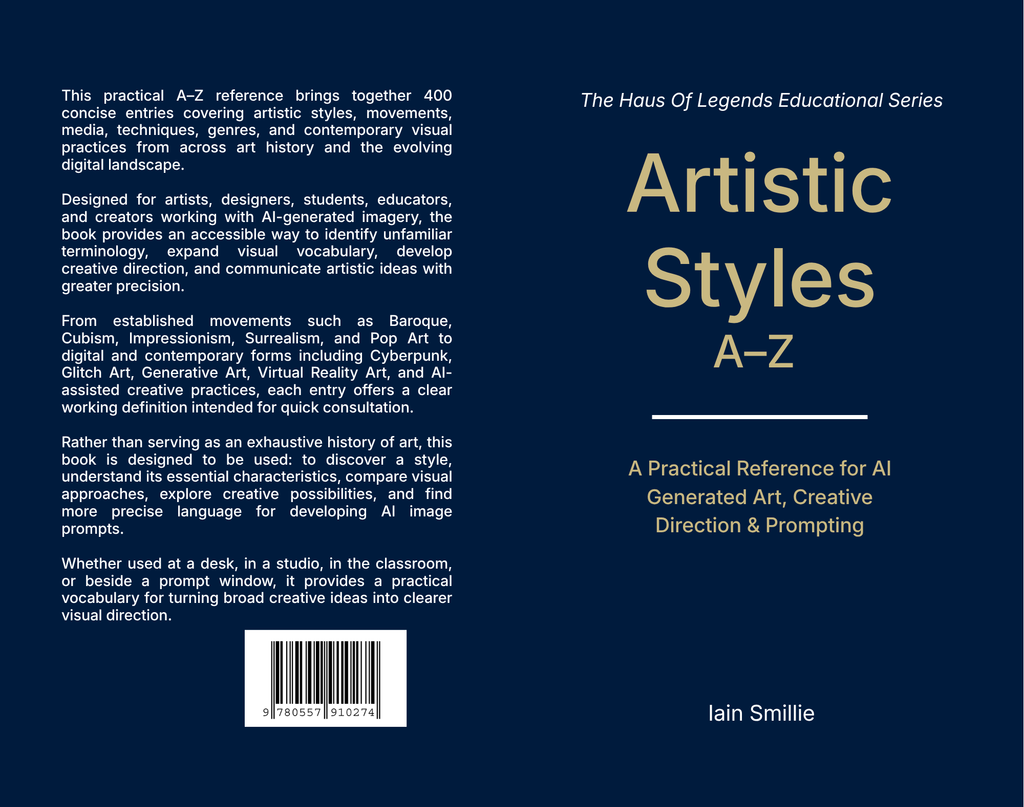
Artistic Styles A–Z is a practical new reference for artists, designers, photographers, writers, creative directors, AI image creators, and anyone interested in using artistic styles and art movements to create more intentional visual work with generative AI.
Part of The Artistic Styles and Movements Series, Artistic Styles A–Z was created to answer a deceptively simple question:
What does it actually mean when we ask for an image in a particular artistic style—and how can we use that knowledge to create better images?
With today’s AI image generators, creating an image is often as easy as describing what we want to see. But getting an image that has a specific visual identity, atmosphere, aesthetic language, or artistic character requires something more.
It requires vocabulary. It requires an understanding of visual characteristics. And, most importantly, it requires knowing how to translate an artistic idea into language that can become part of an effective prompt. That is where Artistic Styles A–Z comes in.
What Is Artistic Styles A–Z?
Artistic Styles A–Z: A Practical Reference for AI Generated Art, Creative Direction & Prompting is designed as a working reference rather than a traditional art-history textbook. The book explores artistic styles and visual languages in a way that makes them useful for contemporary creative work, particularly in the rapidly developing world of AI-generated imagery. Rather than simply providing a list of style names, the goal is to help readers understand what those names actually represent.
An artistic style is more than a label.
When we describe something as Art Nouveau, for example, we are invoking a visual language associated with flowing organic lines, botanical motifs, decorative ornamentation, elegant asymmetry, stylized natural forms, and distinctive linework. Likewise, Art Deco suggests geometric structure, symmetry, streamlined forms, luxury, ornament, metallic surfaces, and a particular relationship between architecture, design, and visual composition.
Impressionism can suggest broken or visible brushwork, atmospheric light, shifting color, painterly surfaces, and an interest in the perception of a moment rather than precise photographic representation.
Understanding those characteristics gives us considerably more creative control than simply knowing the name of the style. That distinction is central to Artistic Styles A–Z.
Why Does Understanding Artistic Style Matter?
One of the most important lessons for anyone working with generative AI is that what you ask for is only part of the equation. How you ask for it matters.
A prompt that says: “A woman standing in a garden.” establishes a subject and setting, but leaves enormous amounts of visual interpretation to the image generator.
What kind of garden? What period? What artistic tradition? What medium? What kind of lighting?What emotional atmosphere? What visual language?
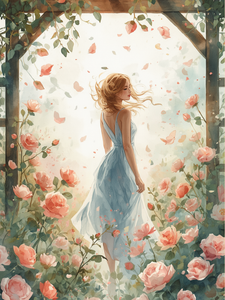
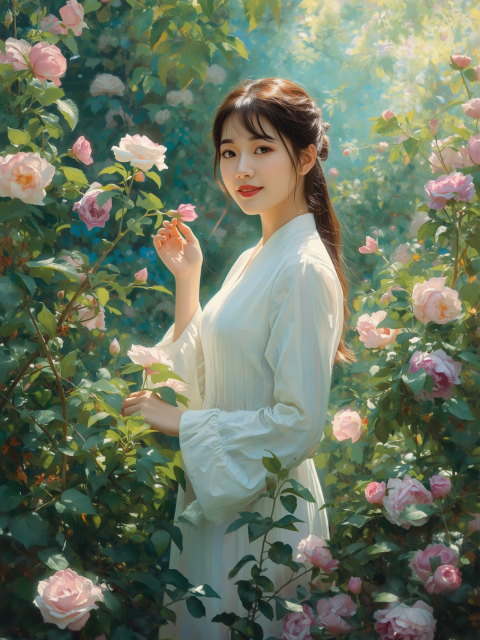
Now consider:
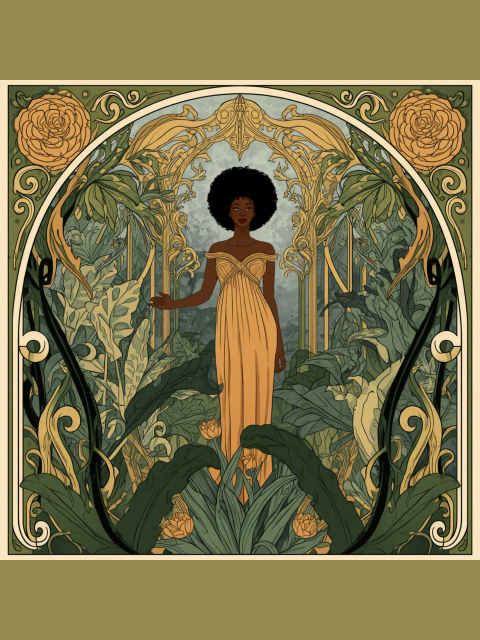
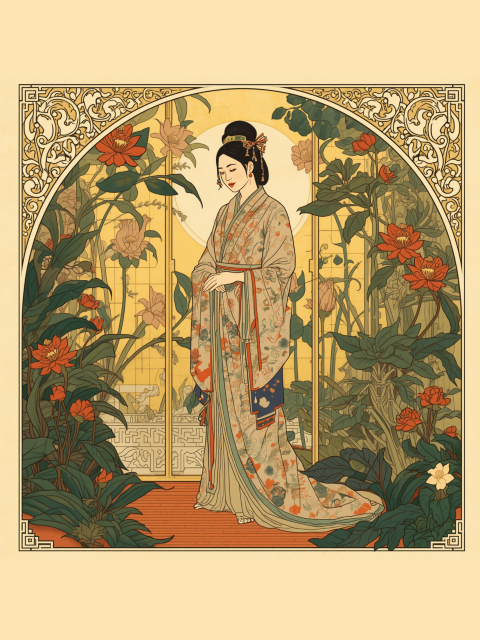
“A woman standing in an ornate botanical garden, Art Nouveau aesthetic, flowing organic linework, stylized floral ornament, elegant asymmetry, decorative composition, soft atmospheric lighting.”
The subject has not changed dramatically. The creative direction has. Artistic style becomes a way of communicating how the image should look and feel, rather than merely describing what should appear in it.
Modern AI image-generation systems can respond to artistic movements, visual aesthetics, mediums, photographic approaches, illustration techniques, historical periods, and other stylistic descriptors. Adobe, Runway, Microsoft and other AI platforms similarly recommend using artistic styles, movements, mediums, lighting, composition, and visual characteristics to guide image generation.
The more familiar you become with the vocabulary of visual art, the greater your ability to direct the machine rather than simply react to whatever it produces.
Artistic Style Is a Creative Tool
For an artist, understanding style can provide inspiration. For a designer, it can provide visual direction. For a photographer, it can provide a conceptual framework. For a creative director, it can provide a shared vocabulary for communicating an aesthetic. For an AI image creator, it can become one of the most useful components of a prompt. This is one of the reasons artistic styles are particularly valuable in generative AI.
A style name can function as a kind of creative shorthand.
Instead of attempting to describe every visual characteristic independently, you can begin with an established artistic language and then refine it.
For example:
Subject + Style
A majestic castle in the mountains, Romanticism.
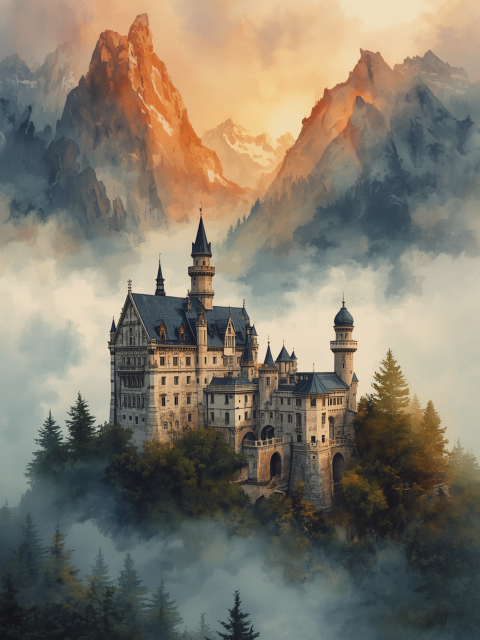
Then expand:
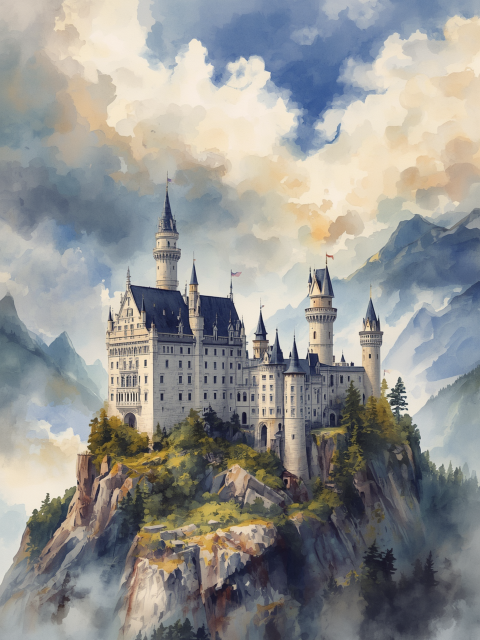
Subject + Style + Characteristics
A majestic castle in the mountains, Romanticism, dramatic atmosphere, sublime landscape, monumental scale, turbulent clouds, emotional natural light.
And then expand further:
Subject + Style + Characteristics + Medium + Composition
A majestic castle in the mountains, Romanticism, dramatic sublime landscape, monumental scale, turbulent clouds, atmospheric perspective, oil painting, sweeping composition, dramatic natural light.
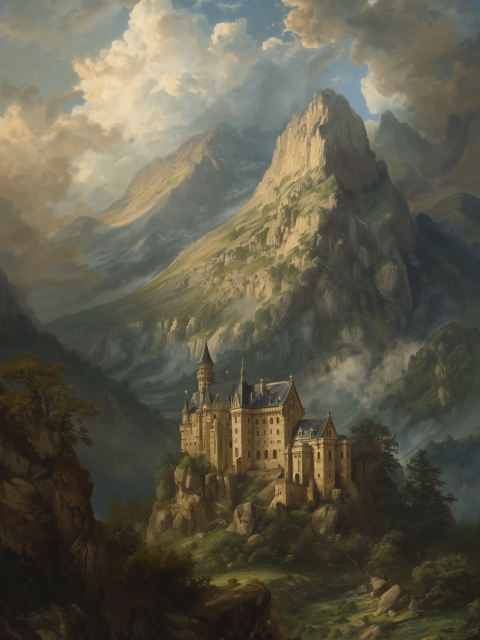
The style provides the foundation. The descriptive characteristics provide specificity. The additional prompt elements provide creative direction. This approach turns an artistic style from a simple label into a usable visual vocabulary.
Who Is Artistic Styles A–Z For?
The book is intentionally useful to a broad creative audience. It can benefit:
- AI artists and AI image creators who want greater control over the visual results produced by generative image tools.
- Artists and illustrators who want to explore unfamiliar artistic traditions, movements, and visual approaches.
- Graphic designers looking for visual references and creative direction.
- Photographers interested in translating historical or artistic aesthetics into photographic concepts.
- Creative directors and art directors who need a vocabulary for communicating visual direction.
- Writers and storytellers who want to visualize characters, environments, worlds, and scenes.
- Authors and publishers developing book covers, promotional artwork, or visual identities.
- Students and beginners who are just beginning to learn about art movements and artistic vocabulary.
- Educators and mentors who want a practical reference for introducing artistic styles in the context of contemporary creative technology.
And perhaps most importantly, it is for curious creators who have ever looked at an image and thought:
“I know what I want this to feel like. I just don’t know what to call it.”
That is precisely the kind of problem a visual vocabulary can help solve.
How Do You Use the Book?
The simplest way to use Artistic Styles A–Z is as a creative reference while developing an idea or writing an AI image prompt.
Imagine you have an idea for an image but haven’t decided how it should look.
You might begin with the subject:
A mysterious woman standing in an ancient forest.
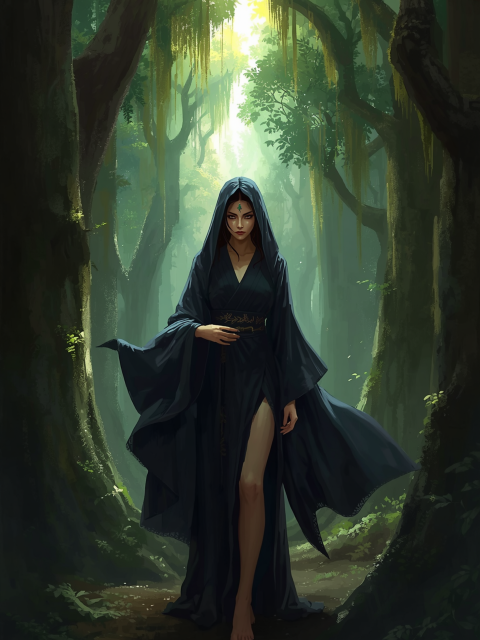
You could then explore different artistic directions.
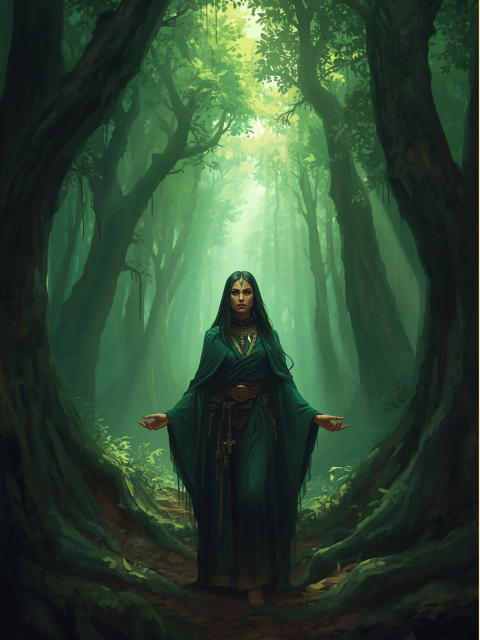
Perhaps Symbolism would emphasize mystery, metaphor, and psychological meaning.
Perhaps Romanticism would emphasize the sublime power of nature.
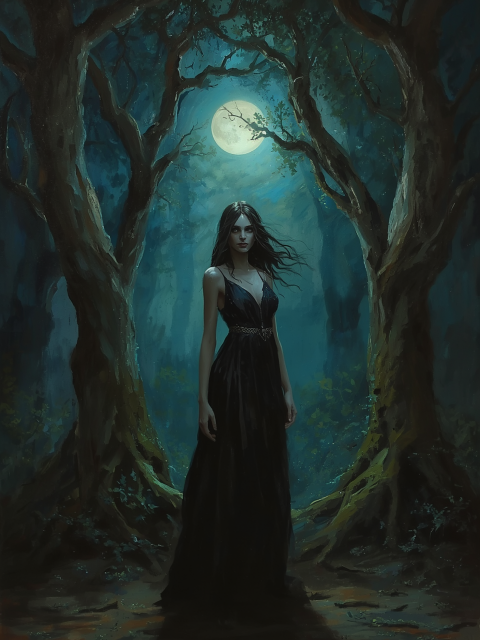
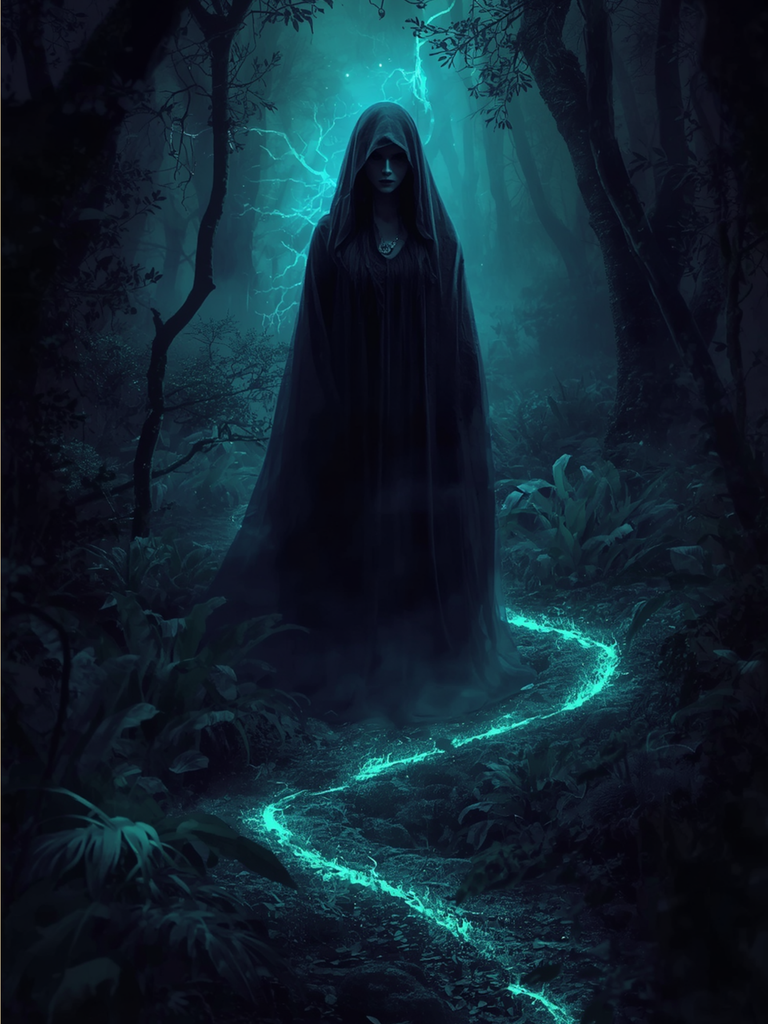
Perhaps Surrealism would introduce dreamlike or impossible elements.
Perhaps Gothic would emphasize darkness, architecture, atmosphere, and the uncanny.
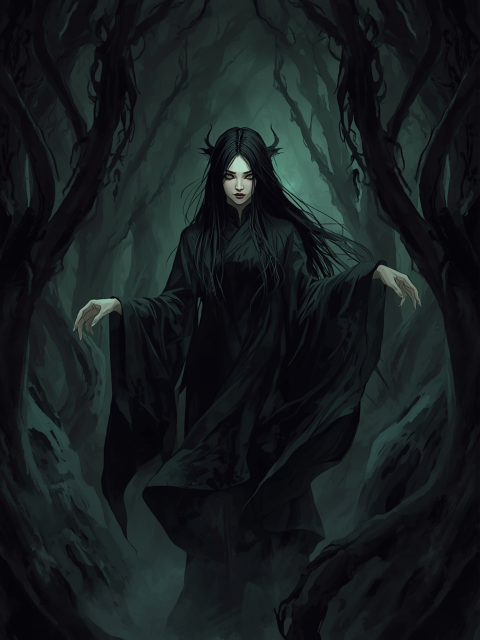
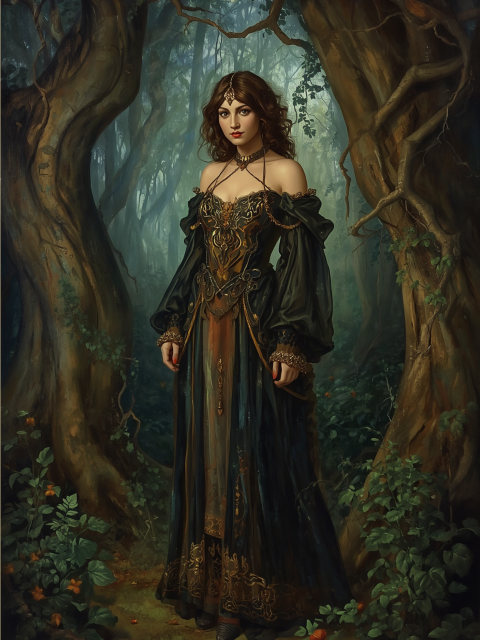
Perhaps Art Nouveau would transform the forest into an elegant decorative environment of organic curves and botanical ornament.
The subject remains essentially the same. The artistic language changes. This makes artistic styles useful not only after you have written a prompt, but before you write it.
The book can help you discover what your image should look like in the first place.
From Style Name to Style Characteristics
One of the most useful approaches to prompting is to move beyond simply naming a style.
Instead of:
“Art Nouveau.”
consider:
“Art Nouveau, flowing whiplash curves, botanical ornament, elegant asymmetry, decorative linework, floral motifs.”
Instead of:
“Film Noir.”
consider:
“Film noir atmosphere, high-contrast lighting, deep shadows, dramatic silhouettes, hard directional light, atmospheric urban setting.”
Instead of:
“Impressionism.”
consider:
“Impressionist painting, visible broken brushwork, luminous natural light, atmospheric color, soft edges, shifting optical color.”
The difference is important. The style name gives the AI a conceptual direction. The characteristics give it additional visual instructions. This principle is increasingly reflected in contemporary AI prompting guidance: style terms can establish an overall aesthetic, while details involving medium, texture, color, lighting, composition, and technique can further refine the result.
Why Artistic Styles Can Improve AI Art Prompts
AI image generation can produce technically impressive images from surprisingly simple prompts. But simple prompts can also produce predictable results. The more creators learn about visual language, the more possibilities become available. Adding an artistic style can help establish:
- Visual identity — giving an image a recognizable aesthetic direction.
- Mood and atmosphere — helping communicate emotional qualities such as drama, serenity, mystery, nostalgia, elegance, or tension.
- Color language — encouraging particular relationships between hue, saturation, contrast, and tonal values.
- Composition — suggesting ways subjects, shapes, architecture, figures, and negative space may be organized.
- Surface and texture — influencing whether an image feels painterly, photographic, graphic, tactile, ornamental, rough, polished, or handmade.
- Line and form — helping establish whether forms are geometric, organic, expressive, precise, decorative, simplified, or distorted.
- Historical context — connecting an image to a particular artistic period or movement.
- Creative consistency — helping establish a visual direction that can be carried across a series of images.
That last benefit is particularly important for artists and designers working on collections, books, campaigns, brands, visual stories, and other bodies of work. A style can become part of a visual system.
Artistic Styles and AI Prompting
A useful way to think about an AI image prompt is as a combination of creative instructions.
For example:
- Subject — What is being depicted?
- Environment — Where does it exist?
- Style — What artistic or visual language should influence it?
- Medium — What should it appear to be made with?
- Characteristics — What specific qualities should be visible?
- Lighting — How should the scene be illuminated?
- Composition — How should the image be arranged?
- Mood — What should the viewer feel?
A simple prompt might therefore evolve from:

“A castle in the clouds“
to:
“A fantastical castle floating among luminous clouds, Romanticism, sublime natural atmosphere, monumental architecture, dramatic sunlight breaking through storm clouds, sweeping cinematic composition, ethereal mood.“

The artistic style does not replace the rest of the prompt. It gives the rest of the prompt a visual context. This is one of the most powerful reasons to study art styles when working with generative AI. You are not simply learning art history. You are learning a language of creative direction.
The Artistic Styles and Movements Series
Artistic Styles A–Z is part of a larger educational project: The Artistic Styles and Movements Series.
The series is built around a simple idea: understanding the history, vocabulary, characteristics, and visual language of art can make contemporary creative tools more useful. Artificial intelligence has made it possible for virtually anyone to experiment with visual styles that once required years of specialized training. But accessibility does not automatically create understanding.
Knowing that something is called “Surrealism” is different from understanding the ideas and visual characteristics associated with Surrealism. Knowing the word “Baroque” is different from understanding its dramatic lighting, movement, ornamentation, theatricality, and emotional intensity. Knowing the term “Bauhaus” is different from understanding its relationship to geometry, functionality, structure, typography, design, and the relationship between art and industry.
The series therefore approaches artistic styles and movements as creative tools as well as historical subjects.
Where Artistic Styles A–Z Fits
- The broader Artistic Styles and Movements Series provides the larger educational framework.
- Artistic Styles A–Z serves as the practical reference within that framework.
Think of the relationship this way:
- The Series teaches you to understand the language.
- Artistic Styles A–Z gives you a practical vocabulary to use that language.
Together, they connect art history and contemporary creative practice. This is particularly relevant in the age of generative AI, where artistic vocabulary can move directly from the study of visual culture into the creative process of generating new imagery.
Learning Art History Through AI
There is another benefit to understanding artistic styles that extends beyond prompting. It can change the way you look at art. Once you begin recognizing the characteristics of artistic movements, historical periods, techniques, and visual traditions, images become more informative. You begin noticing relationships between line, color, composition, symbolism, architecture, materials, light, texture, subject matter, and cultural context.
- You begin asking different questions.
- Why does this image feel dramatic?
- Why does this composition feel balanced?
- Why does this painting feel dreamlike?
- Why does this design feel luxurious?
- Why does this photograph feel cinematic?
- Why does this illustration feel playful?
- Often, the answer is embedded in the visual language.
- Understanding artistic styles gives you a framework for identifying that language.
And once you can identify it, you can begin experimenting with it.
The Benefit for Creative Direction
For professional creatives, this vocabulary has another practical advantage: communication.
Imagine telling a designer:
“Make it look artistic.”
That instruction leaves almost everything open to interpretation.
Compare it with:
“Let’s explore an Art Deco direction—strong geometric forms, symmetry, elegant ornament, streamlined architecture, metallic accents, and a sense of 1920s luxury.”
The second direction is considerably more actionable. The same principle applies when working with AI. A strong creative brief does not simply say what should exist. It communicates how the finished work should behave visually. Artistic styles give creators a vocabulary for doing exactly that.
A Reference for Experimentation
Artistic Styles A–Z should not be treated as a collection of rules. Artistic styles are not formulas. They are starting points. One of the most interesting possibilities of generative AI is the ability to experiment with combinations that might have been difficult, expensive, or impossible to visualize traditionally.
- A creator might explore a fantasy landscape through the visual language of Romanticism.
- A futuristic city might be imagined through Art Deco principles.
- A portrait might combine photographic realism with painterly characteristics.
- A mythical creature might be interpreted through Symbolism.
- A contemporary fashion concept might borrow from Surrealism, Constructivism, or Pop Art.
- The purpose is not to reproduce history perfectly.
The purpose is to understand the visual language well enough to use it intentionally.
From Inspiration to Intention
Perhaps the greatest benefit of learning artistic styles is the movement from inspiration to intention. Without a vocabulary, a creator may know that an image looks “cool,” “dark,” “dreamlike,” “old-fashioned,” “elegant,” or “strange.” With a vocabulary, those impressions can become creative decisions.
Instead of saying:
“I want something dreamy.” you might recognize that you want elements associated with Surrealism.
Instead of saying:
“I want something elegant and decorative.” you might explore Art Nouveau.
Instead of:
“I want something dramatic and luxurious.” you might investigate Baroque.
Instead of:
“I want something geometric and sophisticated.” you might explore Art Deco.
- The vocabulary gives the idea a direction.
- The direction becomes a prompt.
- The prompt becomes an image.
- And the image becomes part of the creative process.
A Bridge Between Art and AI
That is ultimately what Artistic Styles A–Z is intended to be: a bridge between the language of art and the language of generative AI.
AI can generate images remarkably quickly. But speed does not eliminate the need for creative judgment. If anything, it increases it. When thousands of visual possibilities can be generated in minutes, the ability to recognize, evaluate, describe, refine, and direct visual ideas becomes increasingly valuable. Understanding artistic styles gives creators another level of control.
It helps answer not only:
- “What do I want to see?”
but:
- “How do I want it to look?”
- “What visual language should it speak?”
- “What characteristics will communicate that idea?”
And:
- “How can I express those instructions in a prompt?”
That is the practical purpose behind Artistic Styles A–Z.
Start With the Style. Then Make It Your Own.
Artistic Styles A–Z is not intended to replace creativity, artistic judgment, experimentation, or traditional art education. It is intended to make those things more accessible and more useful in a new creative environment.
Whether you are an experienced artist exploring AI image generation, a designer looking for new visual directions, a writer visualizing an imagined world, a student learning about art movements, or simply someone fascinated by the possibilities of generative AI, understanding artistic styles can expand the vocabulary available to you.
The more styles you understand, the more creative directions you can explore. The more characteristics you recognize, the more precisely you can describe what you want. And the more precisely you can communicate your vision, the more intentional your AI-generated artwork can become.
Artistic Styles A–Z is a reference for that journey.
It is an invitation to explore the history of visual expression, discover the characteristics that define different artistic languages, and bring that knowledge into the contemporary creative process. Because the future of AI-generated art does not belong solely to the technology. It belongs to the people who learn how to direct it.
Explore the styles. Learn the language. Build the vision. Create something legendary.
About the Artistic Styles and Movements Series
The Artistic Styles and Movements Series is an educational reference collection from The Haus Of Legends exploring the history, characteristics, vocabulary, and practical creative applications of artistic styles and movements.
The series is designed for contemporary creators who want to understand where visual styles come from, what makes them recognizable, and how that knowledge can be applied to modern creative practice—including AI-generated art, creative direction, visual development, illustration, design, photography, and prompting.
Artistic Styles A–Z: A Practical Reference for AI Generated Art, Creative Direction & Prompting serves as a practical reference volume within the series, connecting the study of artistic styles with their use as contemporary creative and prompting tools.
Continue Learning
This article is part of The Haus Of Legends educational ecosystem. Continue with: