You have an idea for an image. Perhaps it is a castle floating above the clouds, a mysterious figure standing in an ancient forest, or a futuristic city glowing beneath an unfamiliar sky. You can picture the atmosphere. You have some sense of the colors, the lighting, and the feeling you want to create.
Then you open an AI image generator—and discover that describing the image is a creative challenge of its own. Where do you begin? Which details matter? How do you explain what you can see in your imagination?
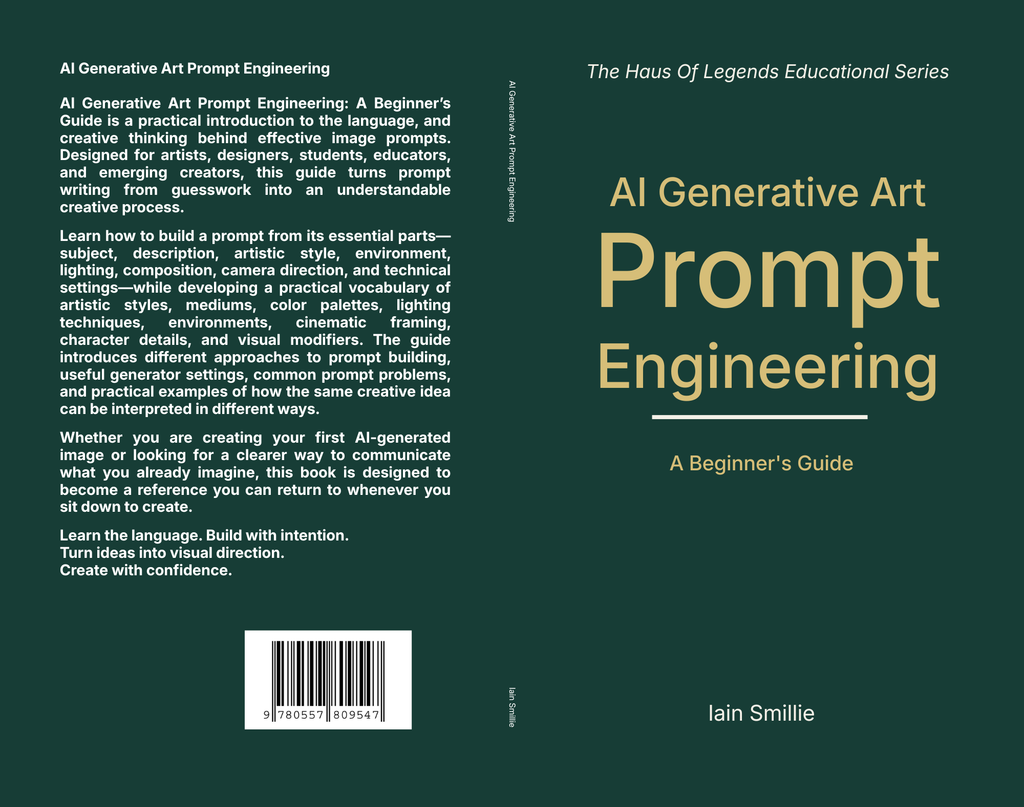
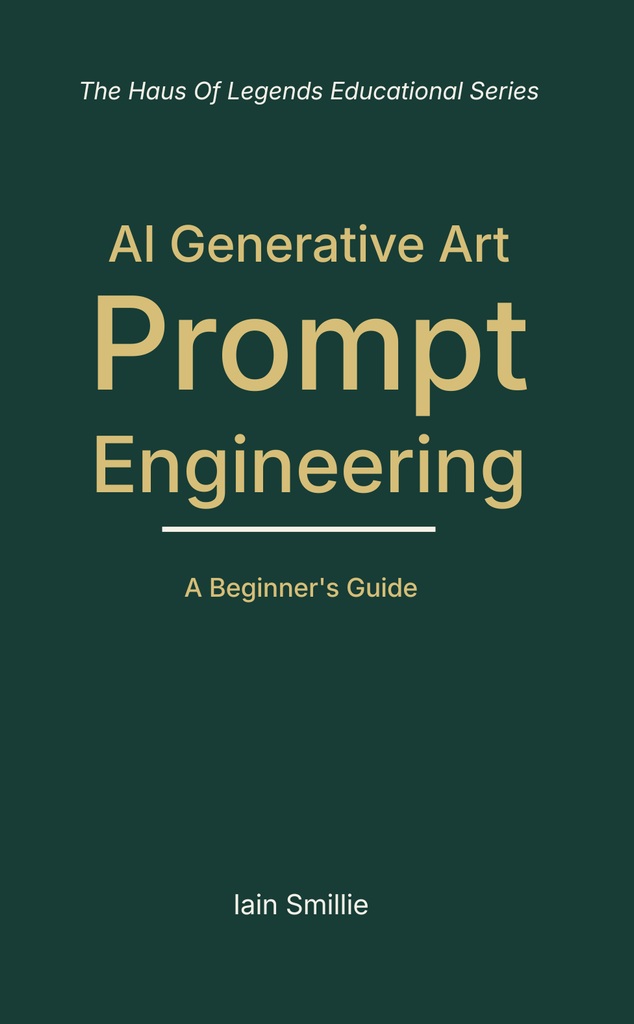
AI Generative Art Prompt Engineering: A Beginner’s Guide was created to help answer those questions.
Now available in The Haus Of Legends catalog, this practical guide introduces the vocabulary, structure, and creative thinking behind effective AI image prompts. It helps beginners move from typing an idea and hoping for the best toward a more deliberate process of describing, evaluating, and refining their visual direction.
What Is AI Generative Art Prompt Engineering?
The title may sound technical, but the starting point is familiar: learning how to communicate an idea clearly.
In AI image generation, a prompt gives the system instructions about the image you want it to create. Those instructions might describe a subject, a setting, an artistic style, lighting, composition, or other visual qualities.
Prompt engineering involves choosing and organizing those instructions, then adjusting them in response to the results. For an artist or creative beginner, that means asking useful questions:
- What should appear in the image?
- How should it look?
- What should draw the viewer’s attention?
- What atmosphere should it create?
- And which words will help communicate those choices?
This book approaches prompt writing as a creative skill that can be developed through understanding and practice.
Why the Words Matter
Consider this simple prompt:
A castle in the clouds.
It establishes an idea, but leaves many decisions open.
Is the castle a distant silhouette or the main subject? Are the clouds bright and welcoming or dark and threatening? Should the image resemble a photograph, a watercolor painting, or a fantasy illustration?
Now consider a more developed version:
A weathered stone castle floating above a sea of clouds, distant mountain peaks below, warm sunrise illuminating the towers, sweeping panoramic composition, watercolor illustration, quiet and dreamlike atmosphere.
The central idea remains the same. The instructions give it a more specific visual direction.
“Weathered stone” describes the architecture. “Warm sunrise” establishes lighting. “Panoramic composition” suggests how the scene should be arranged. “Watercolor illustration” identifies a medium, while “quiet and dreamlike” describes the intended atmosphere.
Each detail contributes something the creator has chosen.
The goal is not to make every prompt longer. It is to understand which details help express the image you want.
Building a Prompt, One Decision at a Time
A blank prompt box can feel surprisingly intimidating. The book helps make that starting point more manageable by introducing the essential components of an image prompt.
These include:
- Subject: What is being depicted?
- Description: Which features or details define it?
- Artistic style: What visual language should influence the result?
- Environment: Where does the subject exist?
- Lighting: How should the scene be illuminated?
- Composition: How should the image be arranged?
- Camera direction: What viewpoint or framing should shape the scene?
- Technical settings: Which available controls affect the output?
These components give readers a way to examine an idea before trying to describe everything at once.
You might begin with a subject, then decide on its surroundings. From there, you can consider lighting, style, and the viewer’s position. Each choice makes the direction clearer. You also begin recognizing when a detail is unnecessary—or when two instructions are pulling the image in different directions.
A Visual Vocabulary You Can Actually Use
Sometimes the difficulty is not knowing what you want. It is knowing what to call it. You might recognize that an image feels atmospheric, cinematic, delicate, dramatic, or painterly without knowing which characteristics create that effect.
The guide introduces a wide-ranging visual vocabulary covering artistic movements, mediums, color palettes, atmospheric effects, cinematic framing, character details, rendering terms, and prompt modifiers. That vocabulary helps turn broad impressions into more specific instructions.
Instead of asking only for “dramatic lighting,” you might describe a strong beam of light entering through a window, illuminating the subject while the room remains in shadow.
Instead of requesting a “dreamy landscape,” you might describe soft mist, muted colors, distant forms fading into the atmosphere, and gentle morning light.
The words become useful because they identify visible qualities. As readers develop that vocabulary, they gain more ways to communicate their ideas—and more ways to understand why a result does or does not feel right.
The First Image Is Part of the Process
One of the most useful habits in AI art is learning to look carefully at the result.
An image may be attractive while still missing the intention behind the prompt. The subject might be too small. The lighting might feel too harsh. A scene intended to feel peaceful might appear crowded and theatrical. Those differences give you something to work with.
The book explores prompt-building methods, common troubleshooting problems, and practical examples that help readers approach revision with a clearer purpose. Rather than changing everything immediately, you can identify the part of the image that needs attention.
- Does the composition need more breathing room?
- Does the description need to establish the subject more clearly?
- Would a different viewpoint communicate the idea better?
Prompt writing becomes a continuing conversation between your intention and the image in front of you. Your judgment guides the next decision.
Understanding Different Image Generators
The guide also includes examples showing how the same creative idea can be interpreted across multiple AI image-generation systems, along with an introduction to useful generator settings. This gives readers a way to think about prompting beyond a single result.
As you experiment, you can compare how a system interprets your instructions and learn which adjustments help communicate your direction. The aim is to build an adaptable process: describe the idea, examine the image, and refine the instructions.
A glossary of key terms provides an additional reference when unfamiliar language appears.
Who Is This Book For?
AI Generative Art Prompt Engineering is designed for beginners and emerging creators who want a clearer understanding of AI image prompting.
It is useful for artists exploring generative tools, designers developing visual concepts, students learning a new creative process, and educators introducing AI imagery.
It is also for anyone who has looked at a generated image and thought:
“That is interesting—but it is not quite what I meant.”
You do not need to arrive with an extensive technical vocabulary. Developing a useful vocabulary is part of the learning process.
Connecting Art Knowledge with Creative Practice
Part of The Haus Of Legends Educational Series, this guide supports the broader purpose of our Reference Library: helping people understand creative tools and use them with greater intention.
It also connects naturally with Artistic Styles A–Z.
A reference to artistic styles helps you explore possible visual directions. A guide to prompt engineering helps you organize and communicate those directions. Together, these skills help bring an imagined image closer to a workable creative brief. Your taste, curiosity, and judgment remain central. The prompt gives those choices a place to begin.
Available Now from The Haus Of Legends
AI Generative Art Prompt Engineering: A Beginner’s Guide is available now as a 66-page paperback, in a compact 5 × 8-inch format, with a black-and-white interior.
Whether you are creating your first AI image or looking for a more purposeful way to develop your prompts, the book offers a practical introduction to creating with clearer direction. Start with an idea. Find the words that describe it. Then use the results to decide what comes next.
Explore AI Generative Art Prompt Engineering in The Haus Of Legends catalog.
Continue Learning
This article is part of The Haus Of Legends educational ecosystem. Continue with: