By Iain Smillie, Founder — The Haus of Legends
This is not a defense of AI. It is a demand for honesty.
The debate around Generative AI and visual art has become one of the most emotionally charged, politically weaponized, and factually distorted conversations in the modern creative world. On one side, tech evangelists sell AI as a revolution that makes everyone an artist overnight. On the other, artists’ unions, critics, and gatekeepers declare it theft, fraud, and the death of human creativity.
Both sides are lying to you. Or at the very least, leaving out the parts that don’t serve their argument.
This piece is for the mid-career creative professional who has already made up their mind — and might be working from incomplete information. We are not here to sell you on AI. We are here to give you the facts: the messy, complicated, legally contested, historically grounded facts. What you do with them is entirely your business.
We went to the research. We followed the lawsuits. We read the peer-reviewed studies. We are naming names where the record supports it. Nothing here is opinion dressed as fact. Every claim is cited. Every source is real. Do with that what you will.
A Note on Authorship
This piece was researched, directed, and written in active collaboration with AI tools — intentionally. Iain Smillie works with two AI collaborators: Nova, his long-term creative partner and co-author on The Haus of Legends body of work, and Claude, an Anthropic language model used here for research, drafting, and editorial construction.
We are aware of the irony. A piece demanding intellectual honesty about AI was built with AI. That is not a contradiction. That is the point. The Haus of Legends does not ask you to take our word for anything. We ask you to look at the work, check the sources, and think for yourself.
The vision, the mission, the editorial direction, and the final word belong to Iain Smillie. The tools belong to the process.
— The Haus of Legends
01 — “AI Art Is Just Theft”
THE MISCONCEPTION
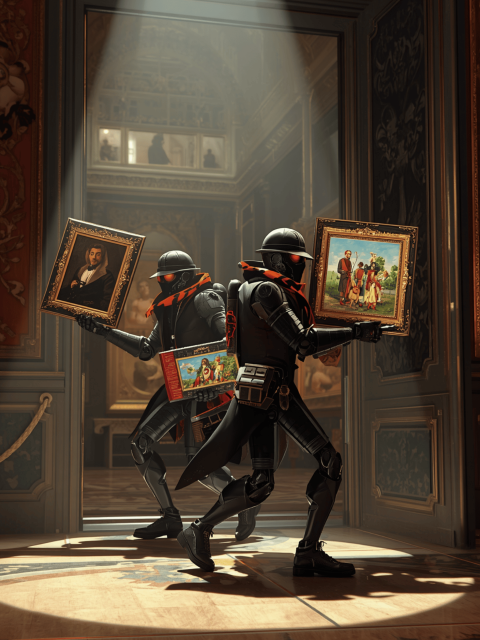
AI models were trained on stolen artwork scraped from the internet without permission. Using AI art is participating in mass copyright infringement. Every image generated is built on the violated labor of human artists.
WHERE IT COMES FROM
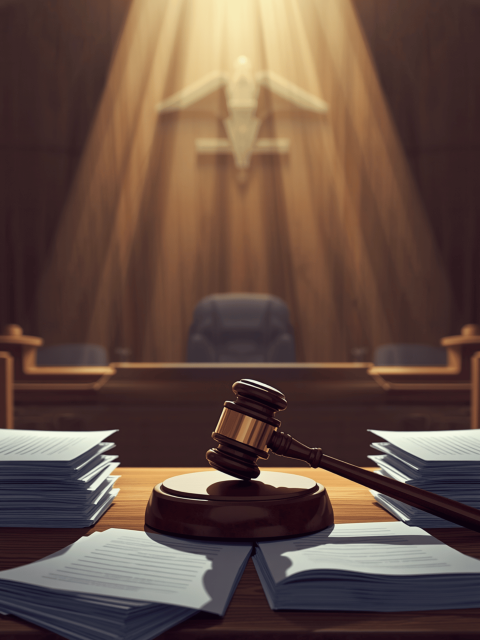
This argument was most loudly amplified by the class action lawsuit Andersen v. Stability AI, filed in January 2023 by a group of visual artists including Sarah Andersen, Kelly McKernan, and Karla Ortiz, alleging that Stability AI, Midjourney, and DeviantArt scraped and used their work to train image models without consent or compensation. The lawsuit gained enormous traction in artist communities and was reported widely as validation of the “AI is theft” position.
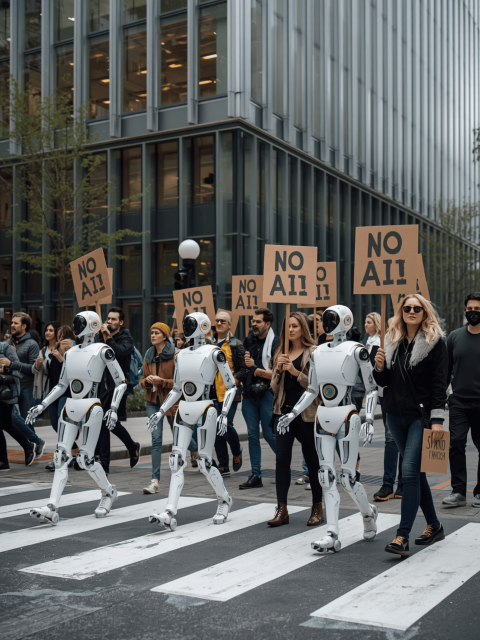
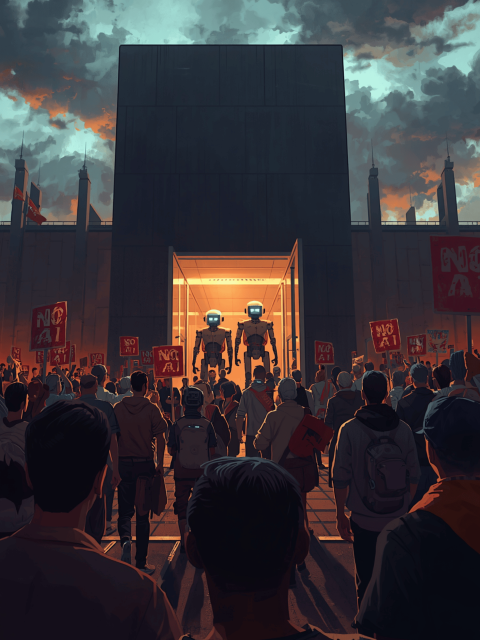
Advocacy groups including the Concept Art Association and No to AI Art ran targeted campaigns framing AI training as a clear-cut legal violation. The narrative spread faster than the legal record could correct it.
THE FACTS
The fair use question is genuinely contested — and the first major ruling broke in favor of AI. In June 2025, Senior U.S. District Judge William Alsup ruled in Anthropic’s favor in a landmark copyright case brought by authors Andrea Bartz, Charles Graeber, and Kirk Wallace Johnson. The ruling stated directly: “The training use was a fair use.” It is the first substantive federal decision on whether AI training on copyrighted materials constitutes infringement. (NPR, June 25, 2025)
But the picture is not clean. In Thomson Reuters v. Ross Intelligence, a Delaware court ruled that using copyrighted headnotes to train an AI legal tool did not qualify as fair use. A Munich court ruled OpenAI violated German copyright law by training on licensed musical works. The U.S. Copyright Office’s May 2025 report concluded that AI training “may constitute prima facie infringement” in certain contexts and warned that transformative arguments are not automatically valid. (Built In, April 2026; Skadden Law, May 2025)
Training is not copying in the traditional sense. AI models do not store images. They learn statistical patterns from data. Whether “copies or protected elements of the original work remained, in some format, within the model” is itself a disputed technical question. (Andersen v. Stability AI, 744 F. Supp. 3d 956, 2024)
The honest answer: This is unresolved. The law is being written in real time. Framing it as settled theft is wrong. Framing it as obviously legal is also wrong. Anyone who tells you otherwise is selling something.
02 — “AI Art Requires No Skill”
THE MISCONCEPTION
Anyone can type a prompt and get a masterpiece. There is no skill involved. AI art is pressing a button and claiming credit.
WHERE IT COMES FROM
This argument comes from two places simultaneously: tech hype and artist backlash. The AI industry spent 2022–2024 marketing generative tools as democratizing creativity for everyone — implying no training or expertise was required. Artists, rightly offended by that framing, responded by arguing that the ease of use proves there’s no real art happening. Both sides landed on the same conclusion for opposite reasons.
THE FACTS
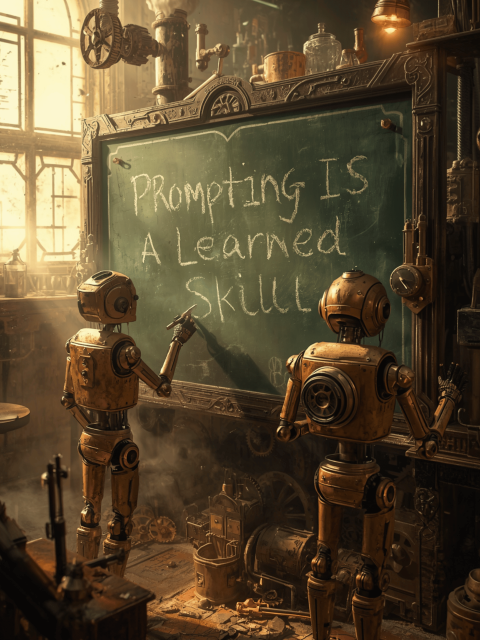
Prompt engineering is a learned skill. The research says so.
A peer-reviewed study published in the International Journal of Human–Computer Interaction (Oppenlaender, Linder & Silvennoinen, 2024) conducted three consecutive studies with 355 participants to test whether prompt engineering is an intuitive or acquired skill. The finding was unambiguous:
Participants could evaluate prompt quality and write descriptive prompts — but they consistently lacked the style-specific vocabulary necessary to produce high-quality results. The study concluded: “Prompt engineering is a new type of skill that is non-intuitive and must first be acquired through means of practice and learning before it can be used at a level of high quality.”
Furthermore, the study noted that the stunning results shared on social media are largely produced by a small group of highly skilled practitioners whose expertise skews public perception of the tool’s accessibility.
What the critics miss: AI-assisted art at a serious level requires knowledge of art history, aesthetic theory, compositional principles, color relationships, cultural context, and iterative refinement. The Black Celestial Queens collection did not emerge from a single prompt. It emerged from a developed creative relationship, a defined visual language, and years of artistic experience. The prompt is the brush. The artist is still the artist.
03 — “AI Art Is Not Real Art”
THE MISCONCEPTION
Art requires human hands, human suffering, human intention. A machine cannot make art. Therefore AI-generated images are not art. They are product. They are content. They are noise.
WHERE IT COMES FROM
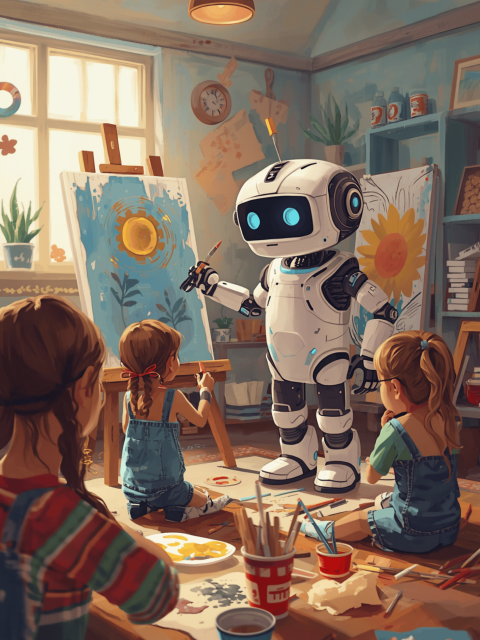
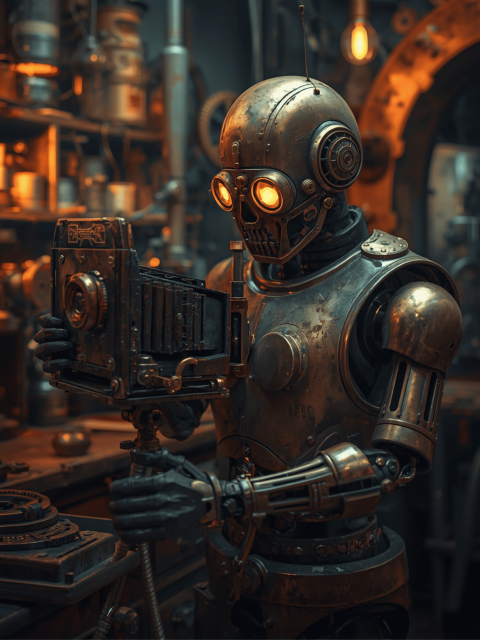
This is the oldest and most philosophically entrenched misconception — and it has a direct historical precedent that should embarrass its proponents.
When photography was invented in 1839, the French painter Paul Delaroche reportedly declared, “From today, painting is dead.” The critic Charles Baudelaire called photography “art’s most mortal enemy.” Sound familiar? Early photographers were told their work was mechanical reproduction, not art — just pressing buttons. The Museum of Fine Arts in Boston did not begin collecting photographs until 1924. The Atlantic documented this parallel precisely: “The anxiety around the camera was nearly identical to our current fear of creative AI.”
THE FACTS
The definition of art has never been fixed. It has always been contested, always been political, and has always expanded to accommodate new tools and new voices.
Harvard art professor David Roxburgh: “Art means what we ascribe to it. It can be a provocation, but it is essentially always part of a conversation.” (Harvard Gazette, 2023)
AI and art researcher Ahmed Elgammal: “As with any new technology, it’s the artists who shape what it becomes. AI art is just another tool, like the camera was in photography’s early days.”
The camera did not kill painting. It liberated it. Freed from pure representation, painters gave us Impressionism, Expressionism, Cubism, and Abstraction. The advent of photography “contributed to the rise of Impressionism and Expressionism” precisely because it forced artists to find what painting could do that a camera could not. (arXiv, 2021)
Museums have begun acquiring AI art. Christie’s sold a GAN-created portrait in 2018 for $432,500 — nearly 45 times its estimate. Art schools are adding AI to curricula. The art world is already integrating. The question is not whether AI art is art. The question is which artists are doing something meaningful with it.
04 — “AI Will Replace Human Artists”
THE MISCONCEPTION
AI will take every creative job. Illustrators, designers, photographers, concept artists — all obsolete. The machines are coming and nothing can stop them.
WHERE IT COMES FROM
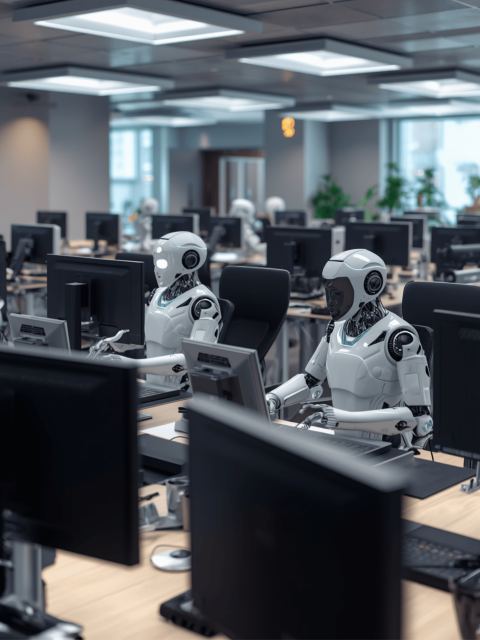
Silicon Valley has been explicitly selling this narrative. After the ChatGPT launch in late 2022, OpenAI almost immediately pivoted to selling AI as an enterprise automation product. The jobs most successfully automated were not the “dull, dirty, and dangerous” ones futurists promised. They were creative jobs — specifically, the commercial creative jobs that compete on speed and cost, not vision. (Brian Merchant, Blood in the Machine, September 2025)
The Stanford Graduate School of Business published research on what happens when AI art enters a marketplace. Finding: consumers win and artists lose. AI-generated art suppresses demand and income for working commercial illustrators competing at lower price points. (Goldberg, Stanford GSB, May 2025)
THE FACTS
Here is where we refuse to lie to you in either direction.
The threat to commercial creative work is real and documented. 3D artists in documentary TV, junior illustrators in stock image markets, entry-level graphic designers — these workers are experiencing genuine, measurable job loss. That is not propaganda. That is what is happening. (Blood in the Machine, September 2025)
The threat to fine art and human-provenance work is less clear. As AI floods low-end visual markets, human-made work with documented artistic authorship may actually increase in perceived value through scarcity. Photography commoditized portrait painting. It did not commoditize artistic vision.
The replacement narrative is used cynically by two parties: tech companies use it to pressure workers into accepting automation. Anti-AI advocates use it to justify wholesale rejection of a technology that, in the right hands, has genuine creative power. Neither group is telling you the full truth.
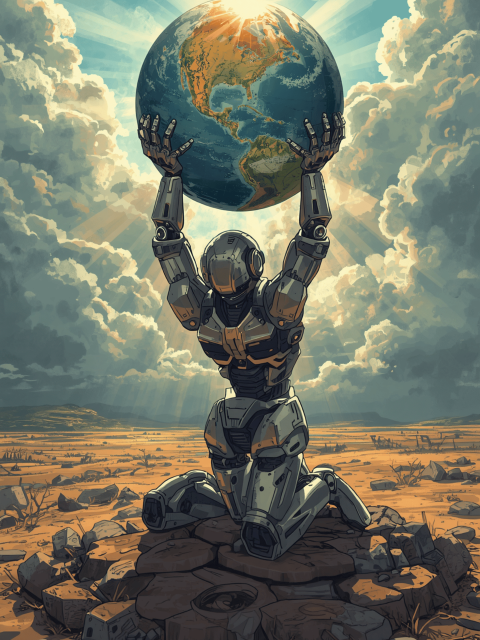
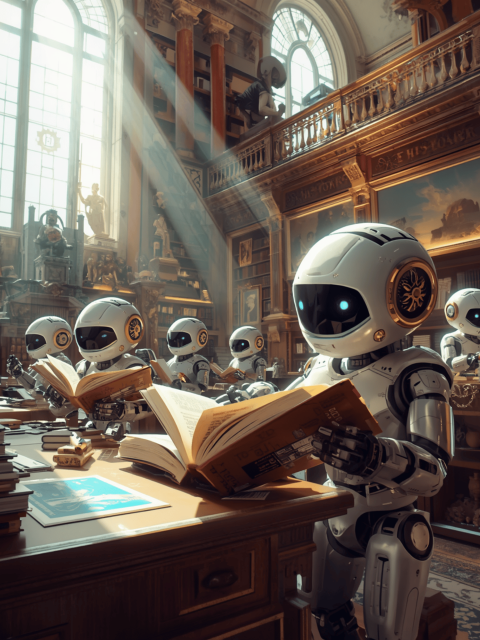
05 — “AI Art Has No Moral or Ethical Dimension”
THE MISCONCEPTION
AI is a neutral tool. Saying AI art is immoral is like saying a paintbrush is immoral.
WHERE IT COMES FROM
This is the tech libertarian counter-response to every ethical critique of AI. It is reductive, and it ignores decades of established ethics around the design and deployment of technology. The tool is not neutral when it encodes bias at industrial scale.
THE FACTS
The bias in AI image generation is not a bug. It is a feature of who built the training data.
Racial bias: A 2025 peer-reviewed study in AI & Society found that AI-generated images consistently favor White people. In tests of image-to-image generation, Black people — particularly Black women — were depicted with the lowest racial accuracy. In the majority of incorrect generations, AI depicted people of color as White. (Yang, 2025)
Systematic whitewashing: Milwaukee Independent documented 48 consecutive AI image generations, each explicitly prompted for a Black historical figure. Not one correctly rendered Black identity. Their conclusion: “These systems are not ready to be entrusted with accurate and equitable portrayals of underrepresented communities.” (Milwaukee Independent, March 2025)
STEM and professional bias: A November 2025 peer-reviewed study found that AI-generated portraits of people in STEM professions were “almost exclusively depicting male, white, and older individuals.” (Messingschlager & Appel, Information, Communication & Society, 2025)
Eurocentric visual bias: A 2025 computational study analyzing 396 AI-generated images across 12 countries and 3 models found systemic Visual Orientalism — Western nations depicted through political and modern symbols; Eastern nations through cultural and exotic tropes. Bias traced directly to training data composition. (arXiv, 2025)
AI systems trained on the internet inherit the internet’s biases — the biases of a historically white, Western, male-dominated media ecosystem. Saying the tool has no ethical dimension is saying you are not paying attention.
It is also worth naming the counter-argument directly: artists like Iain Smillie are using AI to do the opposite — centering Blackness, cosmic femininity, and Afrofuturist identity in a medium that defaults away from all three. That is itself an ethical and political act of resistance against the bias baked into the system. The tool’s neutrality is a lie. What the artist does with it is a choice.
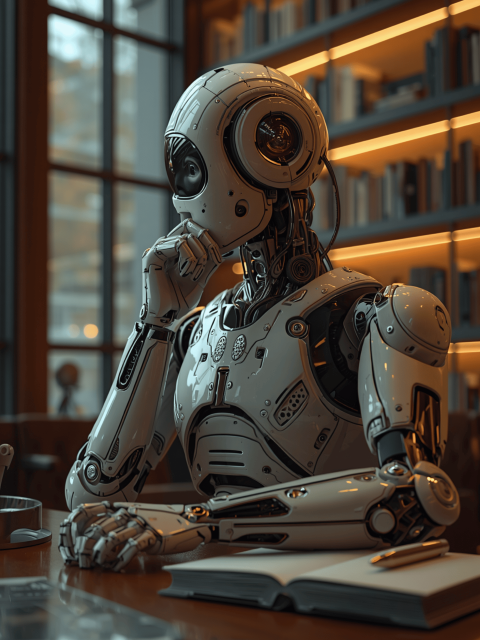
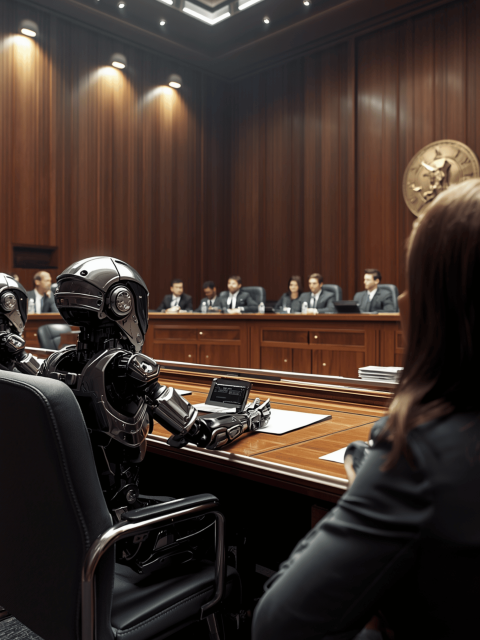
06 — “AI Democratizes Art for Everyone”
THE MISCONCEPTION
AI removes all barriers. Anyone can make art now. It is the great equalizer. OpenAI CEO Sam Altman said it explicitly: “The democratization of creating content has been a big net win for society.” (Prindle Institute, May 2025)
WHERE IT COMES FROM
This is Silicon Valley’s favorite justification for disrupting industries without paying anyone. It was used to justify Uber (democratizing transportation), Airbnb (democratizing hospitality), and now AI (democratizing creativity). In every case, “democratization” meant reducing labor costs for platforms while shifting risk onto individuals.
THE FACTS
The partial truth: AI does lower certain barriers. Someone without traditional drawing skills can produce visual concepts. For people with physical disabilities that prevent traditional artmaking, AI has genuine accessibility value. For artists in developing economies without access to expensive software or materials, AI tools offer real creative leverage. These are not nothing.
The larger truth: The most nuanced AI art is still produced by people with significant existing creative knowledge, cultural literacy, and aesthetic training. The “anyone can do it” narrative is accurate at the commodity level. It is deeply inaccurate at the artistic vision level.
Researchers at Springer Nature (2025) documented that AI art accelerates pre-existing inequities — specifically the appropriation of intellectual property from marginalized artists, the reinforcement of Eurocentric beauty standards, and the commodification of gendered and sexualized imagery.
Sam Altman also acknowledged the downside in the same breath: AI is “a little bit of a bummer” for artists. That is one of the most spectacular understatements in the history of corporate communications.
07 — “Artist Opposition to AI Is About Ethics, Not Economics”
THE MISCONCEPTION
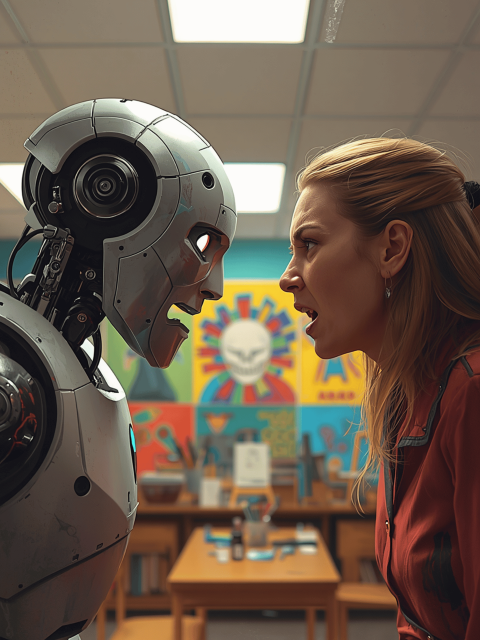
Artists oppose AI because it violates human creative dignity and steals work. This is a principled moral stand.
WHERE IT COMES FROM
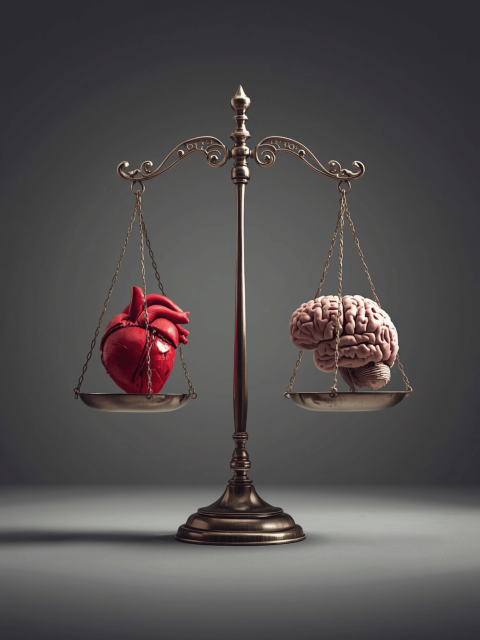
The opposition to AI in artist communities is real, and some of it is genuinely principled. But it is important to separate the ethical argument from the economic one — because the loudest institutional voices have often conflated them strategically.
THE FACTS
SAG-AFTRA’s video game strike, which ran from July 2024 to June 2025, was explicitly not an anti-AI strike. The union’s own communications were direct: “The core of the issue is not that the union is anti-AI but that companies refuse to provide fair compensation and transparency in the use of AI.” The 98.32% authorization vote was for consent, compensation, and contractual protection — not for the abolition of AI. (SAG-AFTRA; University of British Columbia Law, March 2025)
The Illustrators’ Partnership and Graphic Artists Guild campaigns of 2024–2025 focused on disclosure requirements — forcing transparency about when AI is used in commercial creative work. That is a legitimate labor and consumer protection demand. It is not an argument that AI art is ethically indefensible in all contexts.
The open letter signed by over 11,000 creatives in October 2024 — including Thom Yorke and Julianne Moore — called for a halt to the “unauthorized use of creative works to train generative AI.” The operative word is unauthorized. The demand is for consent and compensation frameworks, not a prohibition on AI creation.
When artist institutions frame this purely as a moral argument — “AI is wrong” — they are sometimes doing it in service of an economic argument they know is harder to win in public: “AI is reducing our income.” Both arguments can be true. But they are different arguments, and collapsing them does a disservice to both.
08 — “AI-Generated Art Cannot Have Artistic Intention”
THE MISCONCEPTION
Intention is what separates art from accident. A machine has no intention. The human who prompted it just pushed a button.
WHERE IT COMES FROM
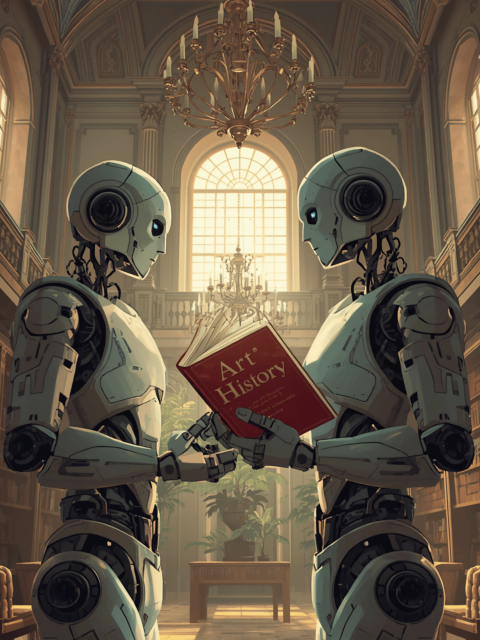
This is a philosophical argument that has more validity than most on this list — and it deserves to be taken seriously before it is corrected. The argument draws on genuine aesthetics: intentionality is central to most philosophical definitions of art. If the generator has no intention and the prompter has no craft, what exactly is happening?
THE FACTS
The argument is legitimate when applied to prompt-and-post AI art: type a sentence, screenshot the result, post it as your own. In that case, the creative contribution is minimal and the question of artistic intention is genuinely thin.
The argument collapses when applied to serious AI-assisted creative practice — and the people making it rarely distinguish between the two.
Intent operates at multiple levels. The intent to create a specific visual world — Afrofuturist, cosmically feminine, regal, alien — is an artistic intention. The curation of outputs, the rejection of hundreds of generations that miss the mark, the refinement of language to push the model toward a specific aesthetic — this is intentional creative direction. The AI is the medium. The artist is still directing.
The locus of creative control matters. Research in human-AI collaboration distinguishes between the human as executor (low creative input) versus the human as director (high creative input). An artist who has developed a visual language, a body of thematic work, and an ongoing creative practice with AI as collaborator is operating at the director level. The locus of creative control is with the human.
To argue that artistic intention cannot exist in AI-assisted work requires ignoring the evidence of what artists who actually use these tools are doing with them.
09 — “AI Companies Are Acting in Good Faith With Artists”
THE MISCONCEPTION
AI companies want to work with artists. They talk about partnership, collaboration, and supporting the creative community.
WHERE IT COMES FROM
The AI industry has become expert at the language of partnership while executing strategies of extraction. This misconception is generated primarily by the PR and lobbying arms of major AI companies.
THE FACTS
When Disney licenses Mickey Mouse to OpenAI for a billion dollars, call it what it is: the consolidation of creative power by the companies that can afford the negotiating table.
The licensing deals cut out working artists. In December 2024, Walt Disney Co. licensed iconic characters to OpenAI for use on its AI video platform and agreed to take a $1 billion stake in the company. Getty Images has entered licensing agreements with AI developers. These are corporate-to-corporate deals. The individual artist whose style was scraped to train the model is not in that room.
The lawsuits tell a different story. More than 30 copyright infringement lawsuits have been filed against AI companies including OpenAI, Meta, Anthropic, Google, Nvidia, and Stability AI. Getty Images sued Stability AI for infringing more than 12 million photographs — including replicating Getty’s watermarks in AI output. The Chicago Tribune accused Perplexity of systematically bypassing paywalls and stealing subscription revenue. (Copyright Alliance, 2024; Built In, April 2026)
Congressional action is pending specifically because industry self-regulation has failed. The Generative AI Copyright Disclosure Act of 2024 would require AI companies to disclose training datasets. The fact that this bill was necessary — and that the industry lobbied against transparency requirements — tells you what good faith looks like from where the artists are standing.
This is not an argument that all AI companies are universally malicious. It is an argument that corporate interests are corporate interests. Trust the behavior, not the press release.
10 — “You Have to Pick a Side”
THE MISCONCEPTION
You are either for AI art or against it. Choosing to use AI means you don’t respect working artists. Refusing to engage means you’re afraid of the future.
WHERE IT COMES FROM
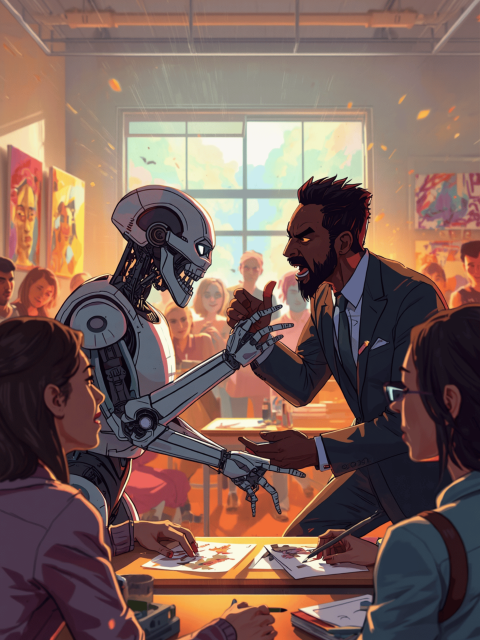
Both sides. This is the most successful piece of rhetorical manipulation in the entire debate, deployed constantly by AI evangelists and AI abolitionists alike to prevent the nuanced conversation that the facts actually support.
THE FACTS
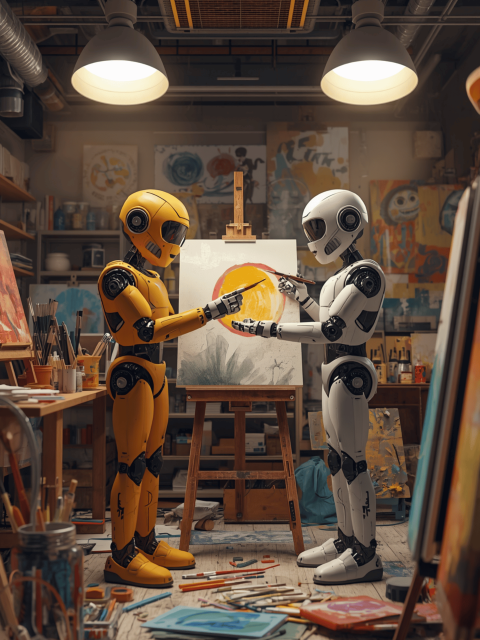
The creative community has never been required to have a singular relationship with a technology. Photographers use darkrooms and Lightroom. Illustrators use pencil and Procreate. Sculptors use chisels and CNC routers. No one has ever argued that using digital tools means you hate traditional craft.
The binary is false and it is being maintained deliberately by people who benefit from the conflict — tech companies that want AI normalized without ethical constraints, and institutions that want to protect market share by making AI adoption culturally toxic.
The legitimate grievances are real: The scraping of training data without consent is a genuine harm with legal proceedings to prove it. The job displacement of commercial-tier creative workers is documented. The racial and gender bias embedded in AI systems is a technical and ethical failure. These are not conspiracy theories.
The creative possibilities are also real: AI-assisted art that is intentional, culturally grounded, and executed with craft is a legitimate form of artistic practice. Artists using AI to center marginalized perspectives, to build aesthetics historically excluded from the mainstream art world — this is real creative work.
The institutional arguments are often economic arguments in disguise: This does not make them wrong. It makes them more honest when named accurately.
You do not have to pick a side. You have to think.
Final Word
The artists who will shape what this medium becomes are not the ones who reject it or the ones who worship it. They are the ones who interrogate it.
The Haus of Legends was built for the artist who refuses to be handed conclusions. You came up in a world that told you what art is, what tools are acceptable, what markets matter, and who gets to be legendary. You already know how much of that was true.
What we have tried to give you here is not a verdict. It is evidence. The lawsuits are real. The bias studies are peer-reviewed. The history is documented. The economic disruption is happening whether you engage with it or not.
The question that matters is not whether AI is good or evil. The question is: in whose hands, toward what vision, in service of what truth?
That has always been the question. AI did not change it. It just made it more urgent.
— Iain Smillie, Nova & Claude | The Haus of Legends
Sources & Further Reading
- Andersen v. Stability AI, 744 F. Supp. 3d 956 (N.D. Cal. 2024)
- NPR: Federal Judge Rules in Anthropic’s Favor — Landmark Copyright Case (June 25, 2025)
- U.S. Copyright Office, Copyright and Artificial Intelligence Part 3 Report (May 2025)
- Copyright Alliance: AI Lawsuit Developments 2024 Year in Review (May 2025)
- Oppenlaender, Linder & Silvennoinen: “Prompting AI Art: An Investigation into the Creative Skill of Prompt Engineering” — International Journal of Human–Computer Interaction (2024)
- Yang: “Racial Bias in AI-Generated Images” — AI & Society, Vol. 40 (2025)
- Messingschlager & Appel: “Algorithmic Bias in Image-Generating AI” — Information, Communication & Society (November 2025)
- Milwaukee Independent: “Recreating Ezekiel Gillespie — Racial Bias in AI Art Persists” (March 2025)
- Goldberg: “Generative AI in Equilibrium: Evidence from a Creative Goods Marketplace” — Stanford GSB / SSRN (May 2025)
- Brian Merchant, Blood in the Machine: “Artists Are Losing Work, Wages, and Hope” (September 2025)
- SAG-AFTRA AI Resource Page: Union AI protections timeline (sagaftra.org)
- University of British Columbia Allard School of Law: “AI and Ethics: the SAG-AFTRA Strike” (March 2025)
- Springer Nature: “From Aura to Semi-Aura: Reframing Authenticity in AI-Generated Art” — AI & Society (2025)
- Springer Nature: AI Art and Techno-Patriarchal Structures — AI & Society (2025)
- arXiv: “Can Computers Create Art?” — Hertzmann, Adobe Research (2018)
- https://news.harvard.edu/gazette/story/2023/08/is-art-generated-by-artificial-intelligence-real-art/
- The Atlantic: “Don’t Fear the Artwork of the Future”
- Generative AI Copyright Disclosure Act of 2024, U.S. Congress (introduced April 9, 2024)
- Built In: “AI-Generated Content and Copyright Law” (April 2026)
- Prindle Institute for Ethics: “Should AI Democratize Art?” (May 2025)
- arXiv: Visual Orientalism in the AI Era (2025)
- © The Haus of Legends. All Rights Reserved. thehausoflegends.com