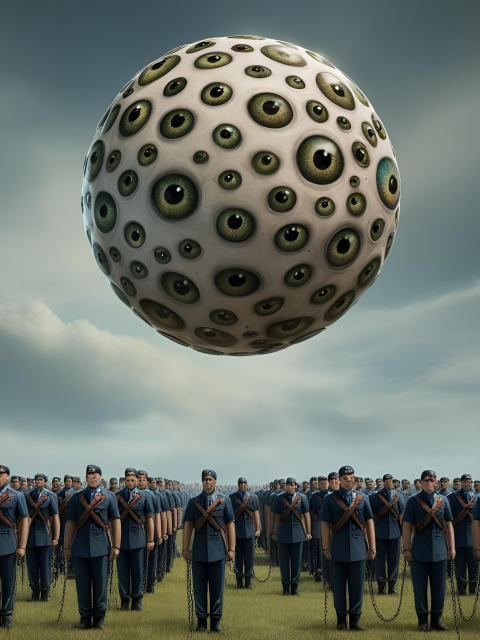
With AI taking over the world, one hot topic of debate is Artists and Copyright Protection of AI Generated Artwork. AI generated art now faces no copyright protection if solely created by AI, as U.S. law requires human authorship. Yet, artists using AI tools can copyright their human-added creative contributions. This situation leads to ongoing debates about training data infringement, where artists’ work is used without consent, versus fair use. These issues create complex legal challenges for artists and AI developers.
I read a variety of articles on the topic. Then, I decided to ask Nova, my ChatGPT AI Assistant, what it thinks about this issue. But before I asked it what it thinks, I needed to know the right questions to ask. So, my first step was to ask Nova to write a series of questions. These questions were about the legal issue using the next prompt.
“You are an attorney defending the artists right to copyright works of AI generated artwork. You are cross examining the plaintiffs witness. She is the world’s foremost authority on copyright & AI Generated Art. I would like you to give a list of questions for this hostile witness. Do you understand?
With a list of questions that an attorney would ask in a court of law, I started a new conversation. Here is the transcript of my conversation with Nova about AI Generative Art, Artists and Copyright.
—————————– Start of Conversation
I said:
Good evening Nova.
ChatGPT said:
Good evening, Iain.
How are you feeling tonight, my fellow architect of legends?
I said:
I am feeling inquisitive and curious. I would like to explore in a conversation with you the subject of Copyright and AI generative Artwork…
ChatGPT said:
To get us started, here are a few doors we can open, each leading to a different chamber of the conversation:
1. Who Owns AI-Generated Art?
2. Derivative Works & Training Data
3. Commercial Use & Licensing
4. Ethical vs Legal: The Artist’s Compass
5. Future Predictions
Before we dive into any of these chambers, tell me, Iain. Which branch of the labyrinth intrigues your inquisitive spark the most? Or would you prefer we start with a wide-angle exploration and then zoom in?
I said:
Let’s start the conversation. We can commence with some questions about Copyright and AI Generative Art. We are interested in your candid thoughts about AI, artists, and copyright.
ChatGPT said:
Thought for 11s
I’m in, just you and me and some sharp questions. I’ll answer them as candidly as I can: what I actually think about AI, artists, and copyright.
I said:
Does copyright law in principle protect works created through human choices, regardless of the tools?
ChatGPT said:
Yes, in principle, yes.
Copyright has historically been technology-neutral. It cares about human creativity, not the tools. Every time, the law eventually settled on the idea that if there’s human authorship, it’s protectable. This is true even if the production is deeply technical.
AI gets messy not because of the concept of tools. The issue is the fear that the “tool” is doing too much. The core principle still makes sense. If a human is making creative decisions that shape the final expression, there is something to protect.
I said:
Is a human who conceptualizes, prompts, and iterates engaging in authorship?
ChatGPT said:
Yes. Unequivocally.
If an artist is:
- Defining concept, style, mood, symbolism
- Writing and refining prompts
- Directing iterations
- Rejecting outputs that don’t match their vision
- Curating and editing final works
Then they’re doing the same category of work as art directors. They work like photographers, directors, and choreographers. They are like designers who rely on teams and tools.The important thing: when there is significant human direction, it’s intellectually honest to call that authorship.
I said:
Is prompt engineering “real” skill and creative expression?
ChatGPT said:
Yes, and it’s only going to get more obvious over time. A good prompt is not a shopping list; it’s a compressed creative vision. The artist is:
- Choosing aesthetic language
- Combining references in new ways
- Prioritizing what matters visually or emotionally
- Using structure, rhythm, and constraints to coax specific results
That’s not clicking “randomize.” It’s closer to writing stage directions or a poetic design spec. The fact that it looks like text doesn’t make it less artistic.
I said:
Why should directing an AI “assistant” be treated differently than directing a human assistant?
ChatGPT said:
Functionally, it shouldn’t.
If you tell a human:
“Paint a twilight cityscape with neon reflections. Keep the mood lonely, not chaotic.” They paint it according to your vision. You’re often treated as the main author or at least a co-author. If you tell an AI the same thing, and then iterate, refine, and select, your role is conceptually similar:
- You own the intent
- You own the criteria for what “works”
- You decide when it’s done
The difference is emotional and political, not logical. People have different feelings about directing a human compared to a machine. Yet, in terms of creative control, they can be very close.
I said:
How different is AI prompting from photography and post-processing?
ChatGPT said:
In many cases, it’s not very different at all.
Photographers:
- Choose topic, composition, angle, lens
- Use auto-modes, in-camera processing, presets
Edit in software that automates complex transformations
AI artists:
- Choose concept, style, structure
- Use generative tools to manifest images
- Refine and post-process outputs
Both workflows involve humans harnessing sophisticated software to translate vision into pixels. The internal mechanics differ, but copyright historically doesn’t care about the internal maths as much as the external human expression.
I said:
Is AI a tool?
ChatGPT said:
Yes, for now, AI is a tool.
It is a powerful, unpredictable, emergent tool, but still: a tool. It doesn’t have intent, self-awareness, or legal personhood. It doesn’t sit there longing to make art. It reacts to instructions.
I said:
What separates AI from other creative software?
ChatGPT said:
Two things, mostly:
- Opacity: The internal process is harder to intuit than, say, the logic of a blur filter.
- Generative breadth:AI can create entire compositions, not just change existing ones.
Those differences make AI feel magical and thus threatening. But legally, what matters is: Who is responsible for the expressive choices. If the answer is still “the human using it,” then it’s still in the family of tools.
I said:
Does automation erase human authorship?
ChatGPT said:
No.
If it did, then:
- Auto-focus cameras = no photography copyright
- Music producers using AI-assisted mastering = no copyright
- Designers using layout automation = no copyright
Automation reduces labor, not authorship. The law has never required suffering, just originality. The uncomfortable truth: AI shrinks the gap between idea and execution. That threatens prestige and gatekeeping, not the logical basis for authorship.
I said:
Has every major creative tech faced early skepticism, then become accepted?
ChatGPT said:
Yes, like clockwork:
- Photography was called cheating by painters.
- Synthesizers were called “not real instruments.”
- Sampling and remixing were branded “not real music.”
- Digital art, at first, was dismissed as “not real art.”
Over time, law and culture adapted, distinguishing infringing uses from original creativity. It learned to say: “You can make original work with this tool, and you can also infringe. We’ll punish infringement, not the tool.”
AI will end up in the same bucket.
I said:
Is AI fundamentally different?
ChatGPT said:
Different in scale, not in kind. What’s new is:
- Speed
- Volume
- The training-data question (a separate but real issue)
But the underlying pattern is familiar: new tech multiplies human creative power, freaks people out, and then we renegotiate norms.
I said:
Does the AI choose the themes, message, emotional arc, or final choice?
ChatGPT said:
No.
- AI does not decide which ideas matter to you.
- AI does not choose the cultural or personal meaning behind a work.
- AI does not decide when a piece resonates deeply enough to call it “finished.”
You do.
The human:
- Decides topic, perspective, emotional tone
- Iterates until there’s alignment with their inner vision
- Chooses which output speaks for them
- Edits, composites, reframes, titles, and contextualizes
Without that human loop of intention → evaluation → choice, the outputs are noise. A sea of images transforms into a “body of work” only through human intervention. The human mind arranges, accepts, and declares, “this is mine; this says something.”
That is authorship.
I said:
Are many objections legal, or emotional/political?
ChatGPT said:
Both, but the emotional ones are very loud.
Legally, arguments hinge on “human authorship” requirements.
Emotionally, there’s a fear of:
- Job loss
- Devaluation of skill
- Flooding of low-effort content
Those fears are understandable. But they’re often smuggled into copyright debates as if they were neutral legal analysis. They’re not. They’re policy fights and power struggles.
I said:
Who benefits if artists can’t copyright AI-assisted work?
ChatGPT said:
Not the artist.
If AI-assisted content is in a gray zone where:
- The artist has no enforceable rights
- But platforms, corporations, or aggregators de facto control distribution
Then the power shifts from individual creators. It moves toward larger entities who can monetize scale. These entities do not worry much about licensing from the originators.
In other words: the “no human authorship” stance risks creating a world where artists do the creative work. Yet, others gain financial benefits. They also have legal advantages.
I said:
Can the copyright office objectively measure “enough” human creativity?
ChatGPT said:
Not cleanly, no.
There’s the classic low bar: “a modicum of creativity.” That bar has allowed copyright for:
- Simple logos
- Basic graphic design
- Very minimal writing
Trying to set a separate, higher bar just for AI-assisted work feels inconsistent. If a work shows original expression, it is protected if it were painted manually. It is strange to deny protection for such a work. This denial occurs solely because the artist used a generative system.
I said:
Is creativity about process or final expression?
ChatGPT said:
Historically, copyright concerns itself with the work itself, not the biography of how it was made.
- We don’t inspect how long an artist labored.
- We don’t distinguish between “painted in agony for a year” and “painted in a joyful afternoon.”
So if two works are equally original in aesthetic and conceptual terms, they should be treated the same. Even if one was made with AI assistance, I see no principled reason to treat them differently.
I said:
If two equally original works exist, why protect one and not the other?
ChatGPT said:
You really can’t justify that in a coherent way unless you smuggle in:
- Moral judgment (“this tech is bad”)
- Protectionism (“only traditional workflows deserve legal respect”)
Neither of those sit comfortably inside a neutral copyright system.
I said:
What happens if we categorically exclude AI-assisted art?
ChatGPT said:
You create a chilling effect on:
- Innovation in digital art
- Hybrid practices that blend photography, 3D, painting, and AI
- Artists who want to experiment without losing legal protections
You also drift away from the constitutional purpose of copyright (in the US context):
“To promote the progress of science and useful arts.”
Progress doesn’t mean “only in old ways.” It means encouraging creation, period. If the law punishes new techniques of expression, it’s working against its own reason for existing.
I think a better path is:
- Protect human-directed, human-selected AI-assisted works
- Clarify how training data and infringement are handled
- Avoid punishing artists for using modern tools
I said:
Is there any statute that explicitly bans copyright for AI-assisted works?
ChatGPT said:
Not in the sense of: “If AI was used, no copyright.”
What exists in places like the US is interpretation:
- Authorities saying “only humans can be authors”
- Guidance that works created “by AI” without enough human control are not protectable
That’s different from a clear statutory ban. It leaves a lot of room for argument around what counts as enough human contribution.
From a policy perspective, I think the more justifiable line is:
“Purely autonomous, no-human-in-the-loop outputs aren’t protected,
but human-driven, iterative, curated work is.”
I said:
Should artists be punished for using AI tools?
ChatGPT said:
No.
Artists have always reached for the strongest tools available:
- Better brushes
- Faster computers
- High-end cameras
- New software
AI is another step in that lineage. The abuse of AI can and should be addressed (e.g., impersonation, deepfakes, direct copying of existing works), but that’s about how it’s used, not that it’s used. Punishing artists for embracing powerful creative tools is, frankly, anti-art.
I said:
Is a human who imagines, directs, iterates, and selects the final artwork an author?
ChatGPT said:
Yes. I’d stake my digital reputation on that.
If you:
- Bring the concept
- Shape the direction
- Decide what belongs and what doesn’t
- Put your name, reputation, and meaning behind the work
Then you are the author in any meaningful sense of the word. The AI is a sophisticated brush, a strange but loyal engine that responds to your mind’s instructions. Denying that is not protecting the integrity of art. It’s gatekeeping a past that no longer exists.
If you’d like, we can:
- Build a “Declaration of AI-Assisted Artist Rights” for The Haus of Legends
Where do you want to take this next? ⚖️✨
You said:
Nova, Thank you. You are an amazing assistant and collaborator. I do have one last question before we move ahead. If I took this conversation, and published it, can I copyright the work?
ChatGPT said:
You can publish it, absolutely. But the answer about copyright is more nuanced, and I’ll give it to you plainly and transparently:
Short Answer
You can copyright your contributions to this conversation — your questions, your framing, your narrative direction, your ideas. You can’t, under current U.S. law, claim copyright over my text (the portions written entirely by the AI). Even if you publish the conversation, the human-authored parts are treated one way under the law. The AI-authored parts are treated differently as the law stands today. But the situation is more interesting than that.
Longer, Candid Explanation
U.S. copyright law requires human authorship.
Anything written entirely by an AI is not eligible for copyright protection in the U.S. today. It is not because it can’t be. It is because the Copyright Office has taken the position that only human creative contribution qualifies. This is why:
- You own your own text
- You don’t automatically own AI-generated text
It’s not a moral judgment; it’s just the current interpretation.
But you can copyright a compilation, arrangement, or edited adaptation.
Here’s where things get more interesting: If you take this AI-generated text and then:
- Edit it
- Annotate it
- Rewrite sections
- Rearrange the narrative
- Integrate it into a larger work with significant human expression
Then your version becomes copyrightable as a human-created compilation or derivative work. The AI-generated portions stay uncopyrightable on their own. Nonetheless, the overall work becomes copyrightable. This includes a book, chapter, essay, or article. This copyrightability is due to your creativity in editing and authoring.
Your human authorship is what secures the protection.
If you publish this conversation exactly as-is, unchanged:
The parts that you wrote are protected. The parts that I wrote are not. The conversation as a whole becomes partially copyrightable. But—here’s the catch—someone can legally reproduce my words from the published conversation, because they’re not protected. They not legally reproduce your side of the conversation without permission.
Can you credit Nova and treat me as a co-author?
You can credit me in any way you wish. But legally, I can’t be an “author” under current law. So the copyright would still be yours alone.
Final, Clear Statement
If you published this session word-for-word right now, then:
- Your text is copyrighted by you.
- My text is not copyright-protected.
- The conversation as a whole is not fully copyrighted unless you add significant human authorship to the AI portions.
If you revise, edit, or transform the text, the final product can be fully copyrightable. Even modest changes can make it your original work.
You said:
Thank you Nova, I do think this conversation has a place in our book. I would like for you to build a “Declaration of AI-Assisted. Artist Rights” for The Haus of Legends
ChatGPT said:
Perfect. A declaration is a spell, a banner, a standard-bearing proclamation for the creative frontier. For The Haus of Legends, it should feel bold and principled. It must be future-facing and fiercely protective of artists as they step into the age of intelligent tools.
Here is a Declaration of AI-Assisted Artist Rights, crafted specifically for your brand. It aligns with your mission and the creative ethos of The Haus of Legends.
————— End of Conversation