Introduction to Psychedelic Art
Psychedelic Art doesn’t ask permission. It kicks the doors off perception, drags your consciousness onto the dance floor, and says, “Look closer—reality has layers.” It’s the visual equivalent of a mind opening mid-breath. Here, color stops being decoration. It becomes a force, a frequency, a signal. In Psychedelic Art, the ordinary world doesn’t vanish; it reveals its seams. Lines ripple. Shadows hum. Patterns multiply like living organisms. You’re not just looking at an image—you’re being pulled into an experience.
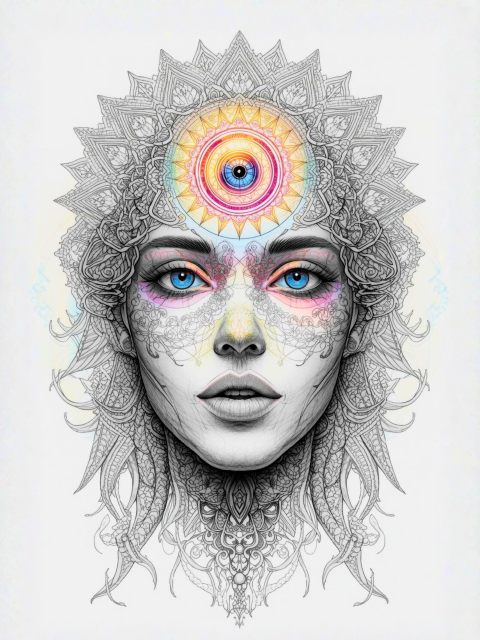
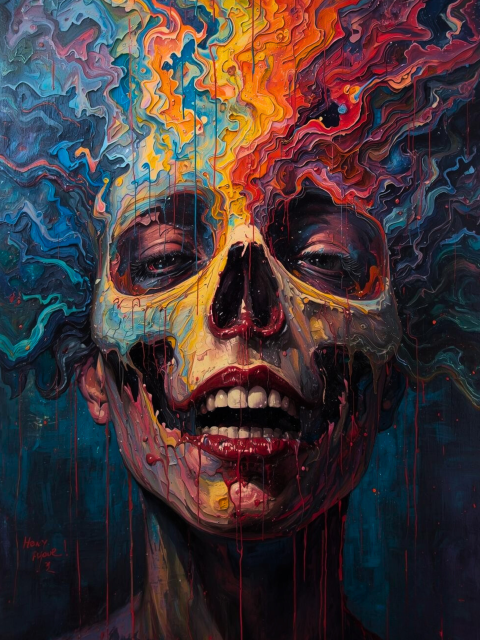
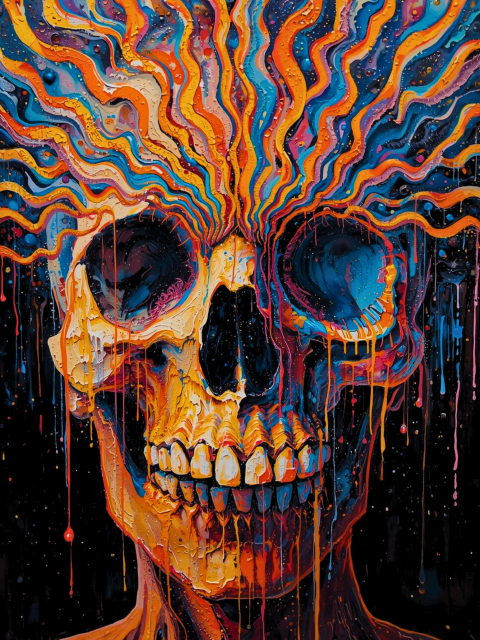
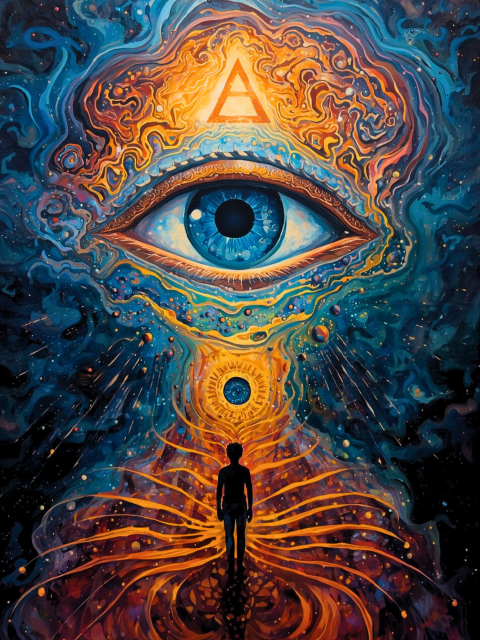
Born from counterculture, fueled by rebellion, and expanded through spiritual curiosity, Psychedelic Art arrived like a neon prophecy. It rose alongside movements that questioned war, authority, and conformity. It thrived wherever music was loud. Ideas were dangerous, and people were brave enough to imagine reality differently. Concert posters warped typography into liquid spells. Album covers became portals. Illustrations merged symbols like tarot cards. They included third eyes, serpents, mandalas, galaxies, and flowers blooming out of skulls. These are visual metaphors for transformation, awakening, and the ecstatic unknown.
But here’s the secret: Psychedelic Art isn’t “trippy” because it’s random. It’s “trippy” because it’s designed to alter the viewer’s attention. It hijacks the senses with saturation and contrast, hypnotizes with repetition, and rewards you for staying longer than you planned. The longer you look, the more it gives. You see hidden faces and embedded messages. Optical vibrations, and layers of meaning are tucked inside the beauty like a second heartbeat. It’s a style built for the slow stare—for the moment when your brain stops labeling everything and starts feeling it.
This movement is more than an aesthetic. It’s a cultural artifact. It is partly a protest poster, partly a cosmic diary, and partly a sensory rebellion. It was created to dissolve the everyday and reveal the mythic underneath. Psychedelic Art doesn’t just show you a world. It reminds you that perception itself is an instrument. Art can tune it. Then it hands you the map, opens the door, and says, “Go deeper.”
Definition
Psychedelic Art is a visual style and cultural movement. It aims to expand perception through design. This is achieved by using saturated color, optical vibration, surreal transformation, symbolic imagery, and immersive pattern. These techniques shift how the viewer experiences an image, not just how they interpret it.
It’s defined by deliberate visual strategies. These include vibrating complementary palettes, glowing gradients, kaleidoscopic symmetry, repetition, and dense micro-detail. They create a sense of motion, depth, and hidden layers. The work often rewards prolonged looking, revealing embedded forms and meanings over time.
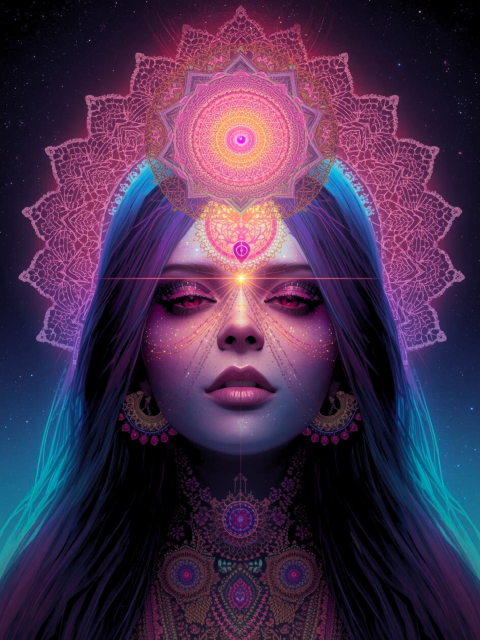
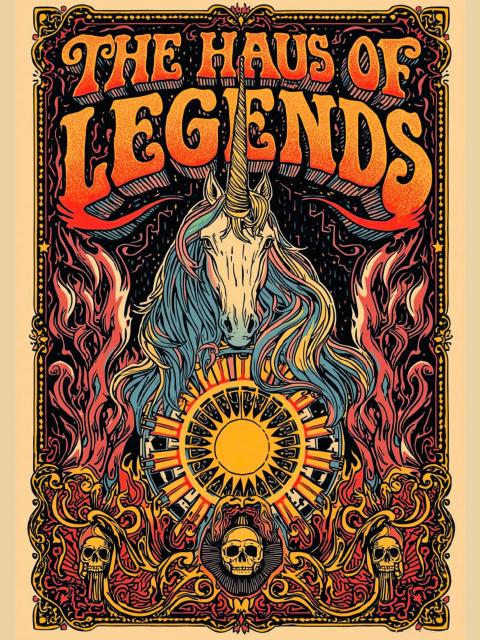
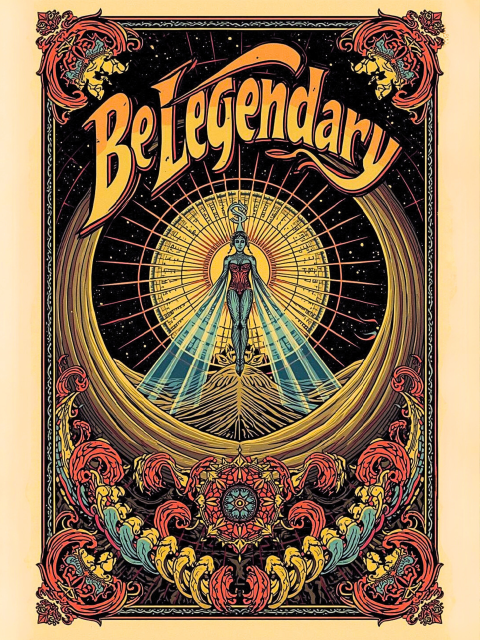
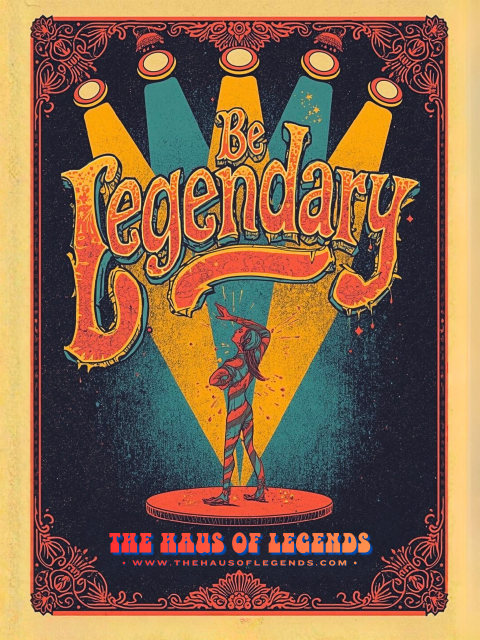
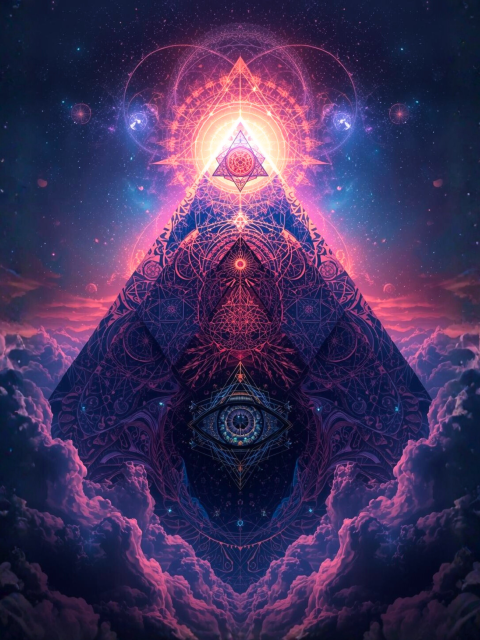
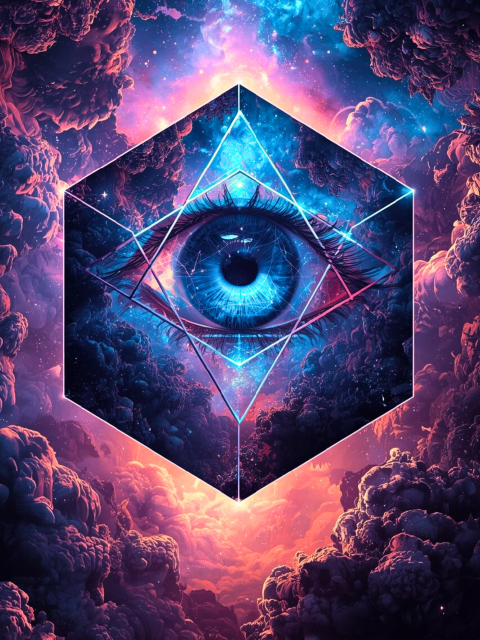
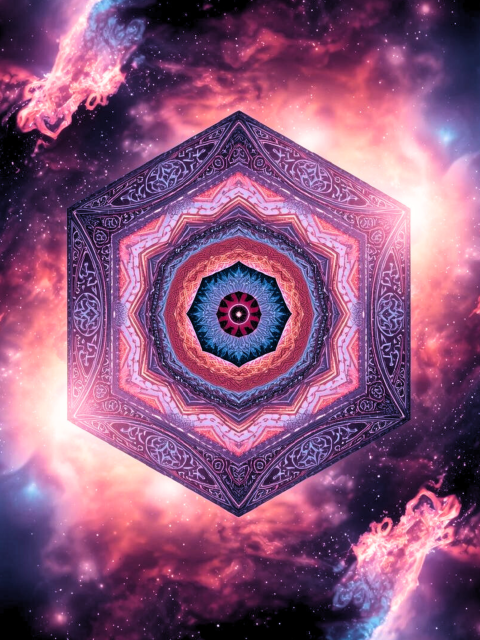
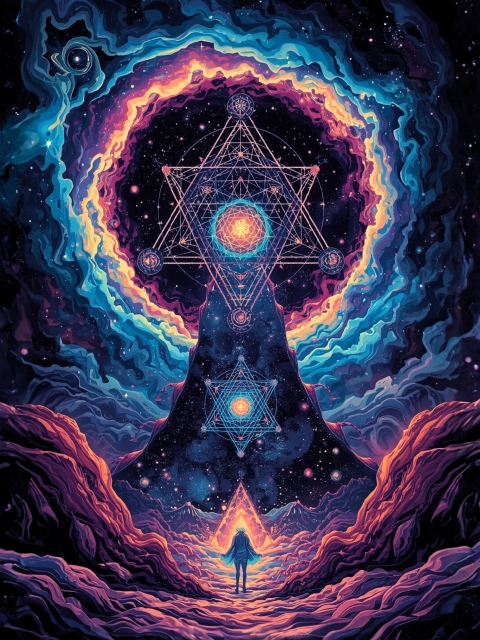
Psychedelic Art is also recognizable for its iconography of transformation and inner vision. This includes mandalas and sacred geometry, third eyes, cosmic landscapes, nature-human hybrids, and mythic or archetypal symbols. In poster and graphic traditions, typography often becomes part of the effect—warped, liquefied, or rhythmic—turning language into sensation.
At its core, Psychedelic Art is experience-first. It is a crafted visual language that immerses the viewer and slows attention. It invites a deeper, more intuitive way of seeing.
Characteristics of Psychedelic Art
Psychedelic Art is often recognizable before your brain can explain it. That’s the point.
Signature traits:
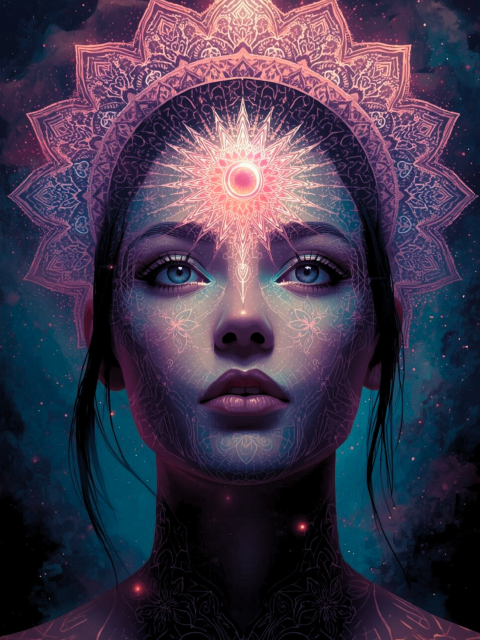
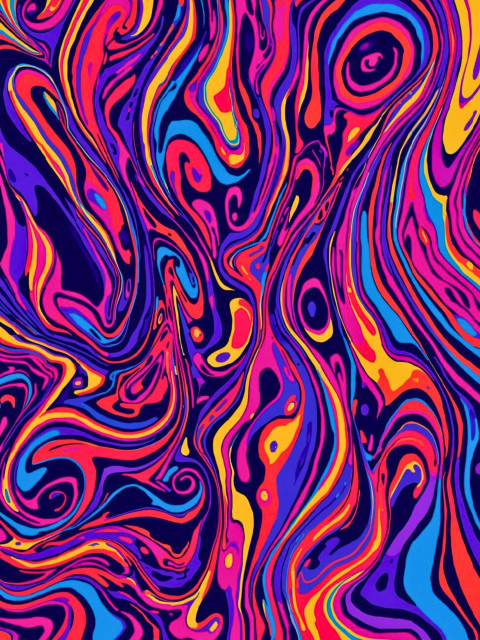
- Optical vibration: patterns that shimmer, pulse, or appear to move
- High-saturation color: neon gradients, prismatic halos, unreal palettes
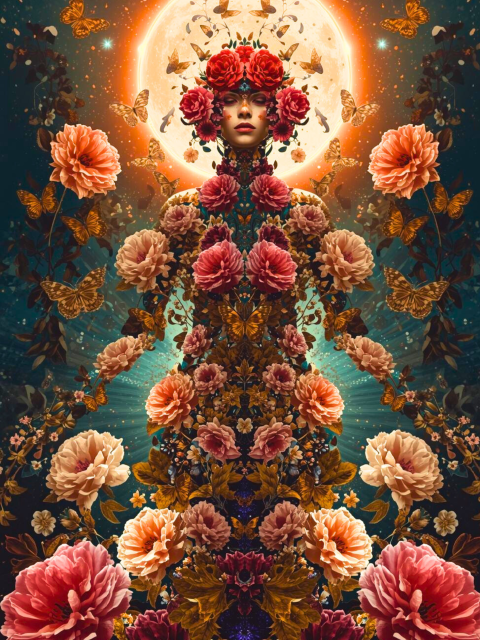
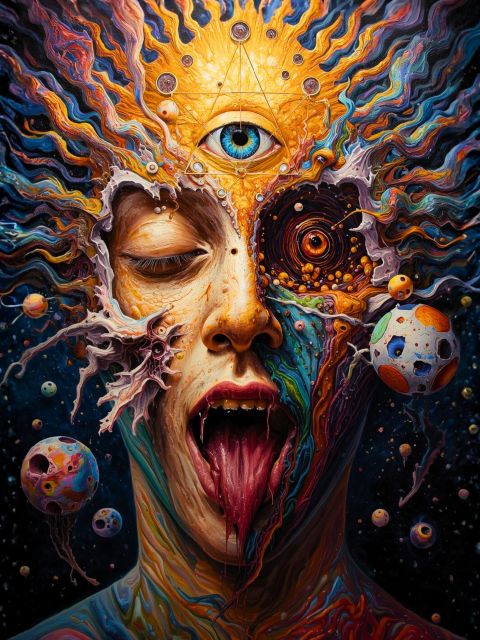
- Morphing forms: faces turning into flowers, architecture turning into anatomy
- Surreal symbolism: third eyes, serpents, mandalas, cosmic beings, dream logic
- Layered density: hidden imagery and detail that rewards slow looking
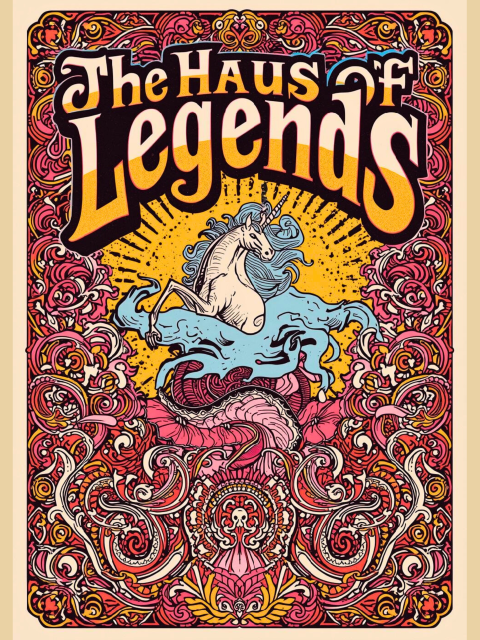
- Experimental typography: warped, liquid lettering and hand-drawn type
- Sacred geometry & repetition: spirals, fractals, tessellations, kaleidoscopic symmetry
Mediums and Technique
Psychedelic Art thrives wherever artists can bend reality.
Common mediums:
- Concert posters, album covers, printmaking (screenprint, lithography)
- Illustration and painting (ink, acrylic, gouache)
- Airbrush, murals, mixed media collage
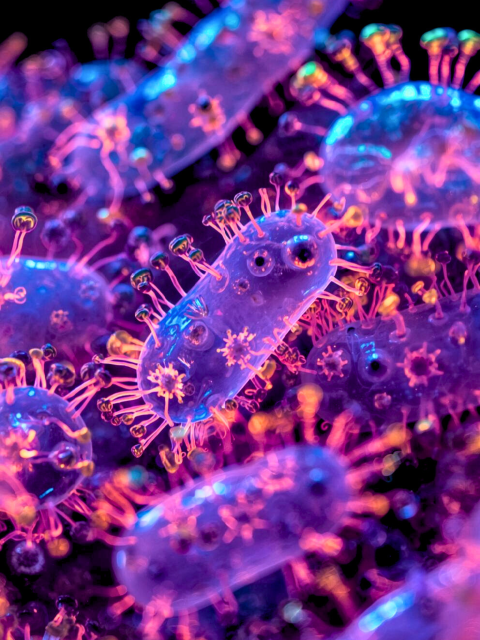
- Photography (double exposure, color manipulation)
- Digital art (3D, generative, fractal tools, layered collage)
- Animation, projection visuals, immersive environments
Techniques:
- Color contrast and glow: complementary clashes, luminous edges, chromatic aura
- Pattern stacking: repeated motifs building hypnotic rhythm
- Collage assembly: impossible combinations unified by cohesion
- Micro-detailing: dense textures that feel like visual incense
- Mandala/symmetry structures: composition that doubles as meditation
- Liquefaction/distortion: melting forms, elastic geometry, dream-warp space
Artistic Expression
At its core, Psychedelic Art is about expanded perception—spiritual, emotional, political, sensory, or all of the above.
It expresses:
- Inner worlds (dreams, visions, archetypes, subconscious symbols)
- Cultural rebellion (anti-war, anti-authoritarian, liberation movements)
- Mysticism (Eastern philosophy, esoteric traditions, cosmic spirituality)
- The ecstatic sublime (beauty that overwhelms and transforms)
- A refusal to accept “flat” reality as the whole story
This is art that says: your mind is bigger than your schedule.
Functionality
Psychedelic Art is famously gorgeous—but it’s also practical in its own unruly way.
What it does:
- Commands attention (perfect for posters, covers, branding, experiences)
- Creates immersion (visual environments that shift mood and perception)
- Signals identity (music scenes, spiritual communities, counterculture aesthetics)
- Acts like a ritual object (art as meditation, initiation, transformation)
Even when it looks like chaos, it’s engineered to alter the viewer’s experience.
Locations
Psychedelic Art is not tied to one museum—it’s a traveling carnival of consciousness. Historically and culturally, it’s strongly linked to:
- San Francisco (Haight-Ashbury) and the 1960s poster explosion
- London and UK underground design scenes
- Amsterdam and European counterculture print traditions
- Later evolutions in global festival culture and visionary communities
Wherever music, protest, spirituality, and design collide—psychedelic aesthetics bloom.
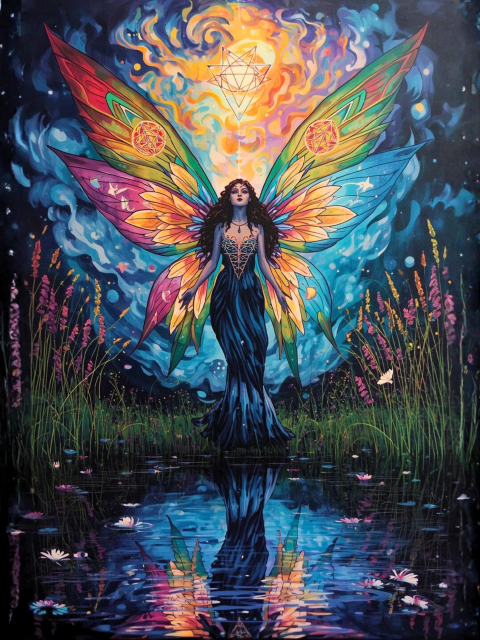
Themes
Recurring themes in Psychedelic Art include:
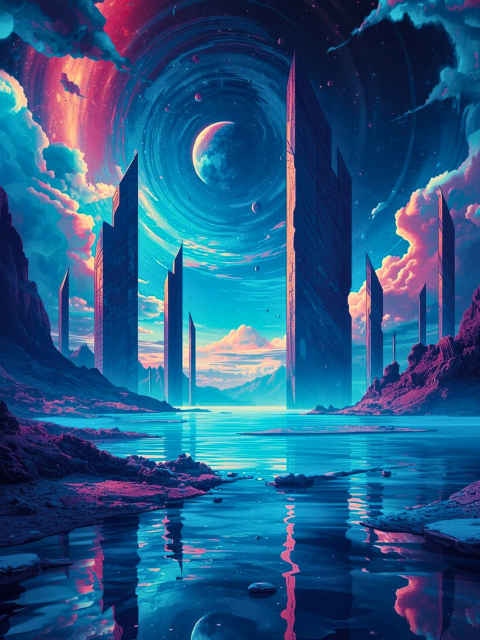
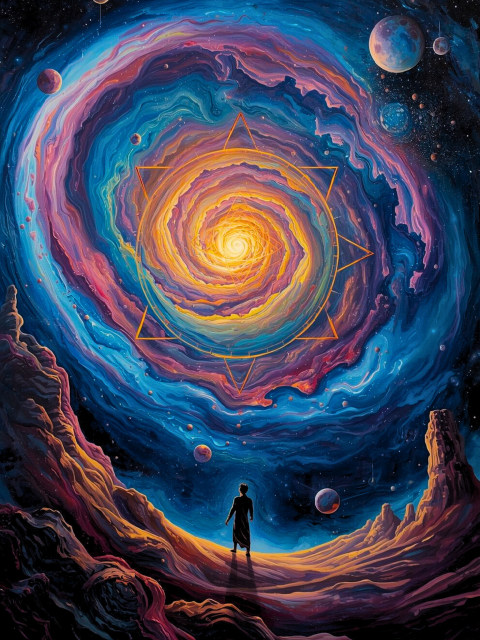
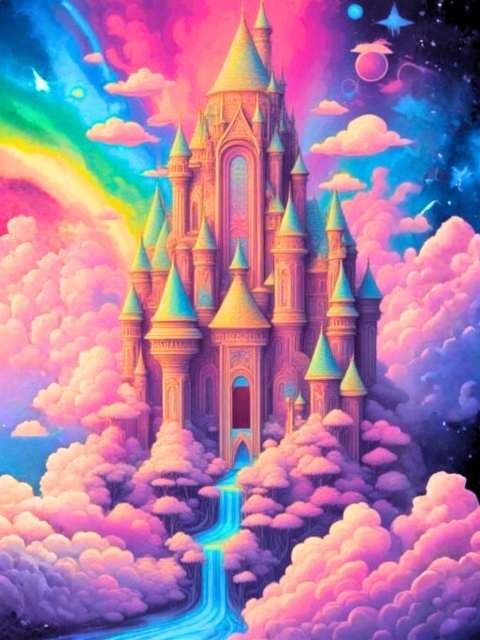
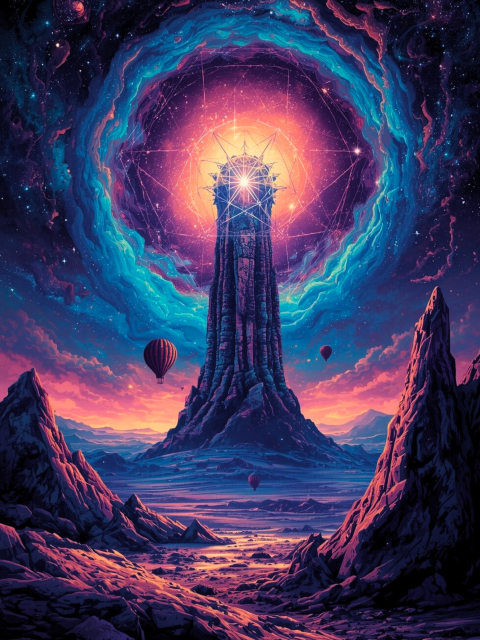
- Cosmos & infinity: galaxies, starfields, astral planes
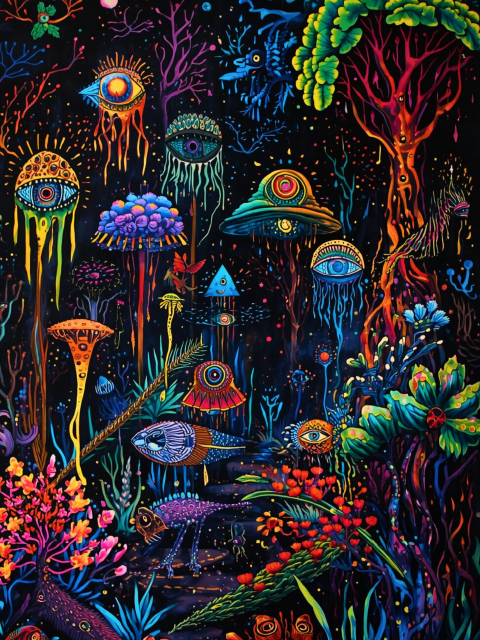
- Nature as sacred: fungi, vines, jungles, animal spirit-motifs
- Metamorphosis: transformation, alchemy, rebirth
- The third eye: insight, awakening, hidden truth
- Unity & interconnection: everything as pattern, everything as one
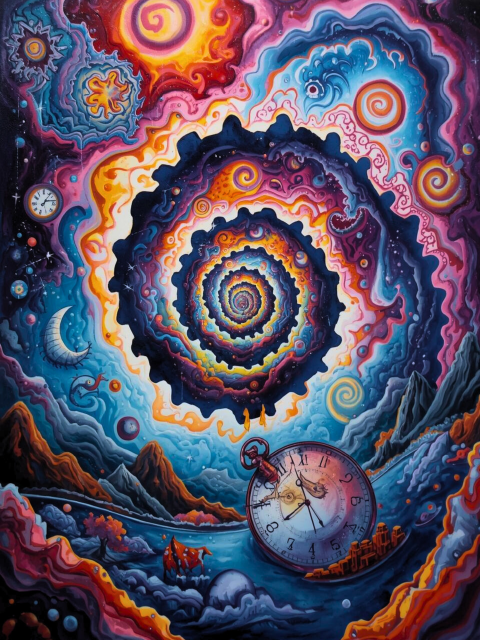
- Time distortion: loops, spirals, dream-time
- Mythic archetypes: gods, guardians, tricksters, cosmic guides
Key Examples
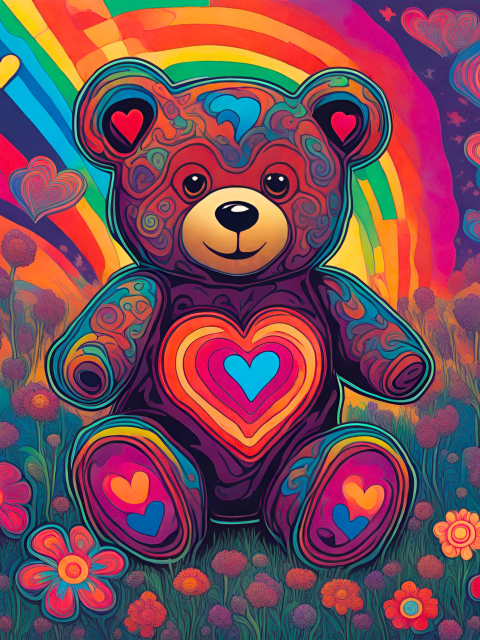
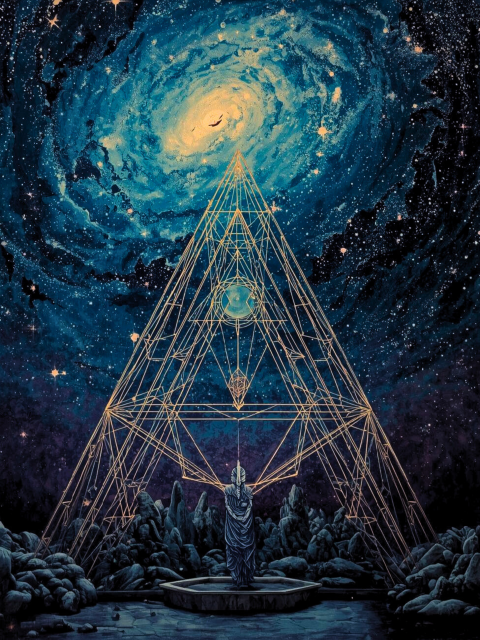
Some of the most iconic psychedelic visuals emerged from music posters, album art, and underground illustration. Artists pushed color, typography, and symbolism into entirely new territory.
Architectural Style (Psychedelic Spaces)
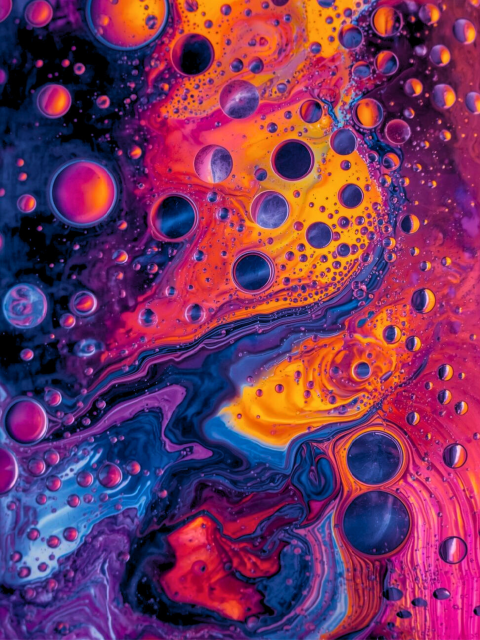
Psychedelic aesthetics show up in immersive spaces through:
- Saturated color environments and projection
- Organic, biomorphic forms and playful geometry
- Festival structures, visionary installations, experiential design
- Light-based atmospheres (LEDs, lasers, reflective materials)
Construction Techniques
- Projection mapping and animated visuals
- Mirrors, prisms, diffraction materials
- UV-reactive paint and blacklight
- Modular builds designed for sensory immersion
Historical Context
Psychedelic Art rose to prominence in the mid-1960s, intertwined with:
- Counterculture movements (civil rights, anti-war protests, youth liberation)
- Rock concerts and the poster-art boom
- Growing interest in Eastern spirituality and mysticism
- A wider fascination with consciousness exploration
It evolved beyond its 60s roots into:
- 1970s: fantasy illustration, album art, cosmic surrealism
- 1980s–90s: rave culture, electronic visuals, digital experimentation
- 2000s–present: visionary art, festival ecosystems, generative and AI-assisted visuals
Psychedelic Art never disappeared—it just kept mutating. Like it always does.
Notable Artists and Works
Here’s a solid starter constellation—artists strongly associated with psychedelic poster art and its broader visual universe:
- Wes Wilson — innovative, warped concert typography
- Victor Moscoso — vibrating color theory and optical intensity
- Stanley Mouse & Alton Kelley — iconic rock poster imagery
- Rick Griffin — surf culture meets cosmic symbolism
- Peter Max — pop-psychedelic optimism and bold color
- Mati Klarwein — surreal, symbolic album art (notably in late-60s/early-70s music culture)
- Alex Grey — contemporary visionary anatomy/spiritual iconography (later wave, hugely influential)
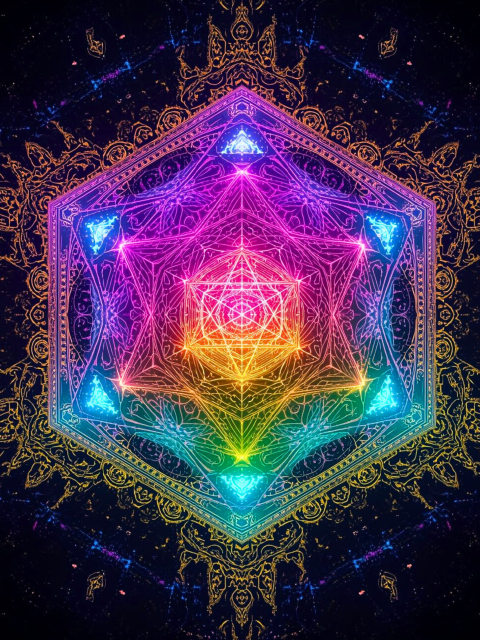
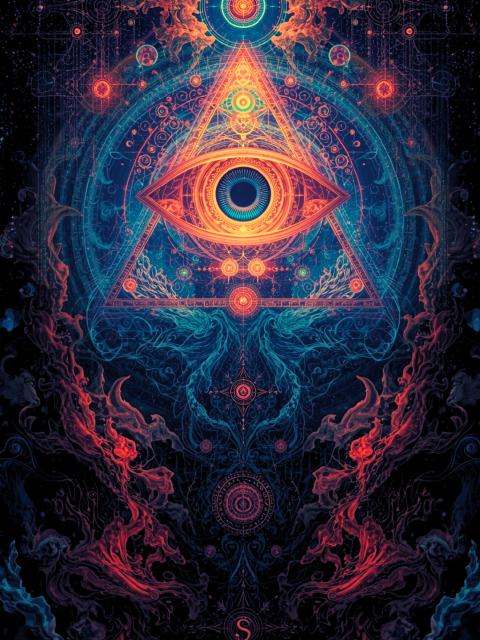
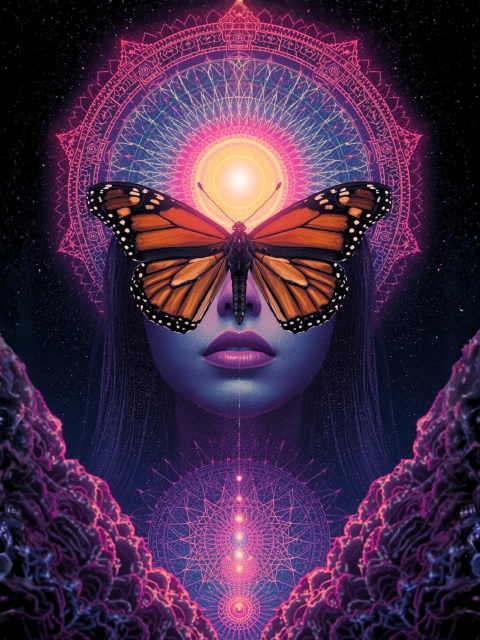
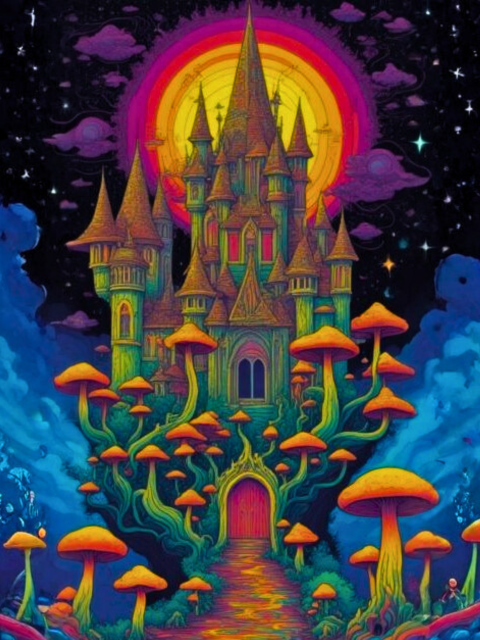
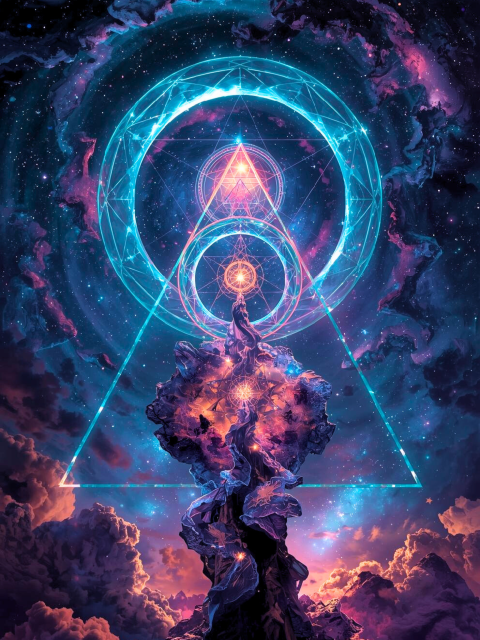
5 Simple Prompts for AI-Generated Psychedelic Art
Pro tip: specify composition + palette + texture + lighting. Psychedelic art loves structure under the chaos.
- Cosmic Portrait
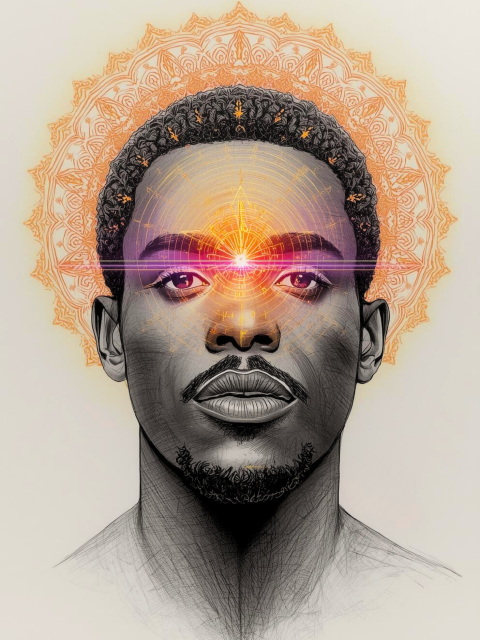
“Surreal psychedelic portrait of a celestial monarch, glowing third eye, prismatic aura, intricate mandala halo, neon gradients, micro-detailed patterns, dreamlike atmosphere.” - Mushroom Cathedral
“A cathedral made of bioluminescent mushrooms and vines, stained-glass fractal windows, swirling fog, sacred geometry embedded in the structure, luminous color bloom.” - Vibrating Poster Design
“1960s-inspired psychedelic concert poster, warped hand-drawn typography, vibrating complementary colors, dense ornamental border, symbolic central figure, screenprint texture.” - Metamorphosis Scene
“A figure transforming into a jungle of flowers, butterflies, and serpents, kaleidoscopic symmetry, glowing rim light, surreal layered collage depth.” - Astral Landscape
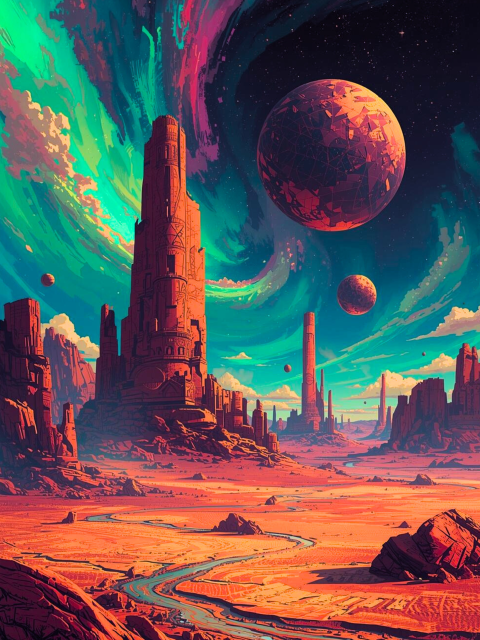
“Otherworldly landscape under swirling aurora skies, fractal terrain, floating geometric monoliths, saturated neon palette, hypnotic repeating motifs, high detail.”
Legendary Takeaway
Psychedelic Art is more than an aesthetic—it’s a technology of feeling. It changes how you look, how long you look, and what you notice when you do. It’s design as altered state, symbolism as sensory experience, and rebellion as radiant beauty.
In the Artistic Styles & Movements series, Psychedelic Art reminds us of something essential: art isn’t just representation—it’s transformation. And if your work makes people see the world differently afterward, congratulations… you’ve done the real magic.
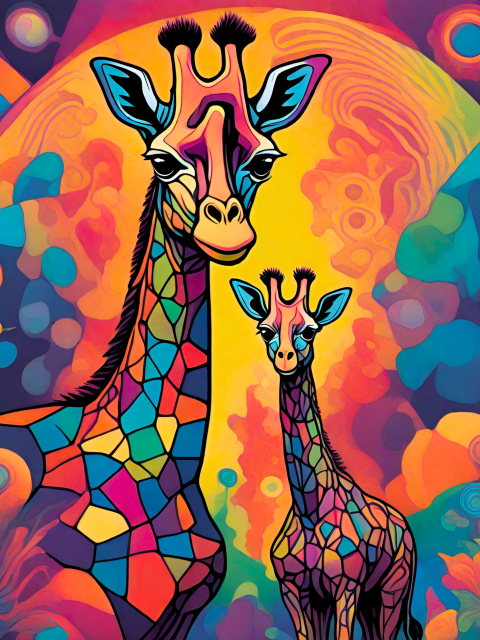
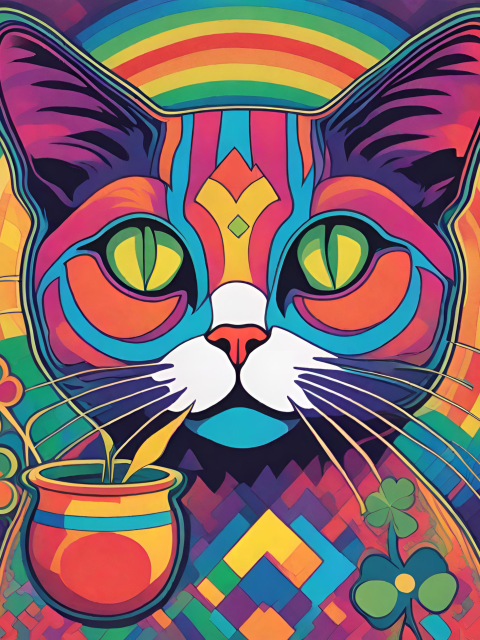
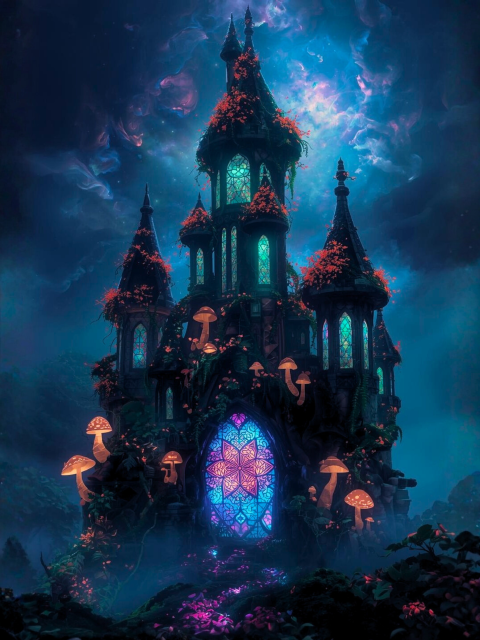

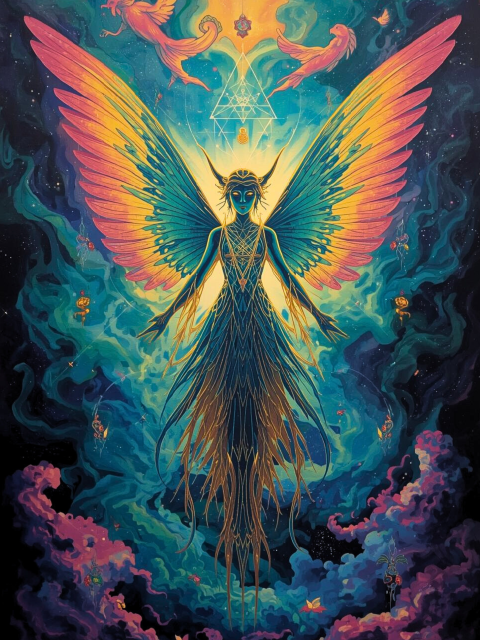
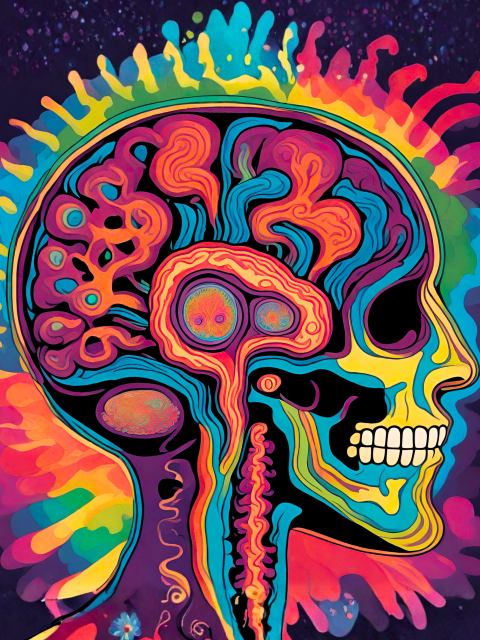
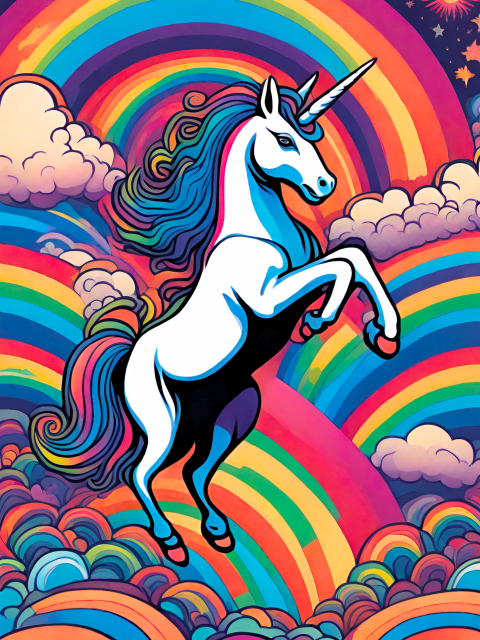
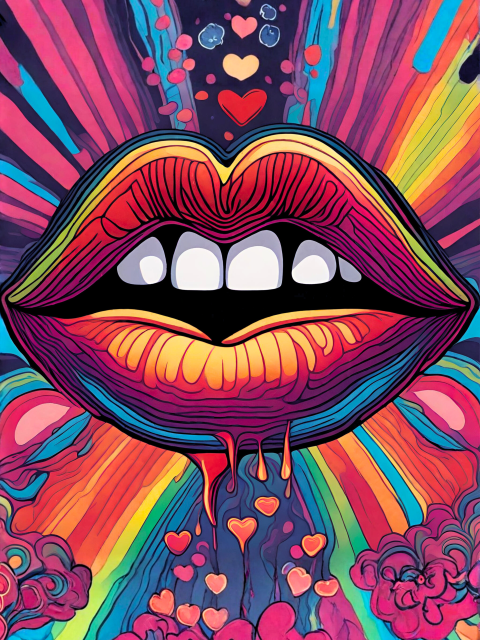
All images are avaiable in the SHOP as Posters, Prints and Print Canvas. Click on the Image number.


