
Geometric Abstract Art
Introduction to Geometric Abstract Art
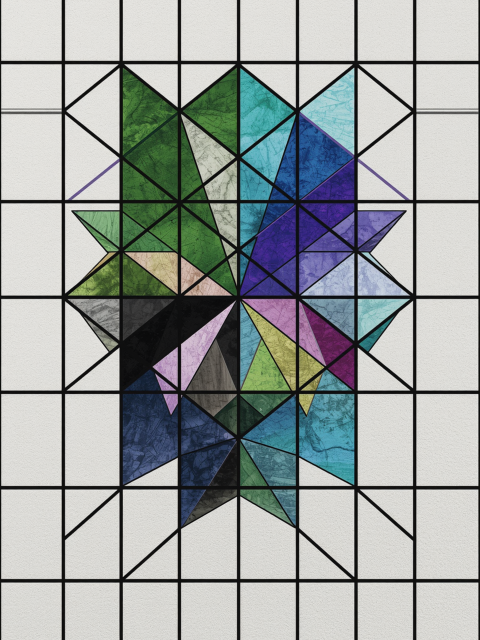
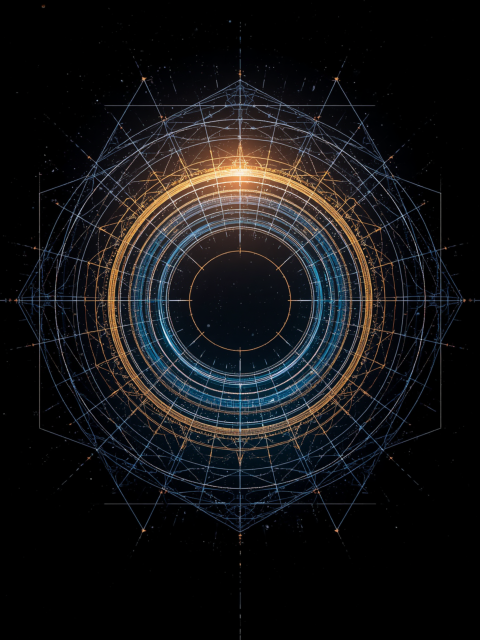
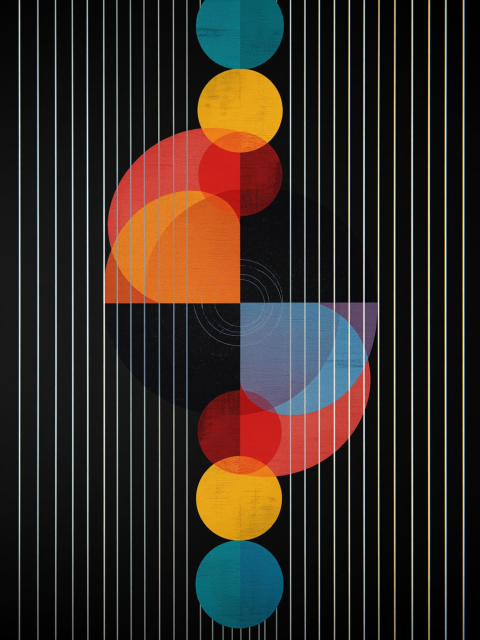
Geometric Abstraction is one of the most consequential and enduring movements in the history of modern art — a radical proposition that visual art need not represent the world as it appears, but can instead communicate through the pure, universal language of shape, line, color, and form. Emerging in the early twentieth century as European artists grappled with the philosophical and cultural upheavals of modernity, it marked a decisive break from centuries of representational tradition and laid the intellectual and visual foundations for much of the art, design, and architecture that followed.
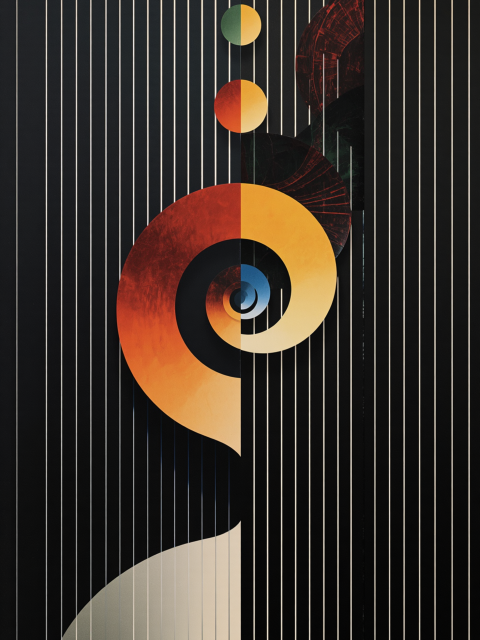
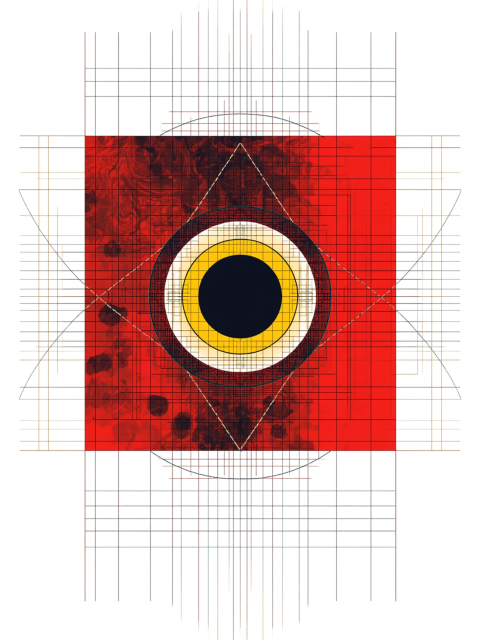
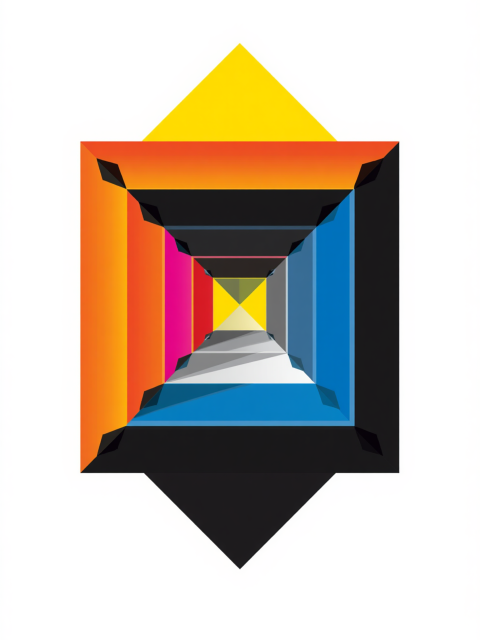
At its core, Geometric Abstraction strips the visual field to its essential elements: circles, squares, triangles, grids, lines, and planes of flat color. Where earlier artistic traditions derived their authority from mimesis — the faithful rendering of the visible world — Geometric Abstraction claims authority through structure, balance, and the intrinsic expressive power of form itself. It is an art of reduction and precision, of deliberate clarity, and, in its most ambitious expressions, of utopian ambition.
The movement encompasses a rich network of related tendencies and formal movements — Suprematism, De Stijl, Constructivism, the Bauhaus, Hard-Edge Abstraction, Op Art, and Minimalism among them — each distinct in philosophy and context, but united by a shared commitment to geometry as a primary expressive tool. Its influence reaches far beyond the gallery wall, permeating graphic design, typography, architecture, textile design, digital interfaces, and contemporary generative art. To understand Geometric Abstraction is to understand the visual grammar of the modern world.

Characteristics of Geometric Abstraction
Mediums and Techniques
Geometric Abstraction has been realized across a remarkably wide range of mediums. Oil and acrylic on canvas remain its most historically prominent vehicles, from the expansive flat fields of Ellsworth Kelly to the precisely taped hard edges of Josef Albers. Gouache on paper served as an essential working and finished medium for many Bauhaus and De Stijl artists, prized for the opacity and evenness of its color. Printmaking — particularly lithography, screenprint, and woodcut — has been central to the movement’s dissemination, allowing geometric designs to reach audiences far beyond the original work.
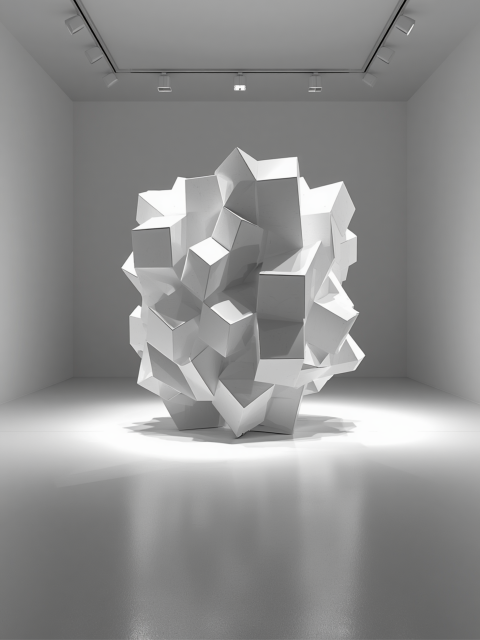
Sculpture and three-dimensional construction have been equally important, from the spatial constructions of El Lissitzky and Alexander Rodchenko to the primary structures of Donald Judd and the geometric mobiles of Alexander Calder. In applied and contemporary contexts, digital vector tools have become the natural medium of geometric abstraction, enabling the production of forms with a precision and scalability impossible in purely physical media. Textiles, ceramics, architectural surface design, and mosaic all carry geometric abstraction into the built and decorative environment.
Artistic Expression
- Flat planes of color: Areas of uniform, unmodulated color applied without visible brushwork, texture, or tonal variation, asserting the flatness of the picture plane as a deliberate formal and philosophical choice.
- Hard edges: Crisp, unblended boundaries between forms, achieved through masking tape, ruling pens, and meticulous technique, producing a sense of mechanical exactitude that removes evidence of the artist’s hand.
- Mathematical structure: Underlying compositional logic governed by mathematical ratios, grids, and proportional systems — the golden section, modular grids, and series progressions all feature as organizing principles.
- Reduced color palette: From Mondrian’s primary colors and neutrals to Albers’ complex chromatic interactions, geometric abstraction tends toward deliberate, controlled color relationships rather than naturalistic or expressive color.
- Compositional balance: Whether through symmetry or carefully calibrated asymmetry, geometric compositions establish visual equilibrium through the thoughtful distribution of form, color, and negative space.
Functionality
Geometric Abstraction has always existed in productive tension between pure art and applied purpose. For the Constructivists and Bauhaus masters, this tension was ideological: art divorced from social utility was a luxury they rejected. The movement’s principles — clarity, structure, reduction, systematic color — translated with exceptional directness into graphic design, poster art, typography, product design, and architecture. The International Typographic Style (Swiss Style) of the mid-twentieth century is perhaps the most comprehensive applied expression of geometric abstract principles, and it remains the dominant design paradigm of the digital age. In contemporary practice, geometric abstraction informs UI and UX design, brand identity systems, and the visual language of generative and algorithmic art.
Locations
The geography of Geometric Abstraction mirrors the broader map of twentieth-century modernism. The Bauhaus school — first in Weimar, then Dessau, then Berlin — was its most consequential institutional home, gathering Europe’s most progressive artists, designers, and architects under a single roof from 1919 to 1933. Amsterdam was the center of De Stijl, the movement founded by Mondrian and Theo van Doesburg. Moscow and Petrograd were the crucibles of Suprematism and Constructivism in the revolutionary period following 1917. New York became the dominant center of geometric and hard-edge abstraction from the 1950s onward, with galleries along 57th Street and the Museum of Modern Art serving as the movement’s institutional backbone. Today, geometric abstraction is a genuinely global practice, with significant communities of artists, galleries, and collectors on every continent.
Themes of Geometric Abstraction
Key Examples
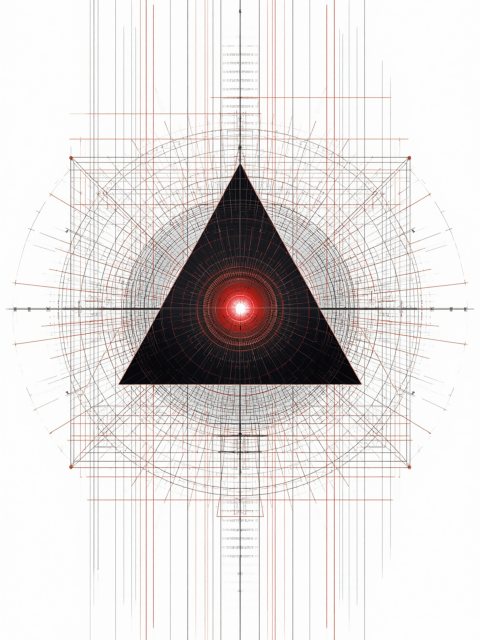
- Kazimir Malevich, Black Square (1915): The foundational manifesto-object of Suprematism, a black quadrilateral on a white ground that claimed to represent the zero degree of painting — pure sensation freed from all reference to the visible world.
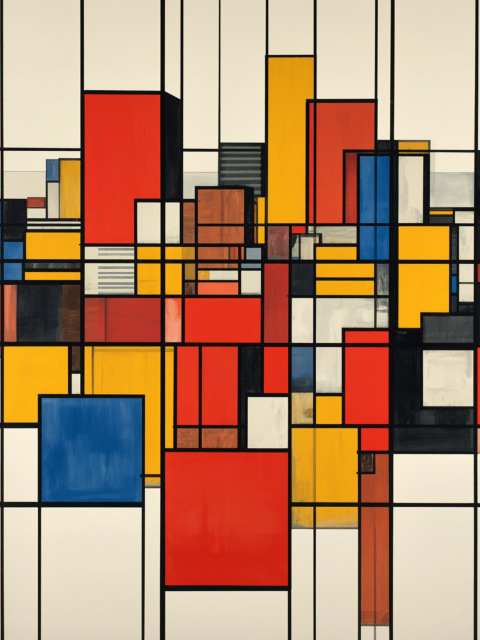
- Piet Mondrian, Composition with Red, Blue, and Yellow (1930): The canonical expression of Neo-Plasticism, a composition of black vertical and horizontal lines enclosing planes of primary color and white, asserting the universal harmony Mondrian believed resided in pure primary relationships.
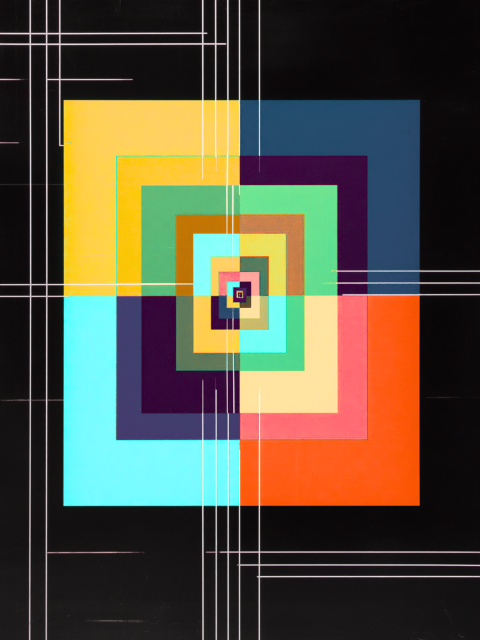
- Josef Albers, Homage to the Square series (1949–1976): Over a thousand paintings and prints systematically exploring the optical and psychological interactions of color through a simple nested-square format, forming the most comprehensive empirical study of color relationships in the history of art.
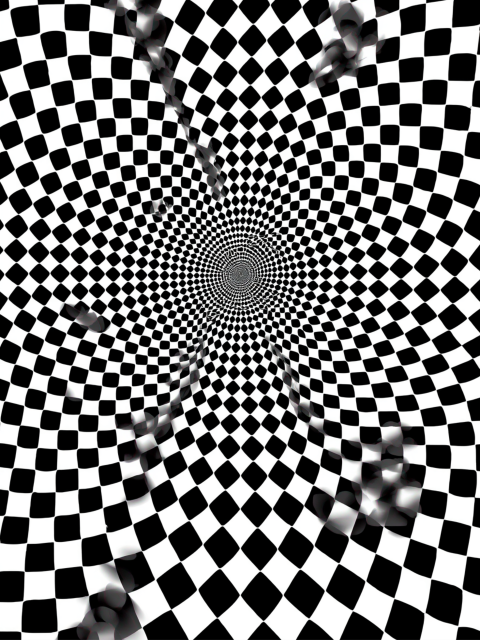
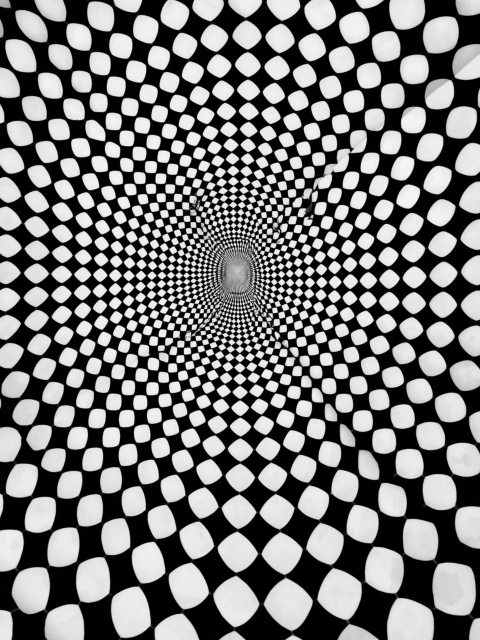
- Bridget Riley, Movement in Squares (1961): A landmark of Op Art using geometric repetition and systematic distortion of black-and-white squares to produce powerful illusions of movement and three-dimensionality on a flat surface.
- Frank Stella, shaped canvases (1960s): Stella’s radical literalism — making the canvas itself a geometric form and filling it with concentric repetitions of that form — pushed the logic of geometric abstraction to its structural extreme and opened the door to Minimalism.
Description
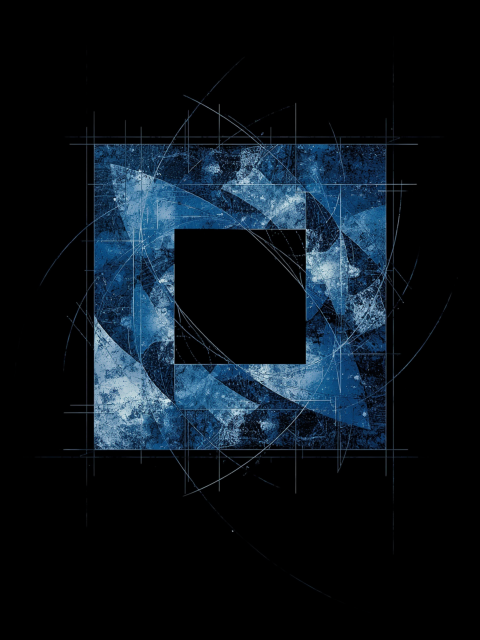
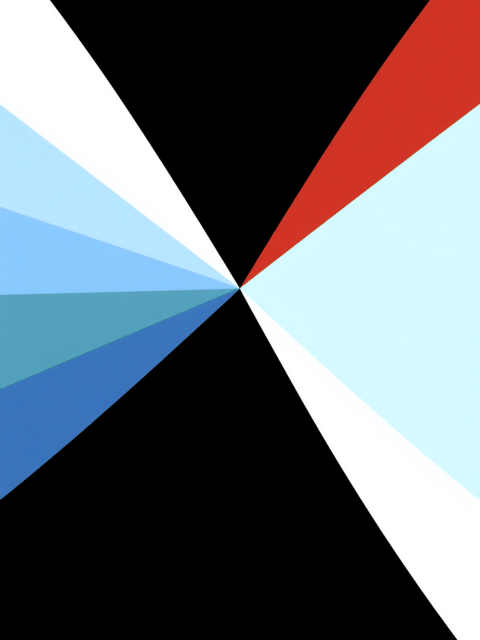
Geometric Abstraction is defined by its insistence on the self-sufficiency of visual form. A Mondrian grid, a Malevich square, an Albers nested color study — each is complete in itself, requiring no external referent, no narrative, no subject matter beyond its own formal relationships. This is both its radical proposition and its lasting power: it asks the viewer to engage with the work on purely visual and perceptual terms, to feel the tension between a vertical and horizontal line, to experience the vibration of two adjacent colors, to sense the weight of a dark square against a luminous field.
The aesthetic operates simultaneously at the level of intellectual system and direct sensory experience. This is not accidental — the greatest geometric abstract artists understood that formal rigor and perceptual immediacy are not opposed but mutually reinforcing. The structural clarity of a Mondrian composition is precisely what produces its visual serenity; the mathematical precision of a Riley pattern is exactly what generates its unsettling optical energy. Geometry here is not a cold constraint but a generative discipline.
Architectural Style
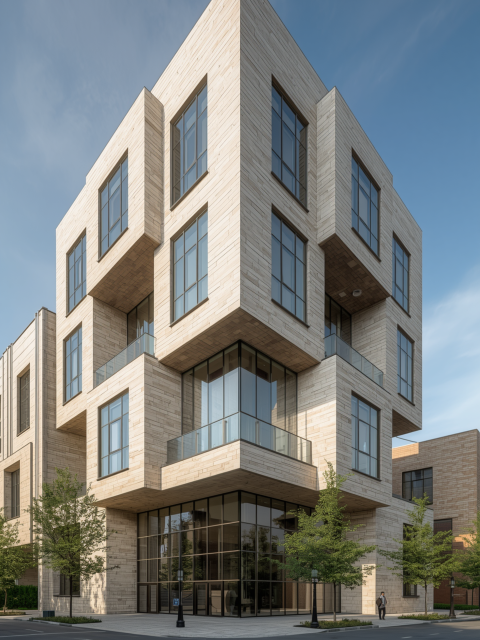
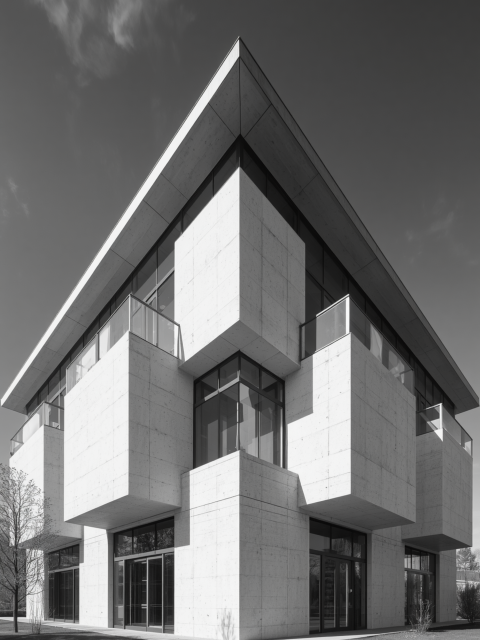
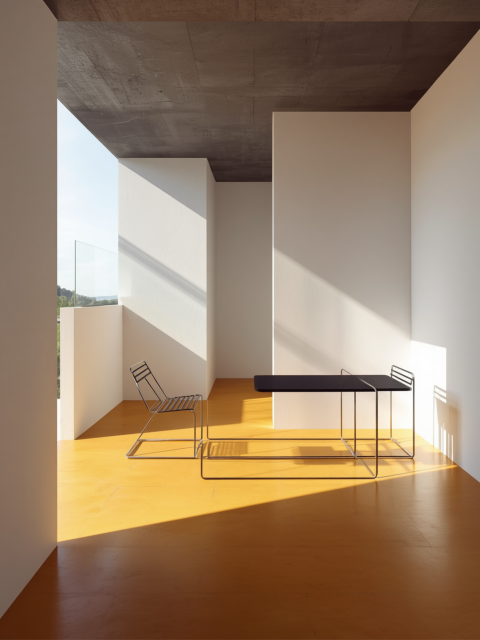
No art movement has had a more direct and transformative relationship with architecture than Geometric Abstraction. The Bauhaus building in Dessau, designed by Walter Gropius and completed in 1926, is the most celebrated physical embodiment of geometric abstract principles in three dimensions: its asymmetrical composition of interlocking cubic volumes, expanses of curtain glass, flat rooflines, and absence of ornament translate the movement’s values directly into built form. Gerrit Rietveld’s Schröder House in Utrecht (1924), designed in explicit dialogue with De Stijl principles, takes the Mondrian grid off the canvas and into habitable space, with sliding partitions and movable walls that reconfigure the geometric composition of interior space.
The broader International Style in architecture — Le Corbusier’s villas, Mies van der Rohe’s glass towers, the corporate modernism of mid-century America — all descend directly from the principles articulated in geometric abstraction. In interior design, the movement’s influence manifests in modular furniture systems, grid-based spatial planning, and the persistent appeal of geometric pattern in textiles, tiles, and surface design. Contemporary architecture continues to draw on these principles, particularly in the parametric and generative approaches to form-making that echo the systematic logic of geometric abstract art.


Historical Context
The emergence of Geometric Abstraction in the early twentieth century was inseparable from the cultural and intellectual upheavals of the period. The trauma of the First World War discredited the cultural traditions of the nineteenth century and created an urgent appetite for new foundations — in politics, philosophy, science, and art. The same decades that produced Einstein’s theory of relativity, Freud’s model of the unconscious, and the Bolshevik Revolution also produced Malevich’s Suprematism, Mondrian’s Neo-Plasticism, and the Bauhaus. Geometric Abstraction was, in this sense, a utopian project: the conviction that pure form, stripped of cultural and historical contingency, could provide a universal visual language adequate to the modern world.
The movement’s trajectory through the century charts the broader history of modernism and its aftermath. The forced closure of the Bauhaus by the Nazis in 1933 and the emigration of its faculty to the United States transplanted European geometric abstract principles into American art education and practice. The post-war decades saw the emergence of American Hard-Edge Abstraction, Color Field painting, and Op Art — all distinct developments that extended the geometric tradition in new directions. Minimalism in the 1960s represented a further radical reduction, while Conceptual Art of the same period interrogated the philosophical premises that geometric abstraction had long taken for granted. By the late twentieth century, geometric abstraction had become both a historical canon and a living practice, its principles absorbed into the DNA of design culture worldwide.
Construction Techniques
- Masking and ruling: Precise hard edges are achieved through masking tape, ruling pens, and straight edges, allowing clean boundaries between color fields without visible brushwork or blending.
- Grid systems: Underlying compositional structures are established through precisely constructed grids, often drawn with compass, set square, and protractor before any color is applied.
- Systematic color application: Color is typically applied in thin, even layers to achieve maximum opacity and uniformity, often using foam rollers or wide flat brushes to eliminate texture.
- Series and progression: Many geometric abstract works are conceived as part of extended series — systematic explorations of a single formal variable, such as Albers’ color interactions or Riley’s optical patterns.
- Digital vector construction: Contemporary geometric abstract artists typically work in vector software such as Adobe Illustrator or Figma, enabling resolution-independent precision and seamless scaling across print and digital applications.
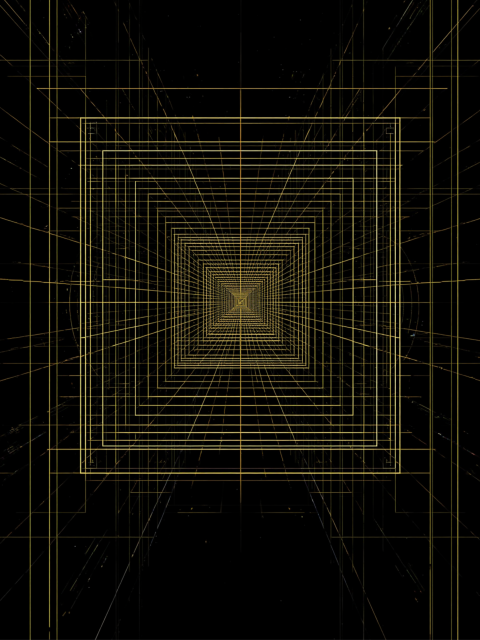
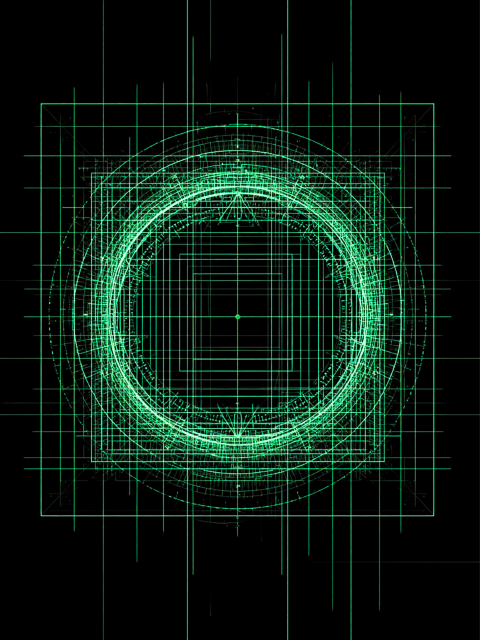

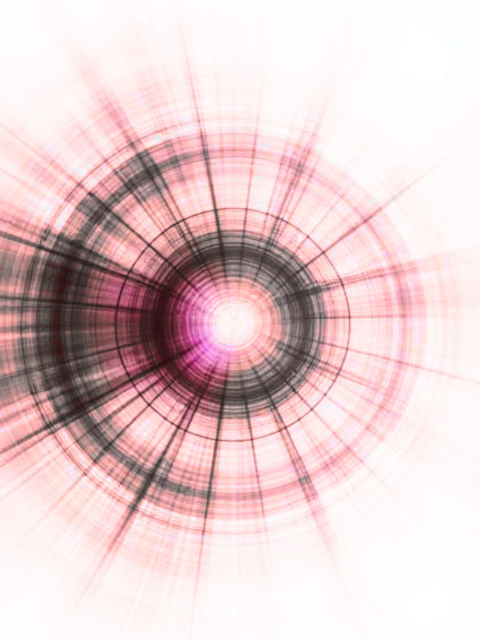
Historical Context of Notable Artists and Works
- Kazimir Malevich and Suprematism (1915): With the exhibition of Black Square at the Last Futurist Exhibition of Paintings 0.10 in Petrograd, Malevich launched Suprematism — a claim that pure geometric sensation, free of all objective reference, was the supreme form of artistic expression. The movement influenced Constructivism, the Bauhaus, and virtually every subsequent geometric tendency in Western art.
- De Stijl and Mondrian (1917–1931): Founded by Mondrian, Theo van Doesburg, and others, De Stijl sought to articulate a universal harmony through the exclusive use of primary colors, black, white, and the right angle. Mondrian’s mature grid paintings remain among the most recognized and influential works in the history of modern art.
- The Bauhaus (1919–1933): Under successive directors Walter Gropius, Hannes Meyer, and Mies van der Rohe, and with a faculty including Klee, Kandinsky, Moholy-Nagy, and Albers, the Bauhaus was the most influential art and design school of the twentieth century, systematically applying geometric abstract principles across art, craft, typography, and architecture.
- American Hard-Edge Abstraction (1950s–1960s): Artists including Ellsworth Kelly, Ad Reinhardt, and Kenneth Noland developed a distinctly American variant of geometric abstraction — large-scale, direct, stripped of European metaphysical ambition, and focused on the immediate optical and physical experience of color and form.
- Op Art (1960s): Bridget Riley (UK) and Victor Vasarely (Hungary/France) led the Op Art movement, using precisely calibrated geometric patterns to produce powerful optical illusions of movement, depth, and vibration, demonstrating the perceptual power latent in pure geometric form.
- Contemporary Geometric and Generative Art (2000s–present): Digital tools have opened new territories within geometric abstraction. Artists such as Vera Molnár (a pioneer of computer art since the 1960s), Refik Anadol, and communities of generative artists working with Processing and p5.js extend the geometric abstract tradition into algorithmically produced, data-driven, and interactive art.
Art Economy
Geometric Abstraction occupies a commanding position in the global art market. Works by the movement’s canonical figures — Mondrian, Malevich, Albers, Kelly, and Riley — rank among the most valuable paintings and works on paper produced in the twentieth century. A Mondrian grid composition can command tens of millions of dollars at auction, while Albers’ Homage to the Square prints and paintings sustain vigorous demand across price points from accessible editions to major auction lots. The movement’s combination of intellectual authority, historical pedigree, and strong visual identity makes it particularly attractive to institutional and corporate collectors, who prize its neutrality and decorative power alongside its art-historical significance.
Corporate collecting has historically been one of geometric abstraction’s most significant markets. The clean, non-narrative, universally legible quality of geometric abstract work makes it ideal for office environments, bank lobbies, and corporate headquarters, and major institutional collections in these contexts — from Deutsche Bank’s renowned collection to the holdings of major law firms and financial institutions — are disproportionately weighted toward geometric abstraction and its close relatives. This has created a robust secondary market and sustained the careers of many mid-career and emerging geometric abstract artists who might struggle in other market conditions.
At the contemporary end of the market, geometric abstraction benefits from its natural affinity with digital production and distribution. Limited edition prints, posters, and digital files sell successfully through platforms such as Artsy, Saatchi Art, and Society6, making geometric abstract work among the most commercially viable for self-representing artists. The NFT boom of 2020–2022 provided a notable, if volatile, new revenue stream for geometric and generative digital artists, with algorithmically produced geometric works by artists such as Dmitri Cherniak (Ringers) achieving significant market valuations. The movement’s ongoing relevance to graphic design, branding, and pattern licensing also provides commercial income streams unavailable to many other art categories.

Legacy and Influence
The legacy of Geometric Abstraction is, in the broadest sense, the visual language of modernity itself. Its core principles — clarity, structure, reduction, the primacy of form — are so thoroughly embedded in the design culture of the twenty-first century that they are often experienced not as a particular artistic tradition but as neutral common sense. The grid-based layouts of print and digital media, the flat color systems of brand identity, the modular principles of product and furniture design: all trace their intellectual lineage directly to the Bauhaus, De Stijl, and the broader geometric abstract tradition.
In fine art, geometric abstraction’s influence cascades through Minimalism, Conceptual Art, installation art, and the contemporary fields of generative and algorithmic art. The logic of series, progression, and systematic variation that Albers pioneered in Homage to the Square found its natural digital extension in the parametric and algorithmic approaches of artists working with code. Vera Molnár’s computer drawings of the 1960s and 1970s, largely unknown during her lifetime, are now recognized as foundational works of generative art, demonstrating that the systematic geometric logic of abstraction was already reaching toward computational realization decades before the internet.
Perhaps most significantly, Geometric Abstraction established the intellectual framework within which all subsequent abstract art has operated — the premise that formal relationships can be expressive in themselves, that visual art need not narrate or represent to be meaningful, and that the language of shape and color is genuinely universal. Every time a designer chooses structure over decoration, every time an architect asserts the beauty of an unornamented plane, every time a digital artist generates form through algorithm rather than observation, they are working within a tradition that Malevich launched with a black square on a white canvas in 1915.
5 AI Art Generation Prompts
Landscape / Environment
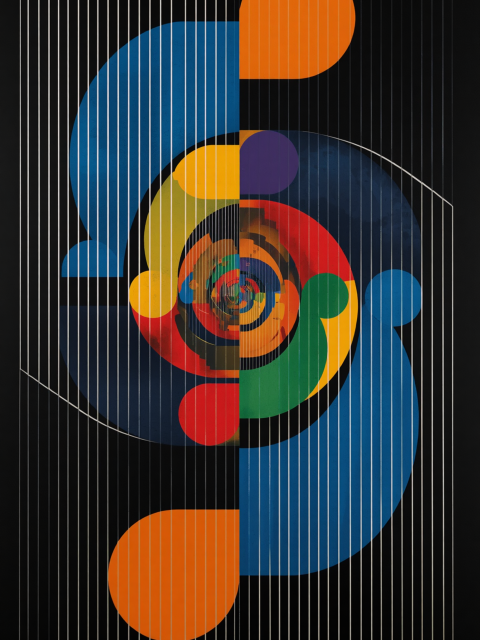
“A geometric abstract cityscape rendered in the style of De Stijl: a grid of interlocking rectangular blocks in primary red, yellow, and blue, separated by precise black horizontal and vertical lines against a white ground, flat perspective, no shadows, no texture, pure structural composition.”
Portrait / Figure
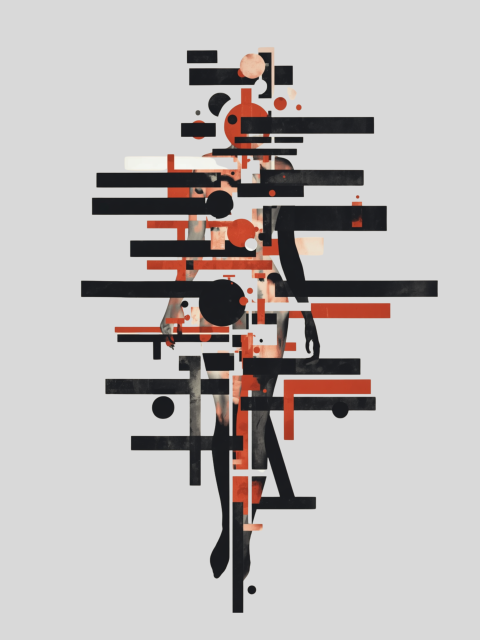
“A Suprematist figure study: the human form dissolved entirely into floating geometric elements — elongated rectangles, circles, and diagonal lines in black, red, and white — arranged in dynamic asymmetric tension on a cream ground, Malevich-inspired, early twentieth-century aesthetic.”
Object / Still Life
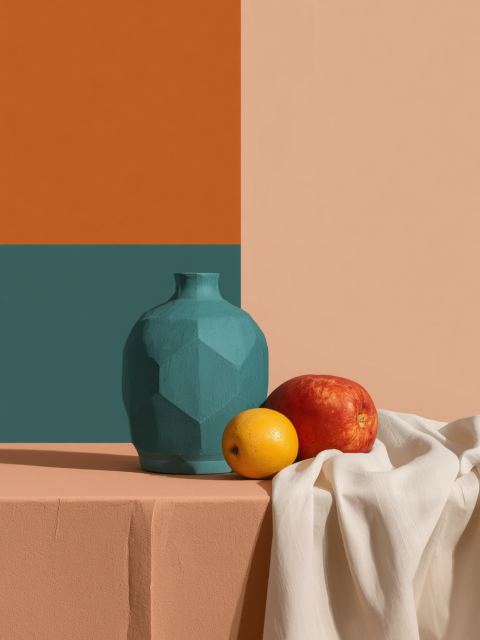
“A still life reimagined as hard-edge abstraction: a vase, fruit, and draped cloth reduced to flat geometric planes of color — ochre, teal, burnt sienna, and soft white — with clean rectilinear forms and no representational detail, inspired by Ellsworth Kelly’s shaped color studies.”
Abstract Composition
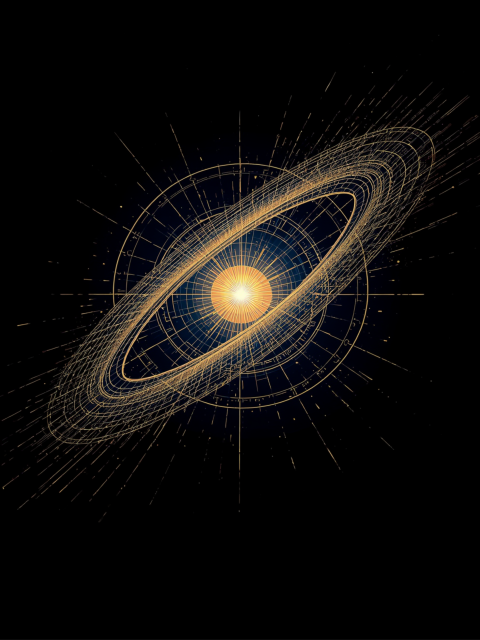
“An Op Art composition in the manner of Bridget Riley: a large-format black-and-white pattern of precisely repeated circles that gradually compress and expand across the canvas, generating a powerful optical illusion of depth and oscillating movement, high contrast, no tonal gradation, pure geometric rhythm.”
Architectural / Interior
“A Bauhaus-inspired interior rendered as geometric abstraction: a minimal room defined by interlocking rectangular planes of flat color — white walls, a mustard floor, a deep grey ceiling — with tubular steel furniture reduced to pure line drawing, natural light as a geometric diagonal, no decorative elements, total formal clarity.”

Conclusion
Geometric Abstraction stands as the defining intellectual and visual achievement of twentieth-century art — the moment at which Western art asked, with complete seriousness, whether the world needed to be in the picture at all, and answered with a resounding and generative no. In doing so, it did not retreat from the world but found a more fundamental way of engaging with it: through the structures, relationships, and formal tensions that underlie all visual experience.
Its legacy is not confined to museum walls or art history syllabi. Every flat-color icon on a phone screen, every modular shelf unit, every grid-based page layout, every algorithmically generated pattern is a descendant of the radical proposition that Malevich, Mondrian, Albers, and their contemporaries placed before the world in the early years of the last century. The grammar they established has become so fundamental to how the modern world looks that it is now largely invisible — which is, in one sense, the ultimate measure of a movement’s success.
For artists, designers, and visual thinkers today, Geometric Abstraction remains not a historical endpoint but a living resource: a discipline of looking, thinking, and making that insists on the expressive power of structure, the intelligence of reduction, and the inexhaustible possibility of the square, the circle, and the line.
Continue Learning
This article is part of The Haus Of Legends educational ecosystem. Continue with: