Art Deco
Introduction to Art Deco
Artistic Styles & Movements Series — The Haus of Legends
Art Deco is what happens when elegance decides to lift weights. It’s luxury with structure, beauty with engineering, and style that refuses to apologize for loving shine. Art Deco emerged after World War I from the desire for modern life. It transformed the world’s obsession with speed, cities, and new technology into a visual language. This language is characterized by confidence, clean geometry, bold symmetry, radiant metallics, and patterns that feel like jazz made visible.
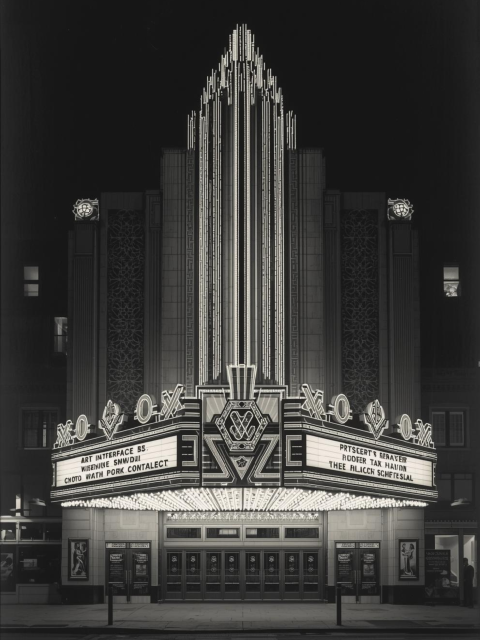
This movement didn’t want “cozy.” It wanted sleek. It wanted progress. It wanted the future—polished, streamlined, and perfectly tailored. Art Deco influenced everything, from skyscraper crowns to cinema marquees. It impacted perfume bottles to ocean liners. It became the house style of modern aspiration. This was the moment the world decided design could be both functional and fabulous.
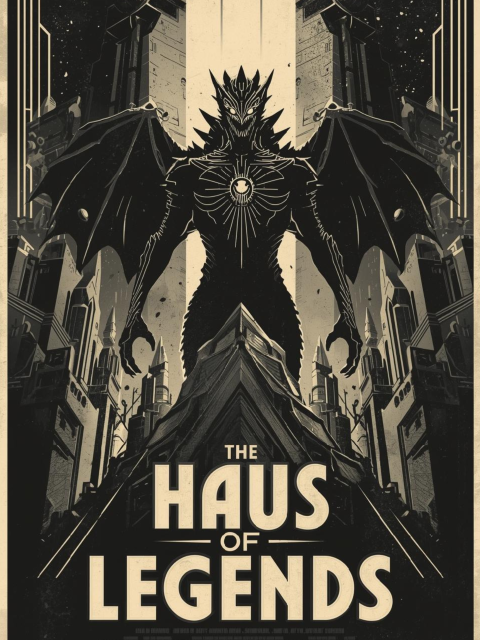


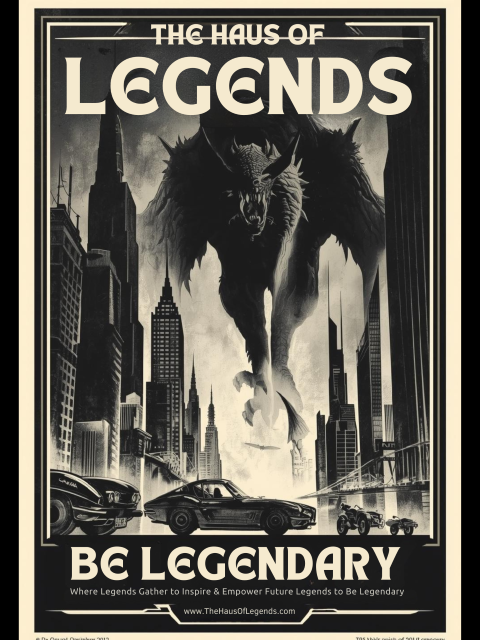
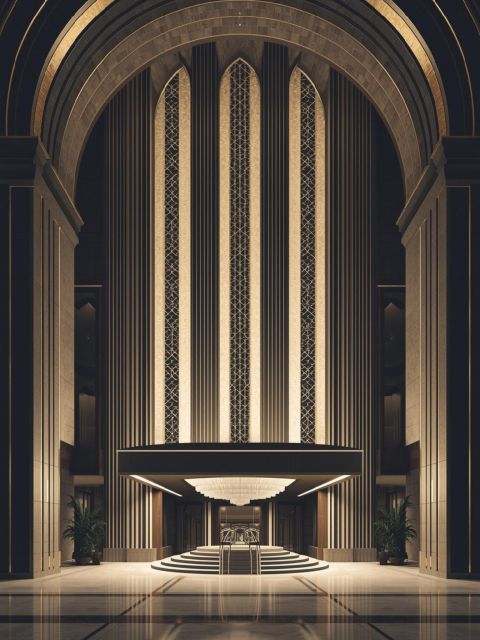
Characteristics of Art Deco
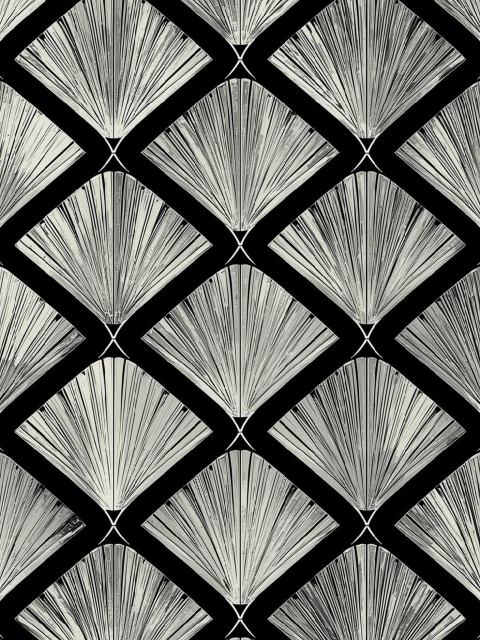
- Geometry & symmetry: zigzags, chevrons, sunbursts, stepped forms, scallops
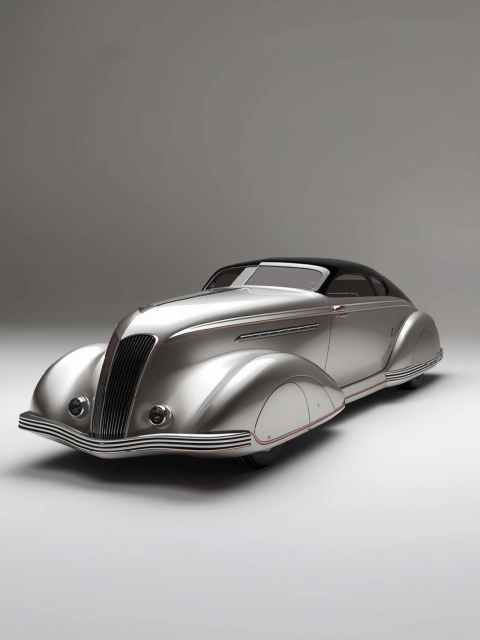
- Streamlined silhouettes: aerodynamic curves and “speed lines” (especially later Deco)
- High contrast: sharp light/dark pairings, crisp edges, bold outlines
- Luxury cues: metallic finishes, lacquer sheen, jewel tones, and polished surfaces
- Stylized nature: florals, feathers, waves, and animals reduced into sleek motifs
- Optimism through order: everything feels intentional, composed, and “designed”
Mediums and Technique
Art Deco is less a single medium and more a design mindset that infected everything:
- Architecture: limestone, granite, terracotta, steel framing, decorative spandrels, patterned facades
- Interior design: inlaid woods, lacquer, mirrored surfaces, chrome, glass, bold textiles
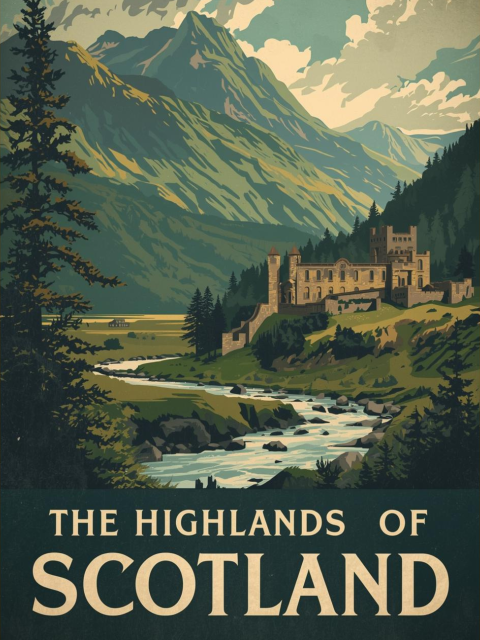
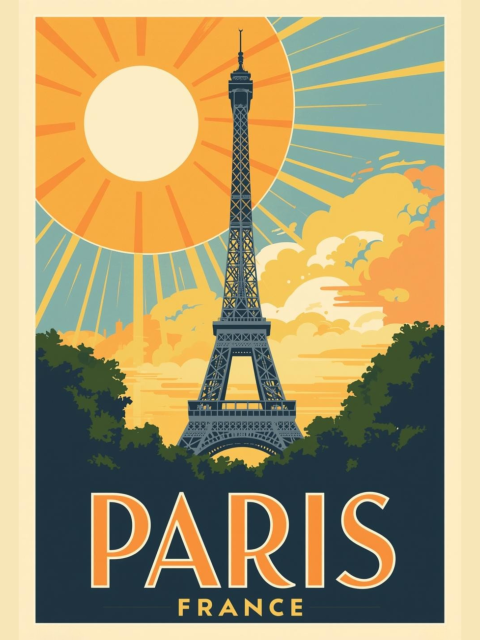
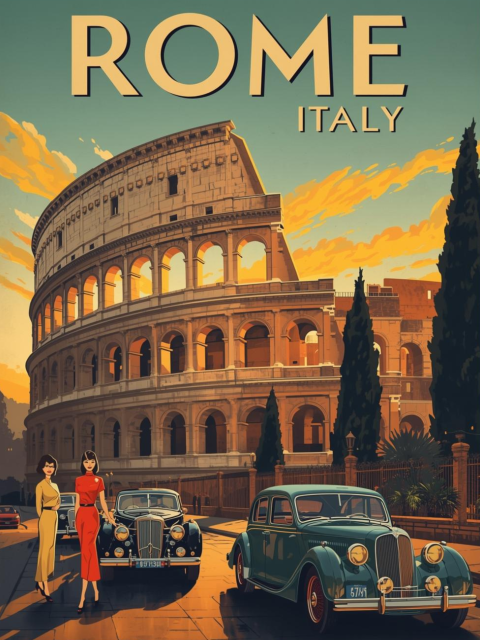
- Graphic design & posters: simplified figures, strong diagonals, airbrushed gradients, dramatic type
- Fashion & jewelry: angular silhouettes, beading, geometric motifs, strong contrast and shine
- Product design: radios, furniture, automobiles, perfume bottles—mass-market objects made glamorous
- Craft & decorative arts: metalwork, stained glass, ceramics, mosaics, and ornamental reliefs
Techniques often emphasize clean construction (crisp edges, measured symmetry), with surface effects that say “expensive” even when the object isn’t.
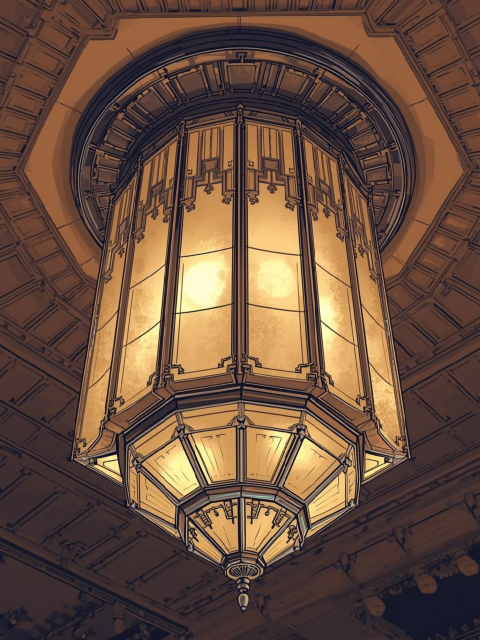

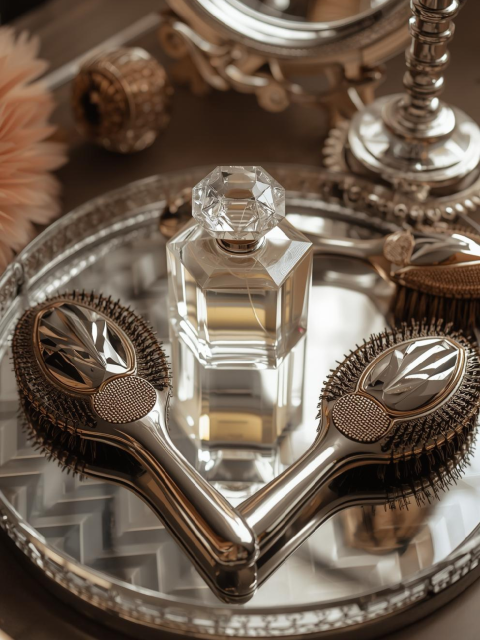
Artistic Expression
Art Deco expresses a very specific kind of emotion: confidence.
It celebrates modern life as something curated into perfection. It is not messy and chaotic. It is like a skyline with good posture.
Common expressive traits:
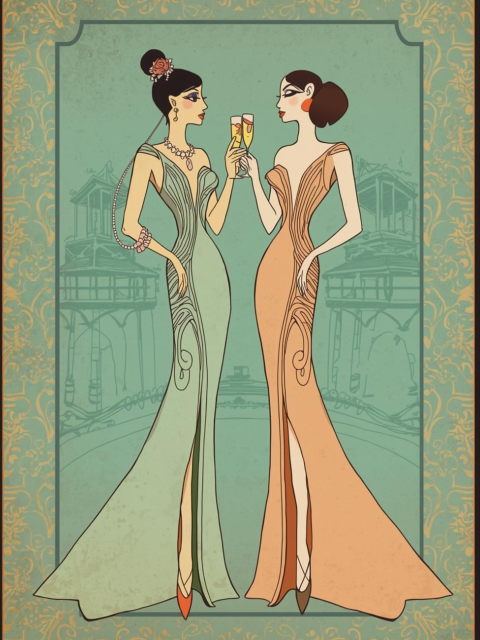
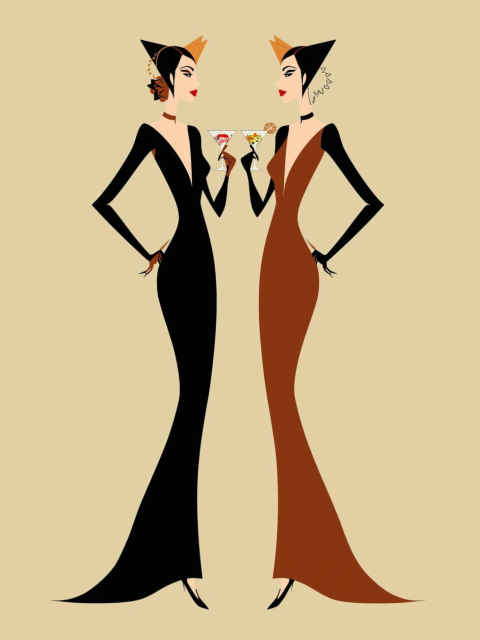
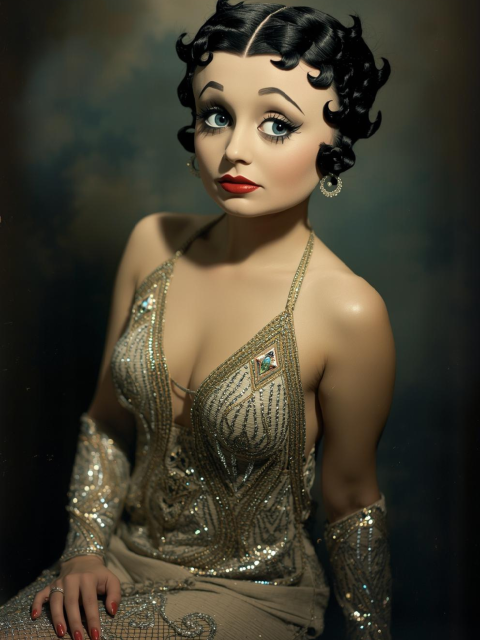
- Stylized humans: elegant, elongated figures; sleek profile poses; theatrical glamour
- Power through design: the human body and the machine share the same “engineered” grace
- Controlled drama: bold statements delivered with restraint—no romantic whining, just impact
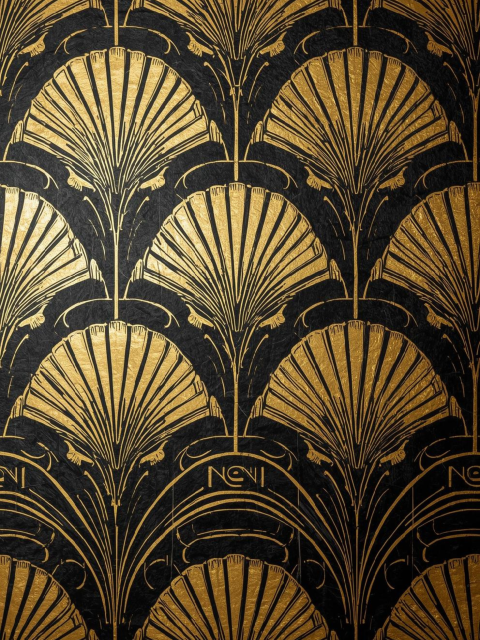
Functionality
Art Deco is the rare movement that can be both ornamental and practical.
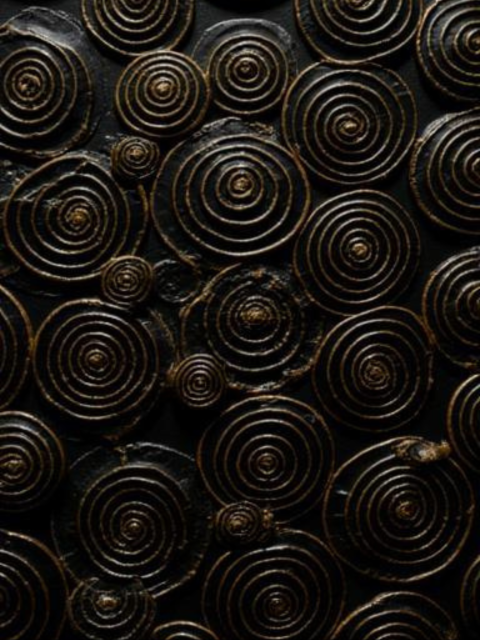
- It embraces decoration—but often in organized, repeating systems (patterns, panels, bands).
- In architecture and product design, it pairs modern materials and efficient forms with decorative identity—the object works, and it performs.
In short: Art Deco believes function can wear a tuxedo.
Locations
Art Deco became global, but some places became icons of the style:
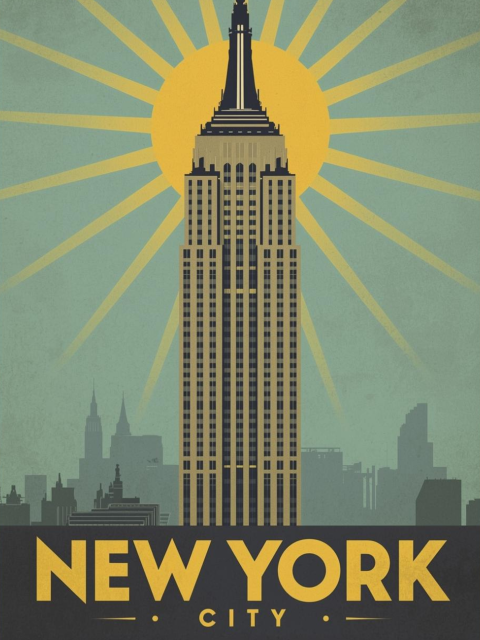
- United States: New York and Chicago (skyscrapers), Miami Beach (pastel seaside Deco)
- France: Paris as a design center and early showcase
- United Kingdom: cinemas, transport buildings, and municipal Deco
- India: notable Deco buildings in Mumbai
- Latin America & beyond: Deco spread widely through urban growth and modern infrastructure
Themes
- Modernity & progress (cities, speed, technology, industry)
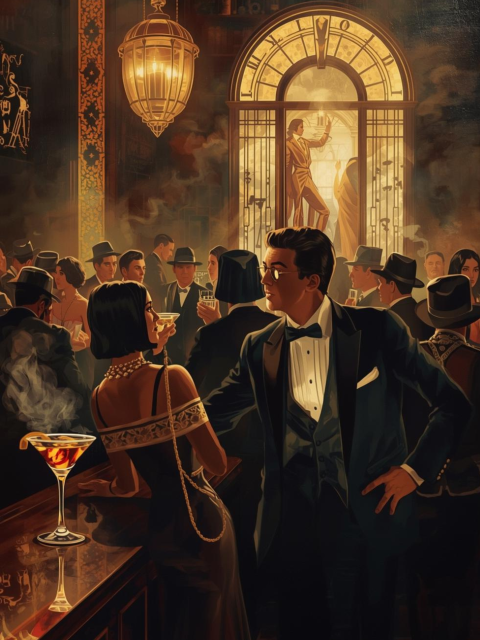
- Luxury & aspiration (glamour, nightlife, wealth aesthetics)
- Order & control (symmetry, structure, precision)
- The machine as beauty (streamlining, polished surfaces, engineered elegance)
- Mythic modernism (sun motifs, godlike figures, heroic scale, “temples of the future”)
Key Examples
Visual motifs to look for:
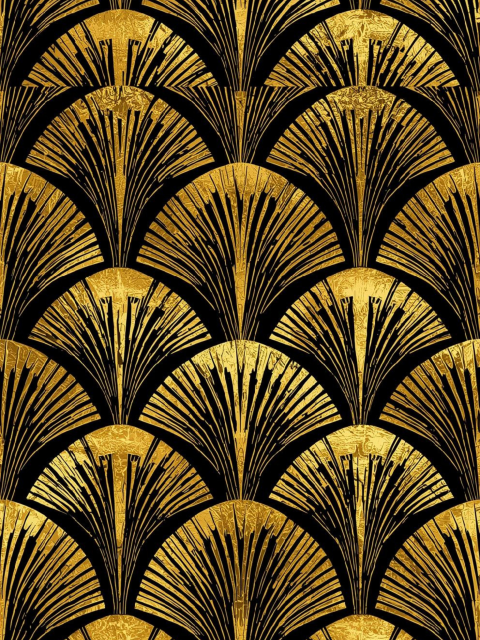
- Sunbursts, fountains, fans, and radiating lines
- Zigzags, chevrons, stepped pyramids, stacked arcs
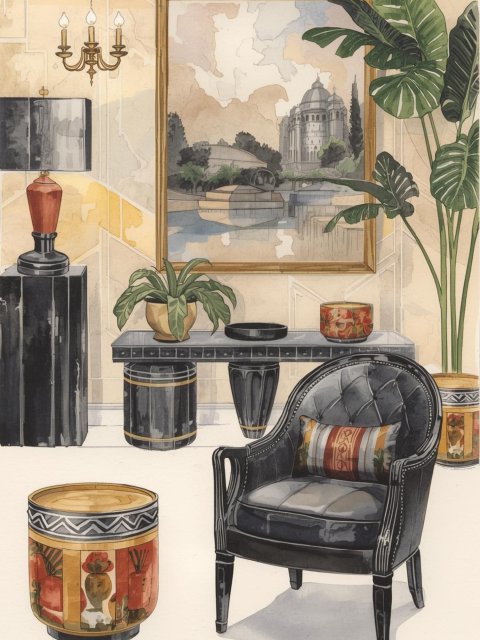
- Chrome trims, black lacquer, mirrored accents
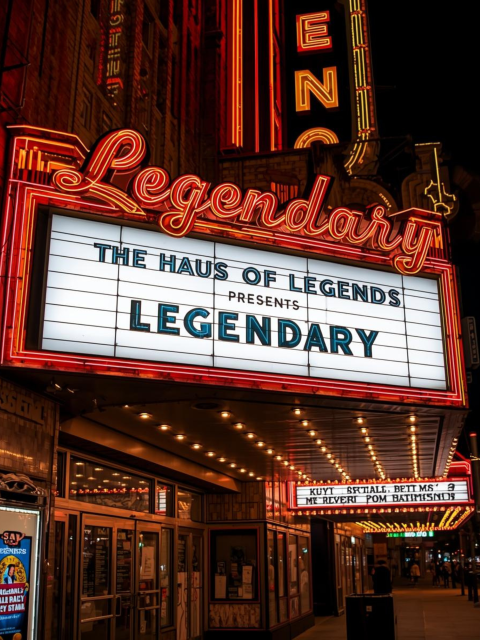
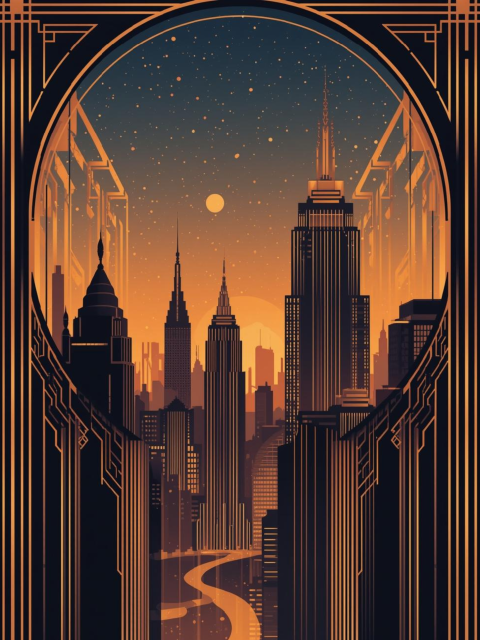
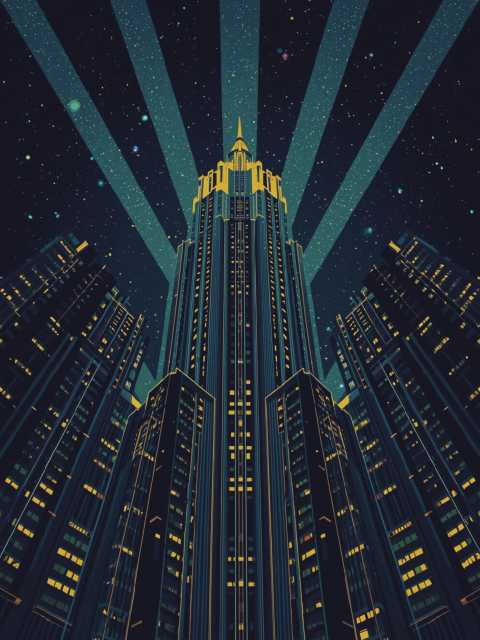
- Stylized skyscrapers, dramatic spotlights, elegant silhouettes
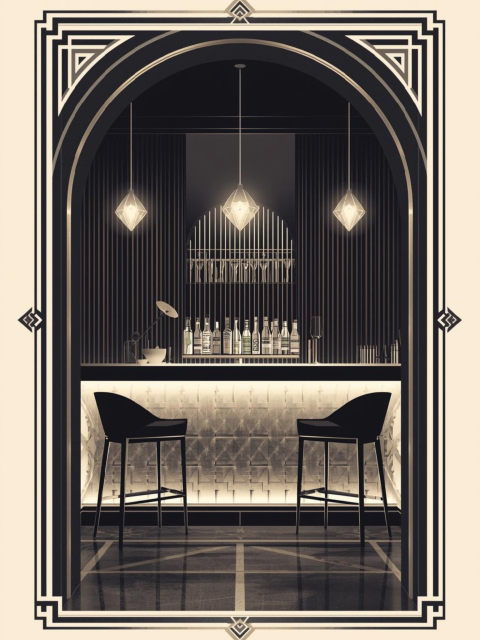
- Decorative borders that feel architectural—like design as framing device
Common object types:
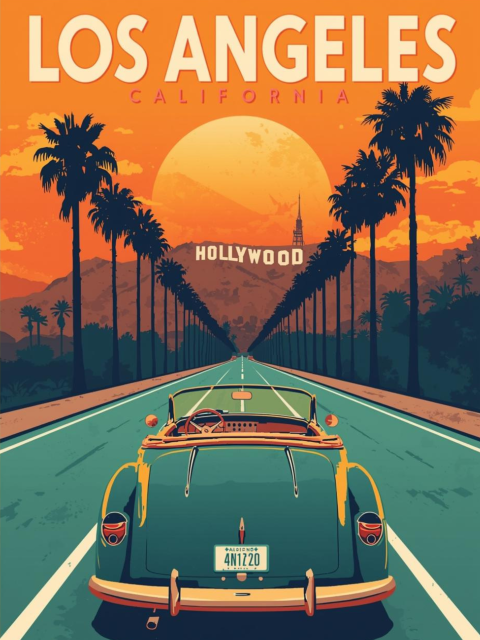
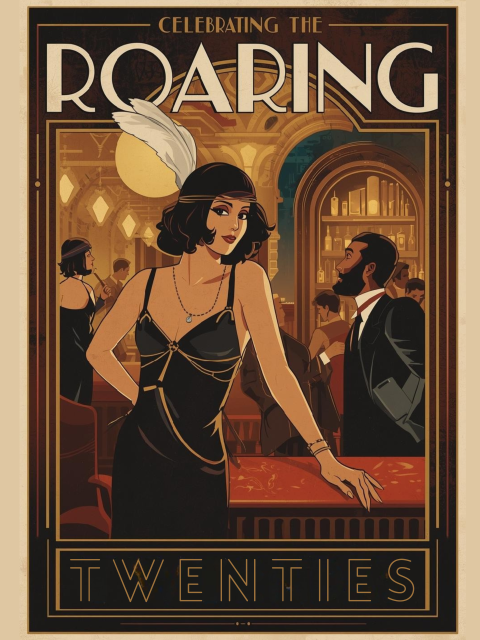
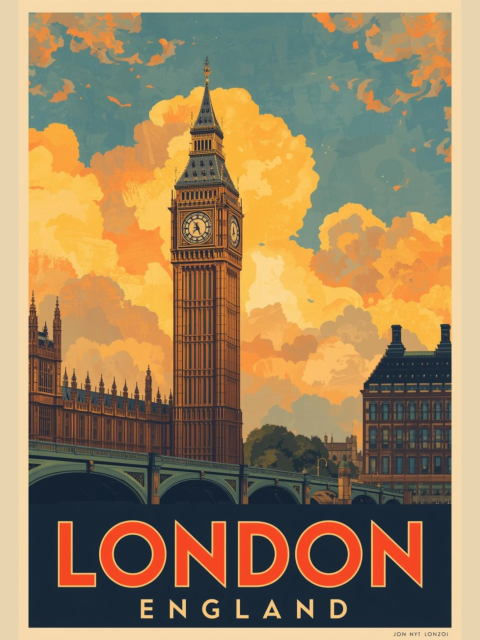
- Movie posters and travel posters
- Cocktail lounges and theater interiors
- Vanity items (perfume bottles, compacts, cigarette cases)
- Radio cabinets and furniture with inlays and curves
- Architectural lobbies with metalwork, murals, and geometric floors
Description
Art Deco is a design movement and broader aesthetic. It flourished primarily in the 1920s–1930s. It emphasizes geometric forms, symmetry, and modern materials. It also brings an elevated sense of glamour. It merges craftsmanship with modern industry—turning architecture, typography, fashion, and everyday objects into symbols of sophistication and forward momentum.

Architectural Style
In architecture, Art Deco often appears as:
- Stepped or tiered massing (buildings that “rise” in stages)
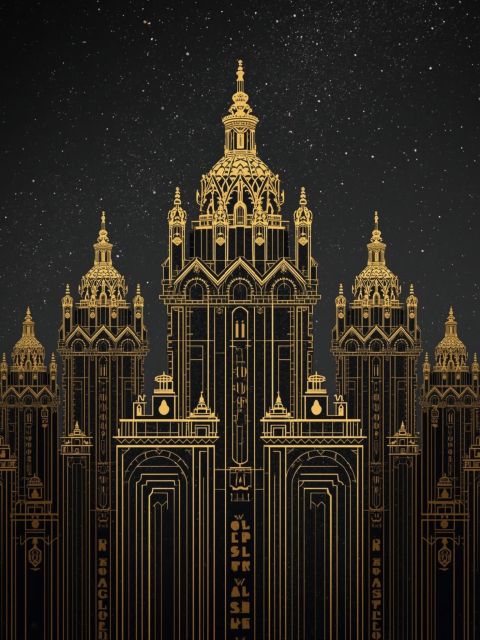
- Decorative crowns and spires (skyline jewelry)
- Vertical emphasis (lines that pull your eye upward)
- Ornamental reliefs (stylized plants, animals, human figures, industrial motifs)
- Statement entrances (portals, marquees, dramatic lighting, metalwork)
It’s architecture that says: Welcome to the future—please dress appropriately.
Historical Context
Art Deco emerged in a world rebuilding after WWI—ready to celebrate modern life, industry, and cultural change. It drew from:
- New manufacturing and materials (mass production meets artistry)
- Urban growth and skyscraper culture
- Cinema, jazz, nightlife, and modern celebrity
- Global influences (seen in patterning and stylization across decorative arts)
Deco’s popularity carried through the interwar period, evolving from lavish early Deco to more streamlined forms as the 1930s progressed.

Construction Techniques
In objects and buildings, Deco favored:
- Precision and repetition (pattern systems, panels, banding)
- High finish surfaces (lacquer, polish, chrome, glass)
- Inlay and contrast (light/dark woods, metal accents, bold color blocks)
- Relief ornamentation (sculpted or molded decorative details)
- Typography as structure (type treated like architecture—stacked, framed, and balanced)
Historical Context of the Style’s Evolution
Art Deco tends to shift in two major vibes:
- Early Deco (1920s): richer materials, more ornamental glamour, bold geometric motifs
- Later/Streamline Deco (1930s): smoother curves, speed-inspired forms, more aerodynamic minimalism
Both keep the same core belief: modern life should look intentional.


Notable Artists and Works
Rather than “one painter,” Deco is defined by designers, architects, and illustrators. Notable anchors include:
- Architecture: landmark skyscraper aesthetics and Deco civic buildings
- Graphic arts: poster design and advertising illustration
- Decorative arts: furniture, glass, metalwork, and luxury objects
- Fashion and film design: costumes and set design that shaped popular Deco imagery
5 Simple Prompts for AI-Generated Art (Art Deco Style)
- Deco Skyline Poster
“Art Deco city skyline at night. It features a symmetrical composition and stepped skyscrapers. The skyline displays glowing windows and metallic accents. Dramatic spotlight beams enhance the vintage poster style. The design showcases crisp geometry.” - Glamour Portrait
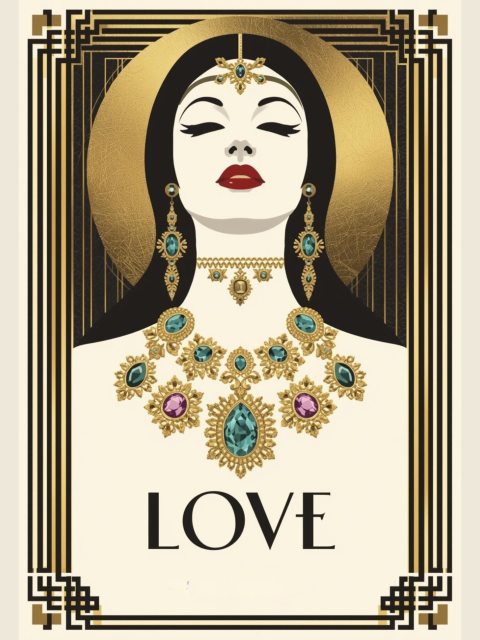
“Elegant Art Deco portrait. It features an elongated figure with geometric jewelry. The palette includes lacquered black and gold elements. There is a sunburst halo motif. The portrait uses cinematic lighting and smooth gradients.” - Deco Pattern Study
“The pattern features chevrons and fan shapes. It also includes sunburst repeats and high contrast. There is a gold foil effect and clean vector-like edges.” - Streamline Machine Beauty
“Streamline Art Deco car or train design concept. It features aerodynamic curves, chrome trim, and speed lines. The surfaces are polished. The style is minimal yet luxurious with studio lighting.” - Deco Interior Scene
“Art Deco lounge interior. Mirrored panels. Geometric floor tiles. Chrome and velvet textures. Symmetrical furniture arrangement. Warm, glamorous lighting.”


Conclusion
Art Deco is the aesthetic of earned confidence—a world that has survived the chaos and decided to build beauty with intention. It’s geometry with charisma, luxury with discipline, and modern design that still feels like a power move nearly a century later.
If your art wants to feel timeless, polished, and unapologetically iconic, Art Deco is an excellent ancestor to invite into the room.
FREE Download “Art Deco







Continue Learning
This article is part of The Haus Of Legends educational ecosystem. Continue with: